Kirjojen hintavertailu. Mukana 11 244 527 kirjaa ja 12 kauppaa.

Kirjahaku

Etsi kirjoja tekijän nimen, kirjan nimen tai ISBN:n perusteella.

4 kirjaa tekijältä Seamus Perry

Coleridge and the Uses of Division

Coleridge and the Uses of Division

Seamus Perry

Clarendon Press
1999
sidottu
Coleridge repeatedly announced the merits of unity, while experiencing the truth of division. A visionary drawn to the numinous, he was also a spontaneous connoisseur of the sensory life; a metaphysician inclined to idealism, his thought was permanently way-laid by a tenacious realism. Such double-mindedness frustrated his ambitions for system, and has often been criticised as a sort of incapacity; but the capability of entertaining equally necessary or valuable kinds of perception, which yet prove ultimately incompatible, might alternatively be thought a kind of virtue - even, perhaps, the secret of his paradoxical, self-defeating genius. The study examines Coleridge's formative double-vision as it manifests itself in his profound self-analysis, his philosophy of mind, his reflections on love and ethics, his descriptions of imagination, and his literary criticism. The focus of many of these mixed feelings is the ambiguous figure of Wordsworth: his momentous and often troubled partnership with Coleridge is examined in detail. Throughout, close attention is paid to Coleridge the writer, the metaphor-maker and stylist, exhibited across the wide range of his oeuvre, in public and private works, prose and poetry. A coda offers a reading of The Ancient Mariner, tracing back the central threads of the study to Coleridges early and surprising masterpiece.
Alfred Tennyson

Alfred Tennyson

Seamus Perry

Liverpool University Press
2005
nidottu
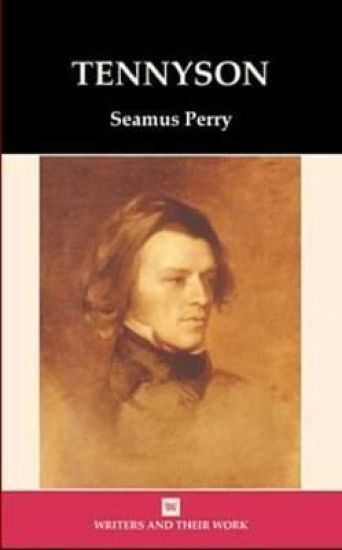
This title is a study of Tennyson's lyrical imagination, describing its complex fascinations with recurrence, progress, narrative, and loss, and its doubts about its own artfulness.
Alfred Tennyson

Alfred Tennyson

Seamus Perry

Liverpool University Press
2005
sidottu
This title is a study of Tennyson's lyrical imagination, describing its complex fascinations with recurrence, progress, narrative, and loss, and its doubts about its own artfulness.
The Connell Guide To T.S. Eliot's The Waste Land
The Waste Land, first published in 1922, is not far from a century old, and it has still not been surpassed as the most famous of all modern poems. In many ways, it continues to define what we mean by modern whenever we begin to speak about modern verse. At the same time, as Ted Hughes once observed, it is also genuinely popular, and not just among the cogniscenti or the degree-bearing. "I remember when I taught fourteen-year-old boys in a secondary modern school," Hughes once said, "of all the poetry I introduced them to, their favourite was The Waste Land." Not for nothing was it included, in its entirety, in The Oxford Book of Twentieth Century English Verse (1973), edited by Philip Larkin, a poet not known otherwise for his hospitality to modernism. The poem's appeal is intellectual, certainly, but also visceral. It fulfils in miniature the demands that Eliot made of the great poet at large: "abundance, variety, and complete competence" - the first of those criteria of greatness all the more surprising, and moving, to find accomplished in a poem that has its starting place in so barren a human territory. The poetry is modern in a wholly self-conscious way, but the modernity of Eliot's poem stems in large part from a strikingly powerful awareness of what's past. In this book, the Oxford scholar Seamus Perry points out some of the fruits of that acute historical awareness - and shares his own admiration of, and pleasure in, the extraordinary voicings and counter-voicings of this perpetually great work.