Kirjojen hintavertailu. Mukana 11 417 157 kirjaa ja 12 kauppaa.

Kirjahaku

Etsi kirjoja tekijän nimen, kirjan nimen tai ISBN:n perusteella.

6 kirjaa tekijältä Sean Alexander Gurd

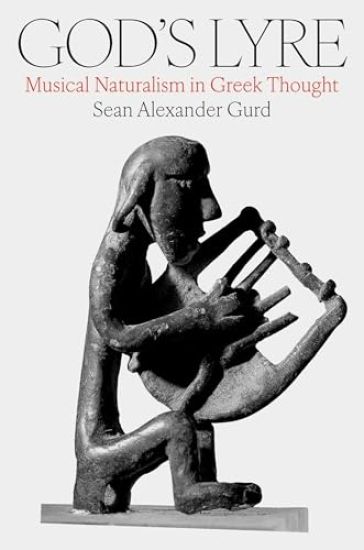
God's Lyre

God's Lyre

Sean Alexander Gurd

OXFORD UNIVERSITY PRESS INC
2026
sidottu
God's Lyre is about a network of ancient ideas that connected musical expression to natural philosophy. This network included Aristotelians, Stoics, and Alexandrian monotheists, and it had a major effect on important theories of language as well. What held the various strands together was a common orientation in which musical phenomena were theorized as a consequence of nature and natural processes. In this book, Sean Alexander Gurd discusses Theophrastus, Diogenes of Babylon, Dionysius of Halicarnassus, Philo of Alexandria, Clement of Alexandria, and John Chrysostom. These authors suggest that music was the result of nature rising to a certain pitch of passionate intensity.
Work in Progress

Work in Progress

Sean Alexander Gurd

Oxford University Press Inc
2012
sidottu
Work in Progress offers an in-depth study of the role of literary revision in the compositional practices and representational strategies of Roman authors at the end of the republic and the beginning of the principate. It focuses on Cicero, Horace, Quintilian, Martial, and Pliny the Younger, but also offers discussions of Isocrates, Plato, and Hellenistic poetry. The book's central argument is that revision made textuality into a medium of social exchange. Revisions were not always made by authors working alone: often, they were the result of conversations between an author and friends or literary contacts, and these conversations exemplified a commitment to collective debate and active collaboration. Revision was thus much more than an unavoidable element in literary genesis: it was one way in which authorship became a form of social agency. Consequently, when we think about revision for authors of the late republic and early empire we should not think solely of painstaking attendance to craft aimed exclusively at the perfection of a literary work. Nor should we think of the resulting texts as closed and invariant statements sent from an author to his reader. So long as an author was still willing to revise, his text served as a temporary platform around and in which a community came into being. The theories of revision that guide the author's study come from the new genetic criticism that has been successfully applied, especially in Europe, to modern authors. While many of the tools of analysis applicable to modern authors (author-written manuscripts, corrected proofs, etc.) are not available for ancient authors, Sean Gurd has amassed a surprising number of passages in ancient texts about revision, its importance to the author, and the circle of critics involved in the process of rewriting.
Iphigenias at Aulis

Iphigenias at Aulis

Sean Alexander Gurd

Cornell University Press
2005
sidottu
How should a literary scholar approach a text characterized not by stability but by variation and flux? This book offers a radical new perspective on the limits—and the accomplishments—of the modern traditions of textual criticism in classics.Sean Alexander Gurd takes as his starting point the case of a single Greek tragedy by Euripides, one of his last. According to ancient accounts, the Iphigenia at Aulis was produced at the city Dionysia, the great festival of Athenian tragedy, sometime after Euripides died (between 407 and 405 BCE). Whether the text performed then was entirely the work of Euripides, and whether the version that appears in the manuscripts reflects either that performance or its defunct author's design, are unknown. But since the mid-eighteenth-century the mysteries and conflicting evidence concerning Iphigenia at Aulis have given rise to an array of different attempts to reconstruct the original, and every generation has seen a version of the play that is radically different from those that came before. Gurd pioneers a literary philology comfortable with this textual multiplicity, capable of reading Iphigenias at Aulis in the plural.Regarding the dossier of successive editions of Iphigenia at Aulis as a symbol for the condition of modern textual reason, Gurd shows lovers of classical literature exactly how contingent the texts they read really are.
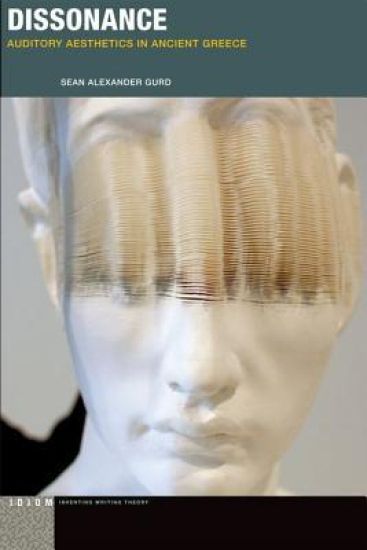
Dissonance

Dissonance

Sean Alexander Gurd

Fordham University Press
2016
sidottu
In the four centuries leading up to the death of Euripides, Greek singers, poets, and theorists delved deeply into auditory experience. They charted its capacity to develop topologies distinct from those of the other senses; contemplated its use as a communicator of information; calculated its power to express and cause extreme emotion. They made sound too, artfully and self-consciously creating songs and poems that reveled in sonorousness. Dissonance reveals the commonalities between ancient Greek auditory art and the concerns of contemporary sound studies, avant-garde music, and aesthetics, making the argument that "classical" Greek song and drama were, in fact, an early European avant-garde, a proto-exploration of the aesthetics of noise. The book thus develops an alternative to that romantic ideal which sees antiquity as a frozen and silent world.
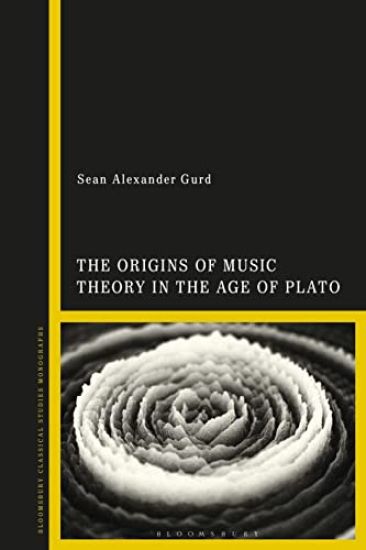
The Origins of Music Theory in the Age of Plato

The Origins of Music Theory in the Age of Plato

Sean Alexander Gurd

Bloomsbury Academic
2019
sidottu
Listening is a social process. Even apparently trivial acts of listening are expert performances of acquired cognitive and bodily habits. Contemporary scholars acknowledge this fact with the notion that there are “auditory cultures.” In the fourth century BCE, Greek philosophers recognized a similar phenomenon in music, which they treated as a privileged site for the cultural manufacture of sensory capabilities, and proof that in a traditional culture perception could be ordered, regular, and reliable. This approachable and elegantly written book tells the story of how music became a vital topic for understanding the senses and their role in the creation of knowledge. Focussing in particular on discussions of music and sensation in Plato and Aristoxenus, Sean Gurd explores a crucial early chapter in the history of hearing and gently raises critical questions about how aesthetic traditionalism and sensory certainty can be joined together in a mutually reinforcing symbiosis.
The Origins of Music Theory in the Age of Plato

The Origins of Music Theory in the Age of Plato

Sean Alexander Gurd

Bloomsbury Academic
2021
nidottu
Listening is a social process. Even apparently trivial acts of listening are expert performances of acquired cognitive and bodily habits. Contemporary scholars acknowledge this fact with the notion that there are “auditory cultures.” In the fourth century BCE, Greek philosophers recognized a similar phenomenon in music, which they treated as a privileged site for the cultural manufacture of sensory capabilities, and proof that in a traditional culture perception could be ordered, regular, and reliable. This approachable and elegantly written book tells the story of how music became a vital topic for understanding the senses and their role in the creation of knowledge. Focussing in particular on discussions of music and sensation in Plato and Aristoxenus, Sean Gurd explores a crucial early chapter in the history of hearing and gently raises critical questions about how aesthetic traditionalism and sensory certainty can be joined together in a mutually reinforcing symbiosis.