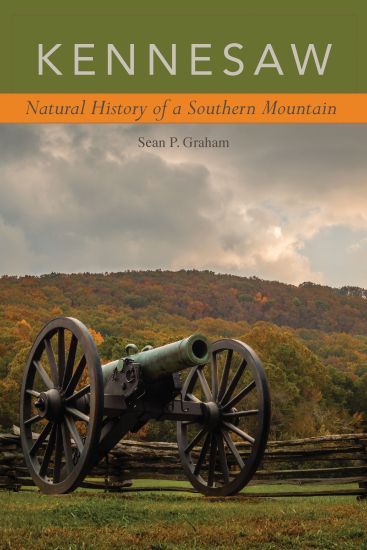
The first in-depth ecological treatment of one of the most frequently visited National Battlefield parks in the country Designated as a National Battlefield in 1917 and as a park in 1935, the 2,965-acre Kennesaw Mountain National Battlefield Park now preserves far more than the military history and fallen soldiers it was originally founded to commemorate. Located approximately 20 miles northwest of downtown Atlanta, Kennesaw Mountain rises 608 feet above the rolling hills and hardwood forests of the Georgia Piedmont. Kennesaw Mountain’s geology and topography create enough of a distinctive ecosystem to make it a haven for flora and fauna alike. As the tallest mountain in the metropolitan Atlanta area, it is also a magnet for human visitors. Featuring 18 miles of interpretive trails looping around and over the mountain, the park is a popular destination for history buffs, outdoor recreationists, and nature enthusiasts alike. Written for a diverse range of readers and park visitors, Kennesaw: Natural History of a Southern Mountain provides a comprehensive exploration of the entire park punctuated with humor, colorful anecdotes, and striking photographs of the landscape. Sean P. Graham begins with a brief summary of the park’s human history before transitioning to a discussion of the mountain’s natural history, including its unique geology, vegetation, animals, and plant-animal interactions. Graham also focuses on Kennesaw Mountain’s most important ecological and conservation attribute—its status as a globally important migratory bird refuge. An insightful chapter on bird watching and the region’s migrating bird populations includes details on migratory patterns, birding hot spots, and the mountain’s significance as one of these important areas. An epilogue revisits the battle by describing how Union veterans pushed for establishment of the park as a memorial, inadvertently creating a priceless biological preserve in the process. Kennesaw: Natural History of a Southern Mountain addresses the complex interactions and behaviors of numerous species that live or migrate through the park, yet it is written in a personal, lively, and entertaining style that will appeal to all readers. In many cases the book synthesizes information from the scientific literature, making this otherwise arcane material accessible to the general public and underscoring-and hopefully increasing public appreciation for-the high biodiversity of life found in the Southeast.