Kirjojen hintavertailu. Mukana 11 244 527 kirjaa ja 12 kauppaa.

Kirjahaku

Etsi kirjoja tekijän nimen, kirjan nimen tai ISBN:n perusteella.

13 kirjaa tekijältä Sebastian Mallaby

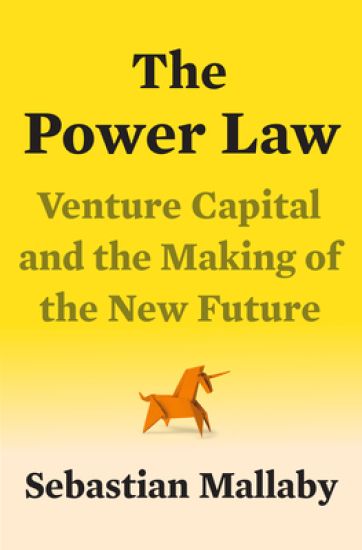
The Power Law

The Power Law

Sebastian Mallaby

PENGUIN BOOKS LTD
2023
pokkari
From an award-winning financial historian comes the gripping, character-driven story of venture capital and the world it madeInnovations rarely come from "experts." Jeff Bezos was not a bookseller; Elon Musk was not in the auto industry. When it comes to innovation, a legendary venture capitalist told Sebastian Mallaby, the future cannot be predicted, it can only be discovered. Most attempts at discovery fail, but a few succeed at such a scale that they more than make up for everything else. That extreme ratio of success and failure is the power law that drives venture capital, Silicon Valley, the tech sector, and, by extension, the world.Drawing on unprecedented access to the most celebrated venture capitalists of all time, award-winning financial historian Sebastian Mallaby tells the story of this strange tribe of financiers who have funded the world's most successful companies, from Google to SpaceX to Alibaba. With a riveting blend of storytelling and analysis, The Power Law makes sense of the seeming randomness of success in venture capital, an industry that relies, for good and ill, on gut instinct and personality rather than spreadsheets and data. We learn the unvarnished truth about some of the most iconic triumphs and infamous disasters in the history of tech, from the comedy of errors that was the birth of Apple to the venture funding that fostered hubris at WeWork and Uber to the industry's notorious lack of women and ethnic minorities.Now the power law echoes around the world: it has transformed China's digital economy beyond recognition, and London is one of the top cities for venture capital investment. By taking us so deeply into the VCs' game, The Power Law helps us think about our own future through their eyes.
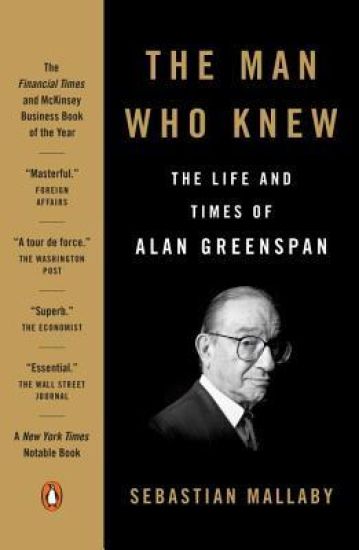
The Man Who Knew: The Life and Times of Alan Greenspan

The Man Who Knew: The Life and Times of Alan Greenspan

Sebastian Mallaby

Penguin Publishing Group
2017
nidottu
"Exceptional . . . Deeply researched and elegantly written . . . As a description of the politics and pressures under which modern independent central banking has to operate, the book is incomparable." --Financial Times The definitive biography of the most important economic statesman of our time, from the bestselling author of The Power Law and More Money Than God Sebastian Mallaby's magisterial biography of Alan Greenspan, the product of over five years of research based on untrammeled access to his subject and his closest professional and personal intimates, brings into vivid focus the mysterious point where the government and the economy meet. To understand Greenspan's story is to see the economic and political landscape of our time--and the presidency from Reagan to George W. Bush--in a whole new light. As the most influential economic statesman of his age, Greenspan spent a lifetime grappling with a momentous shift: the transformation of finance from the fixed and regulated system of the post-war era to the free-for-all of the past quarter century. The story of Greenspan is also the story of the making of modern finance, for good and for ill. Greenspan's life is a quintessential American success story: raised by a single mother in the Jewish migr community of Washington Heights, he was a math prodigy who found a niche as a stats-crunching consultant. A master at explaining the economic weather to captains of industry, he translated that skill into advising Richard Nixon in his 1968 campaign. This led to a perch on the White House Council of Economic Advisers, and then to a dazzling array of business and government roles, from which the path to the Fed was relatively clear. A fire-breathing libertarian and disciple of Ayn Rand in his youth who once called the Fed's creation a historic mistake, Mallaby shows how Greenspan reinvented himself as a pragmatist once in power. In his analysis, and in his core mission of keeping inflation in check, he was a maestro indeed, and hailed as such. At his retirement in 2006, he was lauded as the age's necessary man, the veritable God in the machine, the global economy's avatar. His memoirs sold for record sums to publishers around the world. But then came 2008. Mallaby's story lands with both feet on the great crash which did so much to damage Alan Greenspan's reputation. Mallaby argues that the conventional wisdom is off base: Greenspan wasn't a na ve ideologue who believed greater regulation was unnecessary. He had pressed for greater regulation of some key areas of finance over the years, and had gotten nowhere. To argue that he didn't know the risks in irrational markets is to miss the point. He knew more than almost anyone; the question is why he didn't act, and whether anyone else could or would have. A close reading of Greenspan's life provides fascinating answers to these questions, answers whose lessons we would do well to heed. Because perhaps Mallaby's greatest lesson is that economic statesmanship, like political statesmanship, is the art of the possible. The Man Who Knew is a searching reckoning with what exactly comprised the art, and the possible, in the career of Alan Greenspan.
More Money Than God: Hedge Funds and the Making of a New Elite
The New York Times bestseller "The bright light shed by More Money Than God is particularly welcome. Mr. Mallaby . . . brings a keen sense of financial theory to his subject and a vivid narrative style." --Wall Street Journal "Splendid . . . the definitive history of the hedge fund history, a compelling narrative full of larger-than-life characters and dramatic tales of their financial triumphs and reversals." --The Washington Post The first authoritative history of hedge funds-from their rebel beginnings to their role in defining the future of finance, from the author of The Power Law Wealthy, powerful, and potentially dangerous, hedge fund moguls have become the It Boys of twenty-first-century capitalism. Beating the market was long thought to be impossible, but hedge funds cracked its mysteries and made fortunes in the process. Drawing on his unprecedented access to the industry, esteemed financial writer Sebastian Mallaby tells the inside story of the hedge funds, from their origins in the 1960s to their role in the financial crisis of 2007 to 2009--and explains why understanding the history of hedge funds is key to predicting the future of finance.
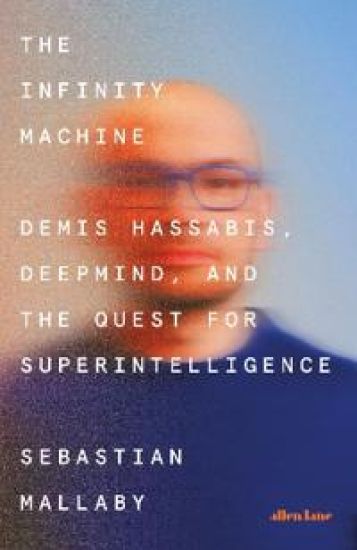
The Infinity Machine

The Infinity Machine

Sebastian Mallaby

PENGUIN BOOKS LTD
2026
sidottu
An intimate portrait of the world’s most brilliant tech visionary and his game-changing company DeepMind, from award-winning financial journalist and historian Sebastian Mallaby Even in a tech world crowded with visionary leaders, Demis Hassabis is recognized as a special case. Born to working class, immigrant parents in North London, a chess prodigy by five and wizard coder in his teens, he turned down a seven-figure job offer from a video-game studio to study science at Cambridge. Long before the current obsession with AI, he founded the path-breaking company DeepMind in order to pursue a single, audacious goal: the dream of artificial superintelligence, which would solve humanity’s hardest problems, change life and work as we know it, and perhaps even unlock the deepest mysteries of the Universe. For his scientific achievements, he won a Nobel Prize in 2024, and his company, now Google DeepMind, is considered the tech giant’s engine room. For the past several years, Sebastian Mallaby has had unprecedented access to Hassabis and DeepMind, conducting hundreds of hours of interviews with him and his inner circle as well as detractors and rivals at other companies. The result is a revelation-packed portrait of a singular mind and a historic reckoning with the AI revolution, a shift potentially more significant than any since the dawn of complex thought 70,000 years ago. As Mallaby chronicles, DeepMind is locked in an arms race with Silicon Valley competitors to build artificial general intelligence, and thereby become the keeper of humanity’s future. Yet this is not a Silicon Valley story. Hassabis has remained in Britain, and unlike his rivals, his aims are not wealth and power but scientific enlightenment. Like them, however, he is haunted by the memory of Robert Oppenheimer, the creator of the atom bomb. He aims to control the technology, but the technology may ultimately control him – and humanity writ large.
The World's Banker

The World's Banker

Sebastian Mallaby

Yale University Press
2006
pokkari
Appointed president of the World Bank in 1995, James Wolfensohn struck it like a whirlwind, determined to reinvent the institution founded by Franklin Roosevelt and his world War II allies. Wolfensohn embraced debt relief for the poorest countries, put taboo subjects such as corruption on the development agenda, and faced off the riotous critics of the antiglobalization movement. Never has the World's Bank been more important, more in the public eye, or more controversial than during his tenure, when challenges from global financial crises to AIDS to the emergence of terrorist sanctuaries in failed states have threatened global security. Sebastian Mallaby's vivid account shows what it was like to reconstruct Bosnia, to combat corruption and currency collapse in Indonesia, to fight AIDS in India, to pull one in five Ugandans out of poverty. But behind the absorbing narrative lies a critical question. In the next quarter of a century the world's population will increase from 6 to 8 billion. The World Bank is the leading mechanism for dealing with the consequences. Is it equal to the challenge?
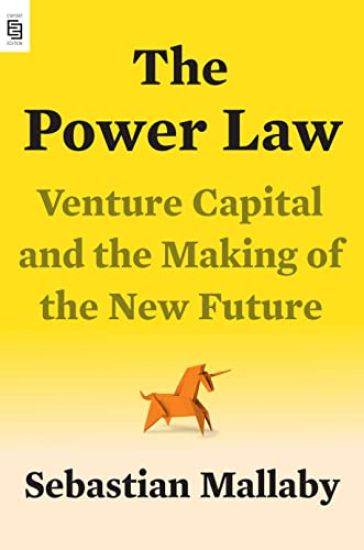
The Power Law: Venture Capital and the Making of the New Future
Shortlisted for the Financial Times Business Book of the Year Named a Best Book of 2022 by The Economist "A gripping fly-on-the-wall story of the rise of this unique and important industry based on extensive interviews with some of the most successful venture capitalists." - Daniel Rasmussen, Wall Street Journal "A must-read for anyone seeking to understand modern-day Silicon Valley and even our economy writ large." -Bethany McLean, The Washington Post "A rare and unsettling look inside a subculture of unparalleled influence." --Jane Mayer "A classic...A book of exceptional reporting, analysis and storytelling." --Charles Duhigg From the New York Times bestselling author of More Money Than God comes the astonishingly frank and intimate story of Silicon Valley's dominant venture-capital firms--and how their strategies and fates have shaped the path of innovation and the global economy Innovations rarely come from "experts." Elon Musk was not an "electric car person" before he started Tesla. When it comes to improbable innovations, a legendary tech VC told Sebastian Mallaby, the future cannot be predicted, it can only be discovered. It is the nature of the venture-capital game that most attempts at discovery fail, but a very few succeed at such a scale that they more than make up for everything else. That extreme ratio of success and failure is the power law that drives the VC business, all of Silicon Valley, the wider tech sector, and, by extension, the world. In The Power Law, Sebastian Mallaby has parlayed unprecedented access to the most celebrated venture capitalists of all time--the key figures at Sequoia, Kleiner Perkins, Accel, Benchmark, and Andreessen Horowitz, as well as Chinese partnerships such as Qiming and Capital Today--into a riveting blend of storytelling and analysis that unfurls the history of tech incubation, in the Valley and ultimately worldwide. We learn the unvarnished truth, often for the first time, about some of the most iconic triumphs and infamous disasters in Valley history, from the comedy of errors at the birth of Apple to the avalanche of venture money that fostered hubris at WeWork and Uber. VCs' relentless search for grand slams brews an obsession with the ideal of the lone entrepreneur-genius, and companies seen as potential "unicorns" are given intoxicating amounts of power, with sometimes disastrous results. On a more systemic level, the need to make outsized bets on unproven talent reinforces bias, with women and minorities still represented at woefully low levels. This does not just have social justice implications: as Mallaby relates, China's homegrown VC sector, having learned at the Valley's feet, is exploding and now has more women VC luminaries than America has ever had. Still, Silicon Valley VC remains the top incubator of business innovation anywhere--it is not where ideas come from so much as where they go to become the products and companies that create the future. By taking us so deeply into the VCs' game, The Power Law helps us think about our own future through their eyes.
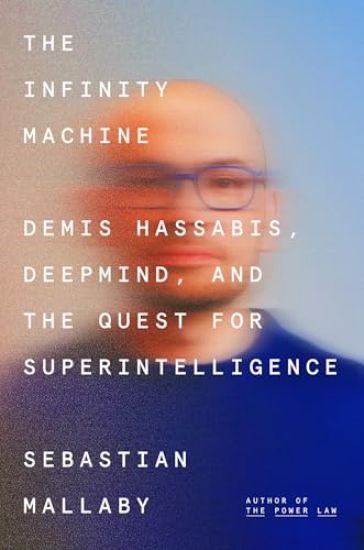
The Infinity Machine: Demis Hassabis, Deepmind, and the Quest for Superintelligence
From one of our leading chroniclers of the intersection of innovation and capitalism, a landmark reckoning--based on unprecedented access--with one of the world's most brilliant and driven tech visionaries, and his game-changing company Even by the standard of a tech industry stacked with so-called geniuses, Demis Hassabis is a special case. Born poor in North London to immigrant parents--a chess prodigy by age five, and a wizard coder in his teens--he turned down a seven-figure job offer before turning eighteen to feed his insatiable scientific curiosity at the University of Cambridge. Later, he added a neuroscience PhD to his computer science skills to pursue the dream of artificial general intelligence, the ultimate goal being to unravel the mysteries of biology and theoretical physics and to usher in superabundance. Alongside a small group of fellow travelers, that is the Nobel Prize-winning path he is still on--imagining machines that will compound, or possibly supplant, the human understanding of the universe. Hassabis has given Sebastian Mallaby a great deal of his time, sitting for over thirty hours of conversation. But Mallaby has also drawn from Hassabis's detractors, such as his estranged DeepMind cofounder Mustafa Suleyman; from his rivals, such as OpenAI's leading scientist Ilya Sutskever; and from academic pioneers who now fear for human survival, such as Geoffrey Hinton. The result is a revelatory account of a singular figure and his company, and a profound reckoning with this protean field as it leaps from the periphery to the center of our consciousness. No one questions Hassabis's brilliance. There are those who, like Elon Musk, regard him as an "evil genius." He is in a game where the stakes are matched only by the exorbitant costs--for talent, and for compute. Celebrated scientists pursue the technology because they cannot resist the sweetness of discovery; others pursue it for money or power. The inventors believe they control their technology, but often their technology controls them. This is not a Silicon Valley story. Hassabis deals with the Valley and takes its money, but remains outside--and furiously critical--of it, lambasting its leaders in conversation with Mallaby. The end of this race cannot be known, but as this great book shows us, Hassabis's quest to will a new form of cognition into the world is a defining story for our era.
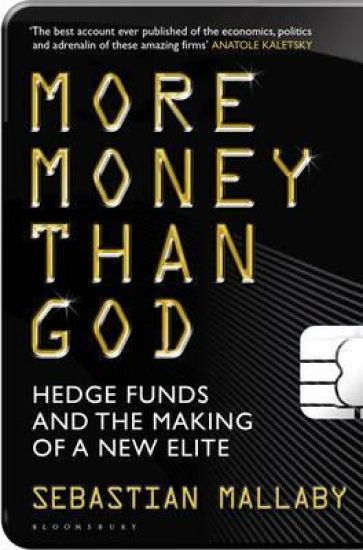
More Money Than God

More Money Than God

Sebastian Mallaby

Bloomsbury Publishing PLC
2011
nidottu
The first book of its kind: a fascinating and entertaining examination of hedge funds todayShortlisted for the Financial Times/Goldman Sachs Business Book of the Year Award'An enormously satisfying book: a gripping chronicle of the cutting edge of the financial markets and a fascinating perspective on what was going on in these shadowy institutions as the crash hit' ObserverWealthy, powerful, and potentially dangerous, hedge-find managers have emerged as the stars of twenty-first century capitalism. Based on unprecedented access to the industry, More Money Than God provides the first authoritative history of hedge funds. This is the inside story of their origins in the 1960s and 1970s, their explosive battles with central banks in the 1980s and 1990s, and finally their role in the financial crisis of 2007-9.Hedge funds reward risk takers, so they tend to attract larger-than-life personalities. Jim Simons began life as a code-breaker and mathematician, co-authoring a paper on theoretical geometry that led to breakthroughs in string theory. Ken Griffin started out trading convertible bonds from his Harvard dorm room. Paul Tudor Jones happily declared that a 1929-style crash would be ‘total rock-and-roll' for him. Michael Steinhardt was capable of reducing underlings to sobs. ‘All I want to do is kill myself,' one said. ‘Can I watch?' Steinhardt responded. A saga of riches and rich egos, this is also a history of discovery. Drawing on insights from mathematics, economics and psychology to crack the mysteries of the market, hedge funds have transformed the world, spawning new markets in exotic financial instruments and rewriting the rules of capitalism. And while major banks, brokers, home lenders, insurers and money market funds failed or were bailed out during the crisis of 2007-9, the hedge-fund industry survived the test, proving that money can be successfully managed without taxpayer safety nets. Anybody pondering fixes to the financial system could usefully start here: the future of finance lies in the history of hedge funds.
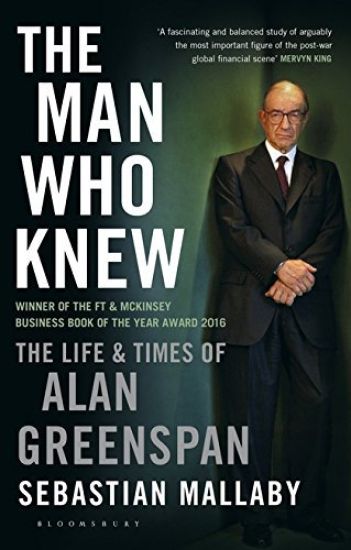
Man Who Knew

Man Who Knew

Sebastian Mallaby

Bloomsbury
2017
pokkari
WINNER OF THE 2016 FT & McKINSEY BUSINESS BOOK OF THE YEAR AWARD, this is the biography of one of the titans of financial history over the last fifty years. Born in 1926, Alan Greenspan was raised in Manhattan by a single mother and immigrant grandparents during the Great Depression but by quiet force of intellect, rose to become a global financial 'maestro'. Appointed by Ronald Reagan to Chairman of the Federal Reserve, a post he held for eighteen years, he presided over an unprecedented period of stability and low inflation, was revered by economists, adored by investors and consulted by leaders from Beijing to Frankfurt. Both data-hound and eligible society bachelor, Greenspan was a man of contradictions. His great success was to prove the very idea he, an advocate of the Gold standard, doubted: that the discretionary judgements of a money-printing central bank could stabilise an economy. He resigned in 2006, having overseen tumultuous changes in the world's most powerful economy. Yet when the great crash happened only two years later many blamed him, even though he had warned early on of irrational exuberance in the market place.