Kirjojen hintavertailu. Mukana 12 016 292 kirjaa ja 12 kauppaa.

Kirjahaku

Etsi kirjoja tekijän nimen, kirjan nimen tai ISBN:n perusteella.

2 kirjaa tekijältä Sebastian N. Page

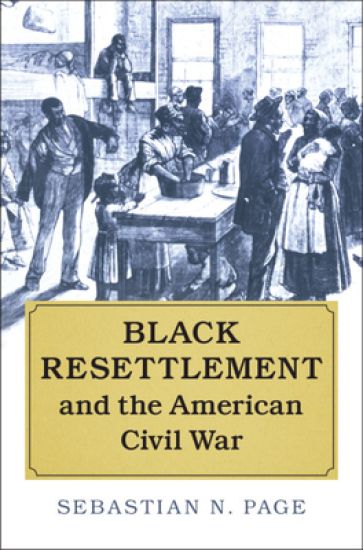
Black Resettlement and the American Civil War

Black Resettlement and the American Civil War

Sebastian N. Page

Cambridge University Press
2021
sidottu
Based on sweeping research in six languages, Black Resettlement and the American Civil War offers the first comprehensive, comparative account of nineteenth-century America's greatest road not taken: the mass resettlement of African Americans outside the United States. Building on resurgent scholarly interest in the so-called 'colonization' movement, the book goes beyond tired debates about colonization's place in the contest over slavery, and beyond the familiar black destinations of Liberia, Canada, and Haiti. Striding effortlessly from Pittsburgh to Panama, Toronto to Trinidad, and Lagos to Louisiana, it synthesizes a wealth of individual, state-level, and national considerations to reorient the field and set a new standard for Atlantic history. Along the way, it shows that what haunted politicians from Thomas Jefferson to Abraham Lincoln was not whether it was right to abolish slavery, but whether it was safe to do so unless the races were separated.
Black Resettlement and the American Civil War

Black Resettlement and the American Civil War

Sebastian N. Page

Cambridge University Press
2022
pokkari
Based on sweeping research in six languages, Black Resettlement and the American Civil War offers the first comprehensive, comparative account of nineteenth-century America's greatest road not taken: the mass resettlement of African Americans outside the United States. Building on resurgent scholarly interest in the so-called 'colonization' movement, the book goes beyond tired debates about colonization's place in the contest over slavery, and beyond the familiar black destinations of Liberia, Canada, and Haiti. Striding effortlessly from Pittsburgh to Panama, Toronto to Trinidad, and Lagos to Louisiana, it synthesizes a wealth of individual, state-level, and national considerations to reorient the field and set a new standard for Atlantic history. Along the way, it shows that what haunted politicians from Thomas Jefferson to Abraham Lincoln was not whether it was right to abolish slavery, but whether it was safe to do so unless the races were separated.