Kirjojen hintavertailu. Mukana 11 832 189 kirjaa ja 12 kauppaa.

Kirjahaku

Etsi kirjoja tekijän nimen, kirjan nimen tai ISBN:n perusteella.

167 kirjaa tekijältä Seneca

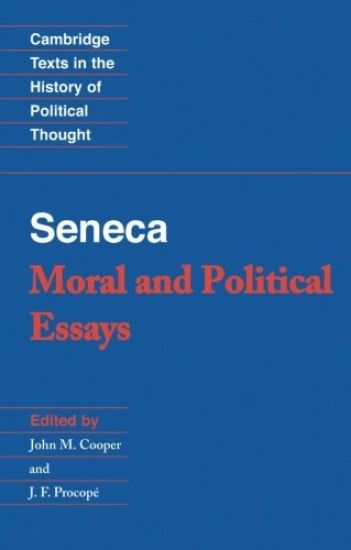
Seneca: Moral and Political Essays

Seneca: Moral and Political Essays

Seneca

Cambridge University Press
1995
pokkari
This volume offers clear and forceful contemporary translations of the most important of Seneca’s ‘Moral Essays’: On Anger, On Mercy, On the Private Life and the first four books of On Favours. They give an attractive, full picture of the social and moral outlook of an ancient Stoic thinker intimately involved in the governance of the Roman empire in the mid first century of the Christian era. A general introduction describes Seneca’s life and career and explains the fundamental ideas underlying the Stoic moral, social and political philosophy that informs the essays. Individual introductions, footnotes and biographical notes place the essays in their historical and philosophical contexts, and further assistance to students is provided by section headings in the translations which organize the principal transitions in the argument and the more unfamiliar aspects of Seneca’s writing.
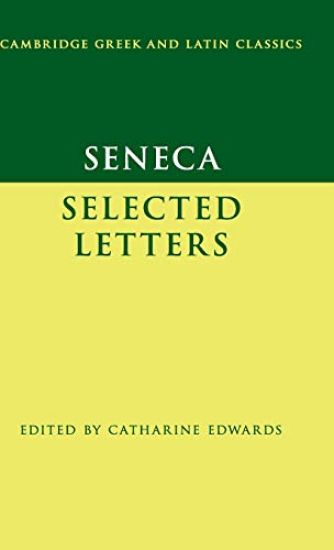
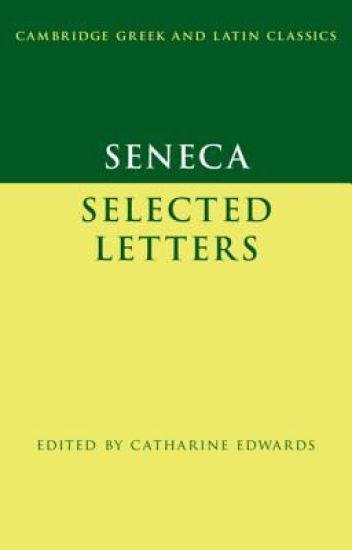
Seneca: Selected Letters

Seneca: Selected Letters

Seneca

Cambridge University Press
2019
sidottu
The letters of Seneca are uniquely engaging among the works that have survived from antiquity. They offer an urgent guide to Stoic self-improvement but also cast light on Roman attitudes towards slavery, gladiatorial combat and suicide. This selection of letters conveys their range and variety, with a particular focus on letters from the earlier part of the collection. As well as a general introduction, it features a brief introductory essay on each letter, which draws out its themes and sets it in context. The commentary explains the more challenging aspects of Seneca's Latin. It also casts light on his engagement with Stoic (and Epicurean) ideas, on the historical context within which the letters were written and on their literary sophistication. This edition will be invaluable for undergraduate and graduate students and scholars of Seneca's moral and intellectual development.
Seneca: Selected Letters

Seneca: Selected Letters

Seneca

Cambridge University Press
2019
pokkari
The letters of Seneca are uniquely engaging among the works that have survived from antiquity. They offer an urgent guide to Stoic self-improvement but also cast light on Roman attitudes towards slavery, gladiatorial combat and suicide. This selection of letters conveys their range and variety, with a particular focus on letters from the earlier part of the collection. As well as a general introduction, it features a brief introductory essay on each letter, which draws out its themes and sets it in context. The commentary explains the more challenging aspects of Seneca's Latin. It also casts light on his engagement with Stoic (and Epicurean) ideas, on the historical context within which the letters were written and on their literary sophistication. This edition will be invaluable for undergraduate and graduate students and scholars of Seneca's moral and intellectual development.
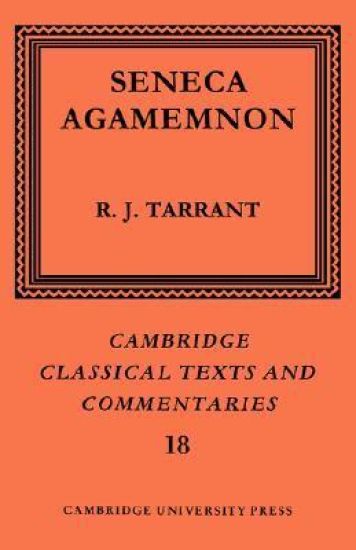
Seneca: Agamemnon

Seneca: Agamemnon

Seneca

Cambridge University Press
2004
pokkari
Seneca's tragedy Agamemnon is a brilliantly rhetorical piece, written for the study rather than the stage. In this edition Professor Tarrant provides a much needed critical text. In his introduction he discusses the sources, dating, structure and mode of production of Agamemnon and Senecan drama in general, and includes a detailed survey of the manuscript tradition. His commentary is the fullest yet published on a Senecan play and attempts both to interpret the text and to define the originality of Senecan drama by placing it in its proper literary context; it contains material illustrating Seneca's relationship to earlier Greek and Roman drama, Augustan poetry (Ovid's in particular), and the rhetoric of declamation. This edition will be welcomed by classical scholars and students of Latin poetry, and may also prove valuable to those interested in Seneca's influence on later European drama.
Seneca

Seneca

Seneca

Johns Hopkins University Press
1995
pokkari
Are there no limits to human cruelty? Is there any divine justice? Do the gods even matter if they do not occupy themselves with rewarding virtue and punishing wickedness? Seneca's plays might be dismissed as bombastic and extravagant answers to such questions-if so much of human history were not "Senecan" in its absurdity, melodrama, and terror. Here is an honest artist confronting the irrationality and cruelty of his world-the Rome of Caligula, Claudius, and Nero-and his art reflects the stress of the encounter. The surprise, perhaps, is that Seneca's world is so like our own.
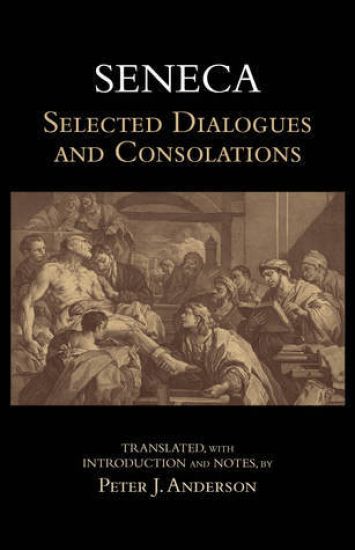
Seneca: Selected Dialogues and Consolations

Seneca: Selected Dialogues and Consolations

Seneca

Hackett Publishing Co, Inc
2015
nidottu
Seneca's dialogues--as his epistolary essays have traditionally been known--offer an ideal path into the philosophical thought of first-century Rome's most famous Stoic, whose compelled suicide in 65 CE (by order of his former pupil Emperor Nero) drew comparisons to the death of Socrates. Notable for, among other things, their portrait of a providential universe and defense of the life of virtue, the nine dialogues included in this volume illustrate the deeply intertwined cosmological and moral arguments of ancient Rome’s chief philosophical alternative to Epicureanism and Academic Skepticism. Peter J. Anderson's new translation conveys the distinctive character of Seneca's style, while striving for accuracy and consistency in its renderings of key terms. His Introduction discusses the dialogues as works of art and situates them in the context of ancient Stoic philosophy as well as the wider philosophical scene. Notes and a glossary are also included.
Seneca: Selected Dialogues and Consolations
The selections in this volume date from nearly the full span of Seneca's life: from the reign of Gaius Caligula (Consolation to Marcia, possibly On Providence); his exile under Claudius (Consolation to Polybius, Consolation to His Mother Helvia); either the last years of Claudius's reign or under Nero (On the Shortness of Life, On the Resolute Natu
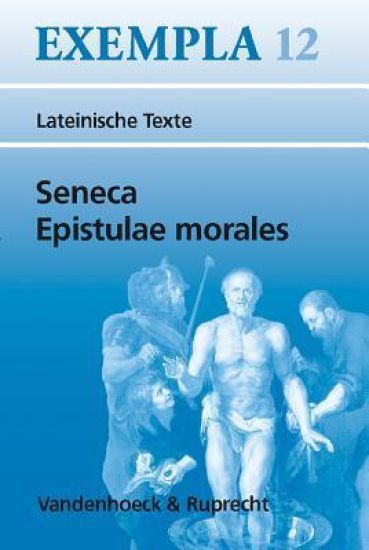
Seneca, Epistulae Morales

Seneca, Epistulae Morales

Seneca

Vandenhoeck Ruprecht GmbH Co KG
2010
nidottu
Die Ausgabe enthält Briefe zu folgenden Themen: Wozu Philosophie? / Briefstil und Philosophie / Zeit / Hinwendung zum höchsten Gut / Ratio und Gottesbegriff / Krankheit, Schmerz, Tod und ihre geistige Bewältigung / Freiheit im Angesicht des Todes / Natur- und vernunftgemäßes Leben / Einfluss des Reichens / Abhängigkeit von Materiellem / Abhängigkeit von Fortuna / Kritik am Körperkult und am Sport / Wahre Freude in Abgrenzung gegen Genusssucht / negativer Einfluss der Volksmenge.
Seneca. Elämän lyhyydestä
Ajankohtaista puhetta suoraan nykyajan ihmisen sieluun.Juhana Torkin suomentamat roomalaisen Senecan elämäntaidolliset tekstit puhuttelevat vuosituhansien takaa vahvasti nykyihmistä. Miten käyttää aika järkevästi? Miksi kiire on vahingollista? Miksi nautinnon tavoittelu ei johda onneen? Miksi hyville ihmisille tapahtuu pahoja asioita, ja mikä on paras tapa suhtautua epäonneen?Senecan vastaukset piirtävät eloisan kuvan antiikin Rooman elämästä, mutta ovat samalla ajattomia opetuksia kenelle tahansa meistä.
Four Tragedies and Octavia

Four Tragedies and Octavia

Seneca

Penguin Classics
2005
isokokoinen pokkari
Based on the legends used in Greek drama, Seneca's plays are notable for the exuberant ruthlessness with which disastrous events are foretold and then pursued to their tragic and often bloodthirsty ends. Thyestes depicts the menace of an ancestral curse hanging over two feuding brothers, while Phaedra portrays a woman tormented by fatal passion for her stepson. In The Trojan Women, the widowed Hecuba and Andromache await their fates at the hands of the conquering Greeks, and Oedipus follows the downfall of the royal House of Thebes. Octavia is a grim commentary on Nero's tyrannical rule and the execution of his wife, with Seneca himself appearing as an ineffective counsellor attempting to curb the atrocities of the emperor.