Kirjojen hintavertailu. Mukana 11 244 527 kirjaa ja 12 kauppaa.

Kirjahaku

Etsi kirjoja tekijän nimen, kirjan nimen tai ISBN:n perusteella.

3 kirjaa tekijältä Serge Gregory

Antosha and Levitasha

Antosha and Levitasha

Serge Gregory

Northern Illinois University Press
2015
pokkari
"Through meticulous scholarship and fine writerly craft, Gregory offers a riveting story of two creative geniuses at work."â• Slavonic and East European Journal Accessible and engaging, Antosha and Levitasha will appeal to scholars and general readers interested in art history, late nineteenth-century Russian culture, and biographies. Antosha and Levitasha is the first book in English devoted to the complex relationship between Anton Chekhov and Isaac Levitan, one of Russia's greatest landscape painters. Outside of Russia, a general lack of familiarity with Levitan's life and art has undermined an appreciation of the cultural significance of his friendship with Chekhov. Serge Gregory's highly readable study attempts to fill that gap for Western readers by examining a friendship that may have vacillated between periods of affection and animosity, but always reflected an unwavering shared aesthetic. In Russia, where entire rooms of galleries in Moscow and St. Petersburg are devoted to Levitan's paintings, the lives of the famous writer and the equally famous artist have long been tied together. To those familiar with the work of both men, it is evident that Levitan's "landscapes of mood" have much in common with the way that Chekhov's characters perceive nature as a reflection of their emotional state. Gregory focuses on three overarching themes: the artists' similar approach to depicting landscape; their romantic and social rivalries within their circle of friends, which included many of Moscow's leading cultural figures; and the influence of Levitan's personal life on Chekhov's stories and plays. He emphasizes the facts of Levitan's life and his place in late nineteenth-century Russian art, particularly with respect to his dual loyalties to the competing Itinerant and World of Art movements.
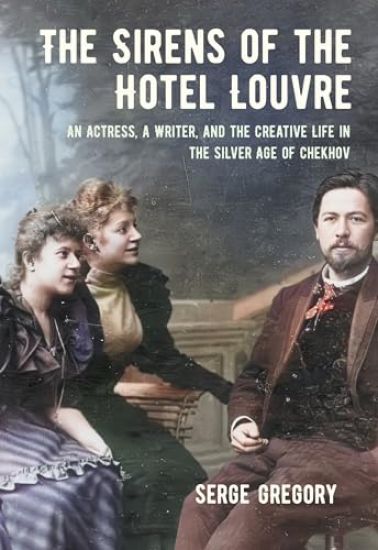
The Sirens of the Hotel Louvre

The Sirens of the Hotel Louvre

Serge Gregory

CORNELL UNIVERSITY PRESS
2025
sidottu
Combining history and biography, The Sirens of the Hotel Louvre focuses on the intimate relationship and professional collaboration between two creative women in Russia's Silver Age (1880s–1920). The actress Lidia Yavorskaya and the writer Tatiana Shchepkina-Kupernik overcame moral and social boundaries to assert themselves as successful artists. Their lives intersected with practically all the major theatrical entrepreneurs and artists of the period in Moscow and St. Petersburg, most notably Anton Chekhov. The opening in the 1880s of private theaters in Moscow and St. Petersburg resulted in an extraordinary flourishing of the dramatic arts, exposing theatergoers to the latest works by both Russian and Western European playwrights. In The Sirens of the Hotel Louvre, Yavorskaya and Shchepkina-Kupernik serve as guides to this remarkable artistic and literary world. Serge Gregory shows how their success in fashioning independent careers reflects the emergence of the theater as one of the few professional paths available for educated women in nineteenth-century Russia who wished to escape the constraints of traditional family life.
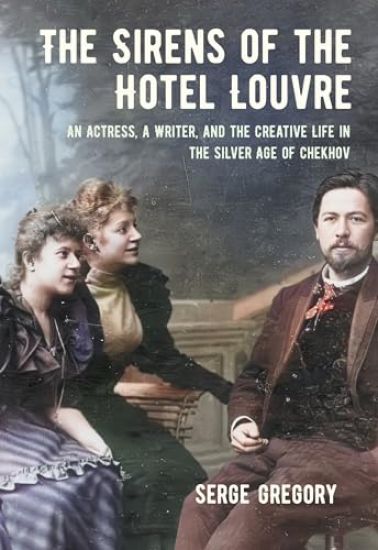
The Sirens of the Hotel Louvre

The Sirens of the Hotel Louvre

Serge Gregory

CORNELL UNIVERSITY PRESS
2025
pokkari
Combining history and biography, The Sirens of the Hotel Louvre focuses on the intimate relationship and professional collaboration between two creative women in Russia's Silver Age (1880s–1920). The actress Lidia Yavorskaya and the writer Tatiana Shchepkina-Kupernik overcame moral and social boundaries to assert themselves as successful artists. Their lives intersected with practically all the major theatrical entrepreneurs and artists of the period in Moscow and St. Petersburg, most notably Anton Chekhov. The opening in the 1880s of private theaters in Moscow and St. Petersburg resulted in an extraordinary flourishing of the dramatic arts, exposing theatergoers to the latest works by both Russian and Western European playwrights. In The Sirens of the Hotel Louvre, Yavorskaya and Shchepkina-Kupernik serve as guides to this remarkable artistic and literary world. Serge Gregory shows how their success in fashioning independent careers reflects the emergence of the theater as one of the few professional paths available for educated women in nineteenth-century Russia who wished to escape the constraints of traditional family life.