Kirjojen hintavertailu. Mukana 11 714 908 kirjaa ja 12 kauppaa.

Kirjahaku

Etsi kirjoja tekijän nimen, kirjan nimen tai ISBN:n perusteella.

10 kirjaa tekijältä Sergio Fabbrini

Compound Democracies

Compound Democracies

Sergio Fabbrini

Oxford University Press
2010
nidottu
This is a major new comparison of the American and European political systems. By deploying a powerful new model to analyse the two systems it draws some challenging conclusions about their increasing similarity. Professor Fabbrini argues that the process of regional integration in Europe over the last 60 years, has significantly reduced the historical differences between the democracies on either side of the Atlantic. The EU and the US are now similar because they represent two different species of the same political genus: the compound democracy. The defining feature of compound democracy is the union of states and their citizens. Through such union, the states agree to pool their sovereignty within a larger integrated supra-state or supranational framework. They do so because these unions are primarily pacts for avoiding war. Because the states which made those unions were, and continue to be, asymmetrically correlated, any attempt to create a unified polity - that is a political system where the decision-making power is monopolized by only one institution - is likely to fail. He goes on to argue that the US and the EU are based on a multiple diffusion of powers which guarantees that any interest can have a voice in the decision-making process and no majority will be able to control all the institutional levels of the polity. This type of system allows an inter-states organization to operate as a supra-state polity - but it does so at the expense of decision-making capacity and accountability.
Democracy and Federalism in the European Union and the United States
The European Union - a supranational system with its own institutional characteristics and autonomy - has a structure and functional logic which are more similar to those of the US than those of European nation states. Yet, by and large, the EU and the US tend to be analyzed more as potential geopolitical and economic rivals or allies than compared as institutional peers. By bringing together some of the most influential political scientists and historians to compare the European and American experiences of federalism, Democracy and Federalism in the European Union and the United States explores the future development, and seeks a better understanding, of a post-national European Union democracy. This book consists of three core parts: how the EU has developed and the implications of the process of European federalizationthe features of American federalism, tracing the intellectual debate that led to the approval of the American federal constitution in 1787the future of European Union.This is essential reading for all students of European politics, democracy and international relations.
Democracy and Federalism in the European Union and the United States
The European Union - a supranational system with its own institutional characteristics and autonomy - has a structure and functional logic which are more similar to those of the US than those of European nation states. Yet, by and large, the EU and the US tend to be analyzed more as potential geopolitical and economic rivals or allies than compared as institutional peers. By bringing together some of the most influential political scientists and historians to compare the European and American experiences of federalism, Democracy and Federalism in the European Union and the United States explores the future development, and seeks a better understanding, of a post-national European Union democracy. This book consists of three core parts: how the EU has developed and the implications of the process of European federalizationthe features of American federalism, tracing the intellectual debate that led to the approval of the American federal constitution in 1787the future of European Union.This is essential reading for all students of European politics, democracy and international relations.
America and Its Critics

America and Its Critics

Sergio Fabbrini

Polity Press
2008
sidottu
No other country in the world evokes such contrasting sentiments as the United States of America. This is not new, but it has become particularly virulent in recent years. The reason is simple: after the end of the cold war America has remained the only super power in the world. Or rather, it has become a veritable hyper-power without apparent limits to the exercise of its power. The fate of the world lies in large part in its hands. This book analyses the most widespread criticisms of American democracy – namely , that it is plebiscitary, devoid of voters, unduly favours the rich, and imperial. It shows that these criticisms fail to hit the mark. Yet even if its vices are fewer and different from what its critics often claim, American democracy cannot be read as an exemplary catalogue of virtues, as its apologists would have it. Resting on contradictions rather than coherence, American democracy cannot be seen as a model and even less as an ideology. Rather it should be understood as a method. Clearing away the misunderstandings and prejudices that cloud contemporary debates about America, this book brings out with exceptional clarity the strengths as well as the weaknesses of the American democratic experience. In a century when no country can hope to escape from the influence of American power, it is vital to understand both.
America and Its Critics

America and Its Critics

Sergio Fabbrini

Polity Press
2008
nidottu
No other country in the world evokes such contrasting sentiments as the United States of America. This is not new, but it has become particularly virulent in recent years. The reason is simple: after the end of the cold war America has remained the only super power in the world. Or rather, it has become a veritable hyper-power without apparent limits to the exercise of its power. The fate of the world lies in large part in its hands. This book analyses the most widespread criticisms of American democracy – namely , that it is plebiscitary, devoid of voters, unduly favours the rich, and imperial. It shows that these criticisms fail to hit the mark. Yet even if its vices are fewer and different from what its critics often claim, American democracy cannot be read as an exemplary catalogue of virtues, as its apologists would have it. Resting on contradictions rather than coherence, American democracy cannot be seen as a model and even less as an ideology. Rather it should be understood as a method. Clearing away the misunderstandings and prejudices that cloud contemporary debates about America, this book brings out with exceptional clarity the strengths as well as the weaknesses of the American democratic experience. In a century when no country can hope to escape from the influence of American power, it is vital to understand both.
A Federalist Alternative for European Governance

A Federalist Alternative for European Governance

Sergio Fabbrini

Cambridge University Press
2024
sidottu
How did the European Union (EU) deal with the crises of the 2010s and 2020s? These crises arose in policy realms that were the province of national governments, so the European Council was the driving institution for managing them. National governments were able to take decisions, but their decisions were contradictory and unaccountable, and regularly hindered by divisions between them. In order to manage a policymaking process dominated by the claims of national and sub-regional governments, Sergio Fabbrini argues that intergovernmental governance has had to transform the EU into an international organization. Fabbrini shows that differentiated integration would further distance the EU from the project of an 'ever closer union' and, on the basis of a comparative federalism approach, he proposes an alternative paradigm of a multi-tier Europe with a federalist core to balance national sovereignties and supranational authority.
A Federalist Alternative for European Governance

A Federalist Alternative for European Governance

Sergio Fabbrini

Cambridge University Press
2024
pokkari
How did the European Union (EU) deal with the crises of the 2010s and 2020s? These crises arose in policy realms that were the province of national governments, so the European Council was the driving institution for managing them. National governments were able to take decisions, but their decisions were contradictory and unaccountable, and regularly hindered by divisions between them. In order to manage a policymaking process dominated by the claims of national and sub-regional governments, Sergio Fabbrini argues that intergovernmental governance has had to transform the EU into an international organization. Fabbrini shows that differentiated integration would further distance the EU from the project of an 'ever closer union' and, on the basis of a comparative federalism approach, he proposes an alternative paradigm of a multi-tier Europe with a federalist core to balance national sovereignties and supranational authority.
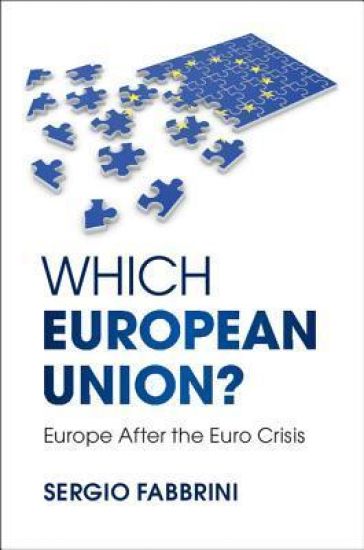
Which European Union?

Which European Union?

Sergio Fabbrini

Cambridge University Press
2015
sidottu
Sergio Fabbrini argues that the European Union (EU) is made up of states pursuing different aims, rather than simply moving in the same direction at different speeds. He describes the alternative perspectives on the EU (an economic community, an intergovernmental union, and a parliamentary union), that led to multiple compromises in its structure and shows how the Euro crisis has called them into question. The book argues that a new European political order is necessary to deal with the consequences of the crisis, based on an institutional differentiation between the EU member states interested only in market co-operation and those advancing towards a genuine economic and monetary union. Such a differentiation would allow the latter group to become a political union, conceptualised as a compound union of states and citizens, while preserving a revised framework of a single market in which both groups of states can participate.
Europe's Future

Europe's Future

Sergio Fabbrini

Cambridge University Press
2019
sidottu
Sergio Fabbrini proposes a way out of the EU's crises, which have triggered an unprecedented cleavage between 'sovereignist' and 'Europeanist' forces. The intergovernmental governance of the multiple crises of the past decade has led to a division on the very rationale of Europe's integration project. Sovereignism (the expression of nationalistic and populist forces) has demanded more decision-making autonomy for the EU member states, although Europeanism has struggled to make an effective case against this challenge. Fabbrini proposes a new perspective to release the EU from this predicament, involving the decoupling and reforming of the EU: on the one hand, the economic community of the single market (consisting of the current member states of the EU and of others interested in joining or re-joining it); and on the other, the political union (largely based on the eurozone reformed according to an original model of the federal union).
Europe's Future

Europe's Future

Sergio Fabbrini

Cambridge University Press
2019
pokkari
Sergio Fabbrini proposes a way out of the EU's crises, which have triggered an unprecedented cleavage between 'sovereignist' and 'Europeanist' forces. The intergovernmental governance of the multiple crises of the past decade has led to a division on the very rationale of Europe's integration project. Sovereignism (the expression of nationalistic and populist forces) has demanded more decision-making autonomy for the EU member states, although Europeanism has struggled to make an effective case against this challenge. Fabbrini proposes a new perspective to release the EU from this predicament, involving the decoupling and reforming of the EU: on the one hand, the economic community of the single market (consisting of the current member states of the EU and of others interested in joining or re-joining it); and on the other, the political union (largely based on the eurozone reformed according to an original model of the federal union).