Kirjojen hintavertailu. Mukana 12 016 292 kirjaa ja 12 kauppaa.

Kirjahaku

Etsi kirjoja tekijän nimen, kirjan nimen tai ISBN:n perusteella.

5 kirjaa tekijältä Seth C. Rasmussen

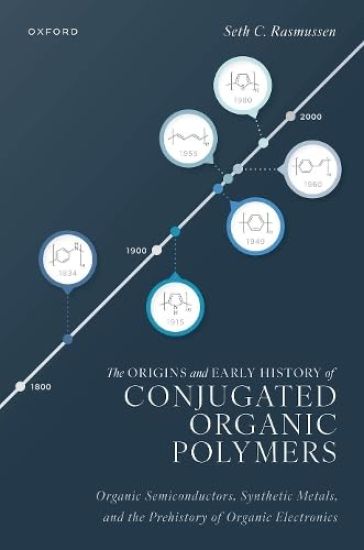
The Origins and Early History of Conjugated Organic Polymers

The Origins and Early History of Conjugated Organic Polymers

Seth C. Rasmussen

OXFORD UNIVERSITY PRESS INC
2025
sidottu
Conjugated organic polymers first drew significant interest in the late 1970s when metallic-looking plastic films of polyacetylene were shown to exhibit conductivities in the metallic regime after treatment with various oxidizing agents. These results formed the basis for awarding Alan MacDiarmid, Alan Heeger, and Hideki Shirakawa the 2000 Nobel Prize in Chemistry for the "for the discovery and development of electrically conductive polymers." However, reports of electrically conductive polymers date back to the early 1960s, with the study of conjugated polymers as a whole dating back to the early 19th century. The Origins and Early History of Conjugated Organic Polymers rethinks the accepted historical narrative of conjugated organic polymers, challenges the established interpretations, and provides new insights into these fascinating electronic materials. Using a range of reader-friendly figures, tables, and illustrations, this book charts the history of the first six primary parent polymers, beginning with the introduction of polyaniline in 1834 and continuing up through the development of polythiophenes and low bandgap polymers in the 1980s. Thought-provoking and original, The Origins and Early History of Conjugated Organic Polymers presents an authoritative history of the primary conjugated organic materials that now make up the foundations of a significant field of science and technology.
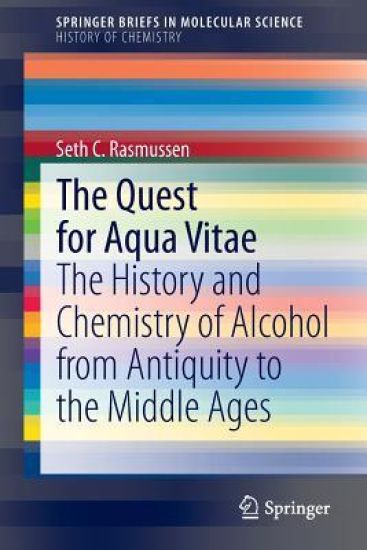
The Quest for Aqua Vitae

The Quest for Aqua Vitae

Seth C. Rasmussen

Springer International Publishing AG
2014
nidottu
Ethyl alcohol, or ethanol, is one of the most ubiquitous chemical compounds in the history of the chemical sciences. The generation of alcohol via fermentation is also one of the oldest forms of chemical technology, with the production of fermented beverages such as mead, beer and wine predating the smelting of metals. By the 12th century, the ability to isolate alcohol from wine had moved this chemical species from a simple component of alcoholic beverages to both a new medicine and a powerful new solvent. Of course, this also began the long tradition of production of liqueurs and strong spirits for consumption. The use of alcohol as a fuel, however, did not occur until significantly later periods. This volume presents a general overview of the early history and chemistry of alcohol production and isolation, as well as a discussion of its early uses in both the chemical arts and medicine.
Acetylene and Its Polymers

Acetylene and Its Polymers

Seth C. Rasmussen

Springer International Publishing AG
2018
nidottu
This Brief presents for the first time a detailed historical overview of the development of acetylene polymers, beginning with the initial discovery of acetylene in 1836 and continuing up through the 2000 Nobel Prize in Chemistry. The polymerization of acetylene is most commonly associated with polyacetylene, which was found to be conductive when treated with oxidizing agents such as Br2 or I2 in the mid-to-late 1970s. In fact, under the right conditions, oxidized polyacetylenes can exhibit conductivities into the metallic regime, thus providing the first example of an organic polymer exhibiting metallic conductivity. As a consequence, the 2000 Nobel Prize in Chemistry was awarded to Hideki Shirakawa, Alan MacDiarmid, and Alan Heeger for this pioneering research, the award citation reading “for the discovery and development of electrically conductive polymers.” Because of this, most incorrectly view polyacetylene, as well as conducting polymers in general, to originate in the 1970s. In this work, the author examines the polymerization of acetylene from early thermal polymerization studies to the ultimate production of the fully conjugated polyacetylene. Although true polyacetylene was not successfully produced until the 1950s by Giulio Natta, the polymerization of acetylene dates back to 1866 with the work of Marcellin Berthelot. These initial efforts were continued by a range of scientists to produce a polymeric material collectively given the name cuprene in 1900 by Paul Sabatier. Between the initial cuprene studies and the production of true polyacetylene, two related materials were also studied, usually referred to as polyenes and polyvinylenes. Although both of these materials could be thought of as forms of polyacetylene, neither was actually generated from the direct polymerization of acetylene. Readers will gain insight into the fact that polyacetylene and conducting organic polymers have a much longer history than commonly believed and involved the work of a significant number of Nobel Laureates.
How Glass Changed the World

How Glass Changed the World

Seth C. Rasmussen

Springer-Verlag Berlin and Heidelberg GmbH Co. K
2012
nidottu
Glass production is thought to date to ~2500 BC and had found numerous uses by the height of the Roman Empire. Yet the modern view of glass-based chemical apparatus (beakers, flasks, stills, etc.) was quite limited due to a lack of glass durability under rapid temperature changes and chemical attack. This “brief” gives an overview of the history and chemistry of glass technology from its origins in antiquity to its dramatic expansion in the 13th century, concluding with its impact on society in general, particularly its effect on chemical practices.