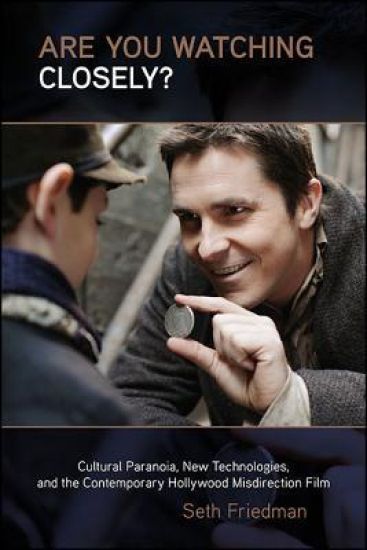
Identifies a new genre—misdirection films—and explains its appeal to contemporary producers and audiences.Are You Watching Closely? is the first book to explore the recent spate of "misdirection films," a previously unidentified Hollywood genre characterized by narratives that inspire viewers to reinterpret them retrospectively. Since 1990, Hollywood has backed more of these films than ever before, many of which, including The Sixth Sense (1999), A Beautiful Mind (2001), and Inception (2010), were both commercial and critical successes. Seth Friedman examines this genre in its sociocultural, industrial, and technological contexts to explain why it has become more attractive to producers and audiences.The recent popularity of misdirection films, Friedman argues, is linked to new technologies that enable repeat viewings and online discussion, which makes it enticing to an industry that depends increasingly on the aftermarket, as well as to historically specific cultural developments. That is, in addition to being well suited for shifting industrial and technological conditions, these films are appealing because they suggest that it remains possible to know what "actually" occurred and who was "really" responsible for events at a time when it is also becoming increasingly recognized that "truth" is relative. Are You Watching Closely? shows how Hollywood's effective strategies for these changing circumstances put it at the forefront of a storytelling trend that has increasingly become important across media. Through close analyses of how misdirection films have been designed, marketed, and received in relation to their contexts, Friedman demonstrates the ways in which they epitomize a kind of narrative experimentation that has become a crucial facet of twenty-first-century audiovisual storytelling.