Kirjojen hintavertailu. Mukana 11 518 949 kirjaa ja 12 kauppaa.

Kirjahaku

Etsi kirjoja tekijän nimen, kirjan nimen tai ISBN:n perusteella.

3 kirjaa tekijältä Seth Giddings

Toy Theory

Toy Theory

Seth Giddings

MIT PRESS LTD
2024
nidottu
A novel interpretation of the history and theory of technology from the perspective of toys, play, and play objects. Toy Theory addresses the relationships between toys and technology in two distinct, but overlapping ways: first, as under-examined cultural artifacts and behaviors with significant technical attributes, and secondly, as playful and toy-like dimensions of technology at large. Seth Giddings sets out a "toy theory" of technology that emphasizes the speculative, the experimental, and non-instrumental in technological paradigms and argues that children's playthings, rather than being the most ephemeral and inconsequential of technical devices, instead offer analytical and anthropological resources for understanding the materiality and imaginaries of technology over time. After defining toy theory in general and conceptual terms, Giddings examines different types of toys to explore shifting relationships between the microcosmic symbolic or mimetic content, material and technical constitution, and modes of play of toys and toy-related artifacts on the one hand, and prevailing, macrocosmic, technological paradigms and imaginaries on the other. Taking a broad historical and genealogical view, Giddings traces contemporary postdigital toy and play culture to precedents from the neolithic through to the Enlightenment to consumer culture from the early nineteenth century to the present day.
Gameworlds

Gameworlds

Seth Giddings

Bloomsbury Academic USA
2016
nidottu
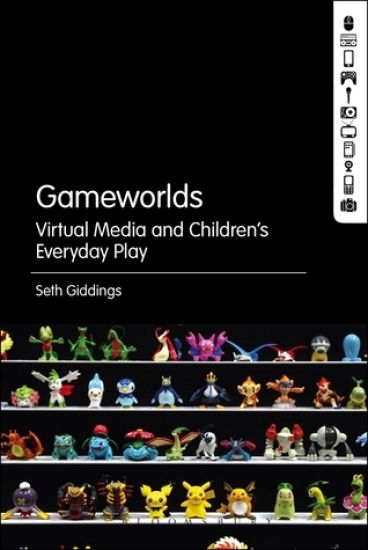
This book is open access and available on www.bloomsburycollections.com. It is funded by Knowledge Unlatched.Game studies is a rapidly developing field across the world, with a growing number of dedicated courses addressing video games and digital play as significant phenomena in contemporary everyday life and media cultures. Seth Giddings looks to fill a gap by focusing on the relationship between the actual and virtual worlds of play in everyday life. He addresses both the continuities and differences between digital play and longer-established modes of play. The 'gameworlds' title indicates both the virtual world designed into the videogame and the wider environments in which play is manifested: social relationships between players; hardware and software; between the virtual worlds of the game and the media universes they extend (e.g. Pokémon, Harry Potter, Lego, Star Wars); and the gameworlds generated by children's imaginations and creativity (through talk and role-play, drawings and outdoor play). The gameworld raises questions about who, and what, is in play. Drawing on recent theoretical work in science and technology studies, games studies and new media studies, a key theme is the material and embodied character of these gameworlds and their components (players' bodies, computer hardware, toys, virtual physics, and the physical environment). Building on detailed small-scale ethnographic case studies, Gameworlds is the first book to explore the nature of play in the virtual worlds of video games and how this play relates to, and crosses over into, everyday play in the actual world.
Gameworlds

Gameworlds

Seth Giddings

Bloomsbury Academic USA
2014
sidottu
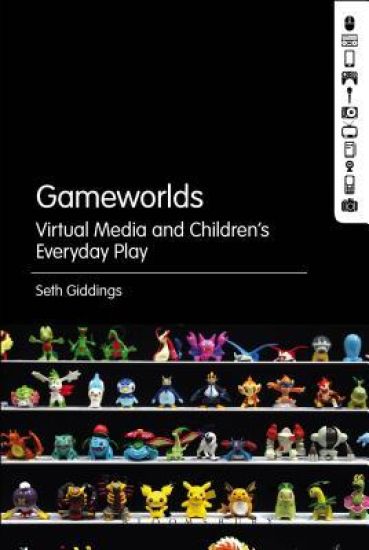
This book is open access and available on www.bloomsburycollections.com. It is funded by Knowledge Unlatched.Game studies is a rapidly developing field across the world, with a growing number of dedicated courses addressing video games and digital play as significant phenomena in contemporary everyday life and media cultures. Seth Giddings looks to fill a gap by focusing on the relationship between the actual and virtual worlds of play in everyday life. He addresses both the continuities and differences between digital play and longer-established modes of play. The 'gameworlds' title indicates both the virtual world designed into the videogame and the wider environments in which play is manifested: social relationships between players; hardware and software; between the virtual worlds of the game and the media universes they extend (e.g. Pokémon, Harry Potter, Lego, Star Wars); and the gameworlds generated by children's imaginations and creativity (through talk and role-play, drawings and outdoor play). The gameworld raises questions about who, and what, is in play. Drawing on recent theoretical work in science and technology studies, games studies and new media studies, a key theme is the material and embodied character of these gameworlds and their components (players' bodies, computer hardware, toys, virtual physics, and the physical environment). Building on detailed small-scale ethnographic case studies, Gameworlds is the first book to explore the nature of play in the virtual worlds of video games and how this play relates to, and crosses over into, everyday play in the actual world.