Kirjojen hintavertailu. Mukana 11 244 527 kirjaa ja 12 kauppaa.

Kirjahaku

Etsi kirjoja tekijän nimen, kirjan nimen tai ISBN:n perusteella.

18 kirjaa tekijältä Seth Lerer

Tradition: A Feeling for the Literary Past

Tradition: A Feeling for the Literary Past

Seth Lerer

Oxford University Press
2016
nidottu
The Literary Agenda is a series of short polemical monographs about the importance of literature and of reading in the wider world and about the state of literary education inside schools and universities. The category of 'the literary' has always been contentious. What is clear, however, is how increasingly it is dismissed or is unrecognised as a way of thinking or an arena for thought. It is sceptically challenged from within, for example, by the sometimes rival claims of cultural history, contextualized explanation, or media studies. It is shaken from without by even greater pressures: by economic exigency and the severe social attitudes that can follow from it; by technological change that may leave the traditional forms of serious human communication looking merely antiquated. For just these reasons this is the right time for renewal, to start reinvigorated work into the meaning and value of literary reading. Seth Lerer presents an original take on tradition in the literary imagination. He asks how we can have an unironic, affective relationship to the literary past in an age marked by historical self-consciousness, critical distance, and shifts in cultural literacy. Tradition: A Feeling for the Literary Past ranges through a set of fiction, poetry, and criticism that makes up our inherited traditions and that also confronts the question of a literary canon and its personal and historical meaning. How are we taught to have a felt experience of literary objects? How do we make our personal anthologies of reading to shape social selves? Why should we care about what literature does both to and for us? This book affirms the value of close and nuanced reading for our understanding of both past and present. Its larger goal is to explore the ways in which the literary past makes us, and in the process, how we create canons for reading, teaching, and scholarship. The writers discussed here were all great readers. Dickens and Orwell, Rushdie and Bradbury, Dickinson and Frost, Anne Bradstreet and Gjertrud Schnackenberg, Chaucer, Dante, Virgil--they all built their literary structures on the scaffold of their bookshelves. Lerer demonstrates how reading the past generates the literary present, and imagines our literate future.
Prospero's Son

Prospero's Son

Seth Lerer

University of Chicago Press
2013
sidottu
This book is the record of a struggle between two temperaments, two consciousnesses and almost two epochs." That's how Edmund Gosse opened "Father and Son", the classic 1907 book about his relationship with his father. Seth Lerer's "Prospero's Son" is, as fits our latter days, altogether more complicated, layered, and multivalent, but at its heart is that same problem: the fraught relationship between fathers and sons. At the same time, Lerer's memoir is about the power of books and theater, the excitement of stories in a young man's life, and the transformative magic of words and performance. A flamboyantly performative father, a teacher and lifelong actor, comes to terms with his life as a gay man. A bookish boy becomes a professor of literature and an acclaimed expert on the very children's books that set him on his path in the first place. And when that boy grows up, he learns how hard it is to be a father and how much books can, and cannot, instruct him. Throughout these intertwined accounts of changing selves, Lerer returns again and again to stories - the ways they teach us about discovery, deliverance, forgetting, and remembering. "A child is a man in small letter," wrote Bishop John Earle in the seventeenth century. "His father hath writ him as his own little story." With "Prospero's Son", Seth Lerer acknowledges the author of his story while simultaneously reminding us that we all confront the blank page of life on our own, as authors of our lives.
Prospero's Son

Prospero's Son

Seth Lerer

University of Chicago Press
2014
nidottu
Seth Lerer's moving memoir Prospero's Son is rooted in the age-old problem of the fraught relationship between fathers and sons. But at the same time, it is about the power of books and theater, the excitement of stories in a young man's life, and the transformative magic of words and performance. A flamboyantly performative father, a teacher and lifelong actor, comes to terms with his life as a gay man. A bookish boy becomes a professor of literature and an acclaimed expert on the very children's books that set him on his path in the first place. And when that boy grows up, he learns how hard it is to be a father and just how much books can - and cannot - instruct him. Throughout these intertwined accounts of changing selves, Lerer returns again and again to stories - the ways they teach us about discovery, deliverance, forgetting, and remembering.
Children`s Literature – A Reader`s History, from Aesop to Harry Potter
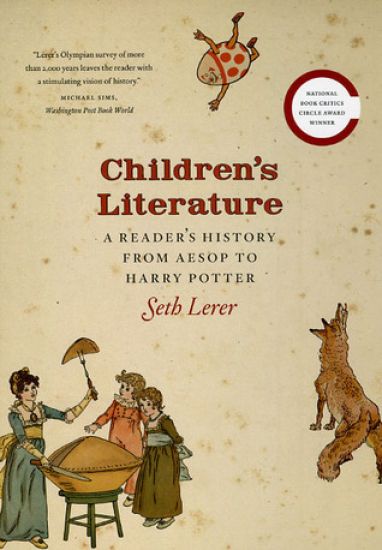
Ever since children have learned to read, there has been children's literature. Seth Lerer here charts the makings of the Western literary imagination from Aesop's fables to Mother Goose, from Alice's Adventures in Wonderland to Peter Pan, from "Where the Wild Things Are" to "Harry Potter". The only single-volume work to capture the rich and diverse history of children's literature in its full panorama, this extraordinary book reveals why J. R. R. Tolkien, Dr. Seuss, Laura Ingalls Wilder, Beatrix Potter, and many others, despite their divergent styles and subject matter, have all resonated with generations of readers. "Children's Literature" is an exhilarating quest across centuries, continents, and genres to discover how, and why, we first fall in love with the written word.
Children's Literature

Children's Literature

Seth Lerer

University of Chicago Press
2009
nidottu
Ever since children have learned to read, there has been children's literature. Seth Lerer here charts the makings of the Western literary imagination from Aesop's fables to Mother Goose, from Alice's Adventures in Wonderland to Peter Pan, from "Where the Wild Things Are" to "Harry Potter". The only single-volume work to capture the rich and diverse history of children's literature in its full panorama, this extraordinary book reveals why J. R. R. Tolkien, Dr. Seuss, Laura Ingalls Wilder, Beatrix Potter, and many others, despite their divergent styles and subject matter, have all resonated with generations of readers. "Children's Literature" is an exhilarating quest across centuries, continents, and genres to discover how, and why, we first fall in love with the written word.
Shakespeare's Lyric Stage

Shakespeare's Lyric Stage

Seth Lerer

University of Chicago Press
2018
sidottu
What does it mean to have an emotional response to poetry and music? And, just as important but considered less often, what does it mean not to have such a response? What happens when lyric utterances—which should invite consolation, revelation, and connection—somehow fall short of the listener’s expectations? As Seth Lerer shows in this pioneering book, Shakespeare’s late plays invite us to contemplate that very question, offering up lyric as a displaced and sometimes desperate antidote to situations of duress or powerlessness. Lerer argues that the theme of lyric misalignment running throughout The Tempest, The Winter’s Tale, Henry VIII, and Cymbeline serves a political purpose, a last-ditch effort at transformation for characters and audiences who had lived through witch-hunting, plague, regime change, political conspiracies, and public executions. A deep dive into the relationship between aesthetics and politics, this book also explores what Shakespearean lyric is able to recuperate for these “victims of history” by virtue of its disjointed utterances. To this end, Lerer establishes the concept of mythic lyricism: an estranging use of songs and poetry that functions to recreate the past as present, to empower the mythic dead, and to restore a bit of magic to the commonplaces and commodities of Jacobean England. Reading against the devotion to form and prosody common in Shakespeare scholarship, Lerer’s account of lyric utterance’s vexed role in his late works offers new ways to understand generational distance and cultural change throughout the playwright’s oeuvre.
Shakespeare's Lyric Stage

Shakespeare's Lyric Stage

Seth Lerer

University of Chicago Press
2018
nidottu
What does it mean to have an emotional response to poetry and music? And, just as important but considered less often, what does it mean not to have such a response? What happens when lyric utterances—which should invite consolation, revelation, and connection—somehow fall short of the listener’s expectations? As Seth Lerer shows in this pioneering book, Shakespeare’s late plays invite us to contemplate that very question, offering up lyric as a displaced and sometimes desperate antidote to situations of duress or powerlessness. Lerer argues that the theme of lyric misalignment running throughout The Tempest, The Winter’s Tale, Henry VIII, and Cymbeline serves a political purpose, a last-ditch effort at transformation for characters and audiences who had lived through witch-hunting, plague, regime change, political conspiracies, and public executions. A deep dive into the relationship between aesthetics and politics, this book also explores what Shakespearean lyric is able to recuperate for these “victims of history” by virtue of its disjointed utterances. To this end, Lerer establishes the concept of mythic lyricism: an estranging use of songs and poetry that functions to recreate the past as present, to empower the mythic dead, and to restore a bit of magic to the commonplaces and commodities of Jacobean England. Reading against the devotion to form and prosody common in Shakespeare scholarship, Lerer’s account of lyric utterance’s vexed role in his late works offers new ways to understand generational distance and cultural change throughout the playwright’s oeuvre.
Error and the Academic Self

Error and the Academic Self

Seth Lerer

Columbia University Press
2003
sidottu
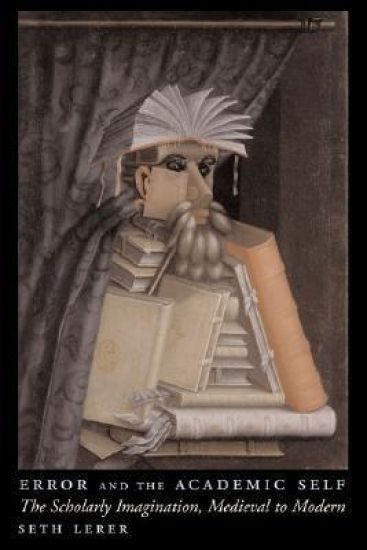
How and why did the academic style of writing, with its emphasis on criticism and correctness, develop? Seth Lerer suggests that the answer lies in medieval and Renaissance philology and, more specifically, in mistakes. For Lerer, erring is not simply being wrong, but being errant, and this book illuminates the wanderings of exiles, emigres, dissenters, and the socially estranged as they helped form the modern university disciplines of philology and rhetoric, literary criticism, and literary theory. Examining a diverse group that includes Thomas More, Stephen Greenblatt, George Hickes, Seamus Heaney, George Eliot, and Paul de Man, Error and the Academic Self argues that this critical abstraction from society and retreat into ivory towers allowed estranged individuals to gain both a sense of private worth and the public legitimacy of a professional identity.
Error and the Academic Self

Error and the Academic Self

Seth Lerer

Columbia University Press
2003
pokkari
How and why did the academic style of writing, with its emphasis on criticism and correctness, develop? Seth Lerer suggests that the answer lies in medieval and Renaissance philology and, more specifically, in mistakes. For Lerer, erring is not simply being wrong, but being errant, and this book illuminates the wanderings of exiles, emigres, dissenters, and the socially estranged as they helped form the modern university disciplines of philology and rhetoric, literary criticism, and literary theory. Examining a diverse group that includes Thomas More, Stephen Greenblatt, George Hickes, Seamus Heaney, George Eliot, and Paul de Man, Error and the Academic Self argues that this critical abstraction from society and retreat into ivory towers allowed estranged individuals to gain both a sense of private worth and the public legitimacy of a professional identity.
Inventing English

Inventing English

Seth Lerer

Columbia University Press
2007
sidottu
Why is there such a striking difference between English spelling and English pronunciation? How did our seemingly relatively simple grammar rules develop? What are the origins of regional dialect, literary language, and everyday speech, and what do they have to do with you? Seth Lerer's Inventing English is a masterful, engaging history of the English language from the age of Beowulf to the rap of Eminem. Many have written about the evolution of our grammar, pronunciation, and vocabulary, but only Lerer situates these developments in the larger history of English, America, and literature. Lerer begins in the seventh century with the poet Caedmon learning to sing what would become the earliest poem in English. He then looks at the medieval scribes and poets who gave shape to Middle English. He finds the traces of the Great Vowel Shift in the spelling choices of letter writers of the fifteenth century and explores the achievements of Samuel Johnson's Dictionary of 1755 and The Oxford English Dictionary of the late nineteenth and early twentieth centuries. He describes the differences between English and American usage and, through the example of Mark Twain, the link between regional dialect and race, class, and gender. Finally, he muses on the ways in which contact with foreign languages, popular culture, advertising, the Internet, and e-mail continue to shape English for future generations. Each concise chapter illuminates a moment of invention-a time when people discovered a new form of expression or changed the way they spoke or wrote. In conclusion, Lerer wonders whether globalization and technology have turned English into a world language and reflects on what has been preserved and what has been lost. A unique blend of historical and personal narrative, Inventing English is the surprising tale of a language that is as dynamic as the people to whom it belongs.
Inventing English

Inventing English

Seth Lerer

Columbia University Press
2015
pokkari
Seth Lerer tells a masterful history of the English language from the age of Beowulf to the rap of Eminem. Many have written about the evolution of grammar, pronunciation, and vocabulary, but only Lerer situates these developments within the larger history of English, America, and literature. This edition features a new chapter on the influence of biblical translation and an epilogue on the relationship of English speech to writing. A unique blend of historical and personal narrative, Inventing English is the surprising tale of a language that is as dynamic as the people to whom it belongs.
Courtly Letters in the Age of Henry VIII

Courtly Letters in the Age of Henry VIII

Seth Lerer

Cambridge University Press
2006
pokkari
This revisionary study of the origins of courtly poetry reveals the culture of spectatorship and voyeurism that shaped early Tudor English literary life. Through research into the reception of Chaucer's Troilus and Criseyde, it demonstrates how Pandarus became the model of the early modern courtier. His blend of counsel, secrecy and eroticism informed the behaviour of poets, lovers, diplomats and even Henry VIII himself. In close readings of the poetry of Hawes and Skelton, the drama of the court, the letters of Henry VIII to Anne Boleyn, the writings of Thomas Wyatt, and manuscript anthologies and early printed books, Seth Lerer illuminates a 'Pandaric' world of displayed bodies, surreptitious letters and transgressive performances. In the process, he redraws the boundaries between the medieval and the Renaissance and illustrates the centrality of the verse epistle to the construction of subjectivity.
Courtly Letters in the Age of Henry VIII

Courtly Letters in the Age of Henry VIII

Seth Lerer

Cambridge University Press
1997
sidottu
This revisionary study of the origins of courtly poetry reveals the culture of spectatorship and voyeurism that shaped early Tudor English literary life. Through new research into the reception of Chaucer’s Troilus and Criseyde, it demonstrates how Pandarus became the model of the early modern courtier. His blend of counsel, secrecy, and eroticism informed the behaviour of poets, lovers, diplomats, and even Henry VIII himself. In close readings of the poetry of Hawes and Skelton, the drama of the court, the letters of Henry VIII to Anne Boleyn, the writings of Thomas Wyatt, and manuscript anthologies and early printed books, Seth Lerer illuminates a ‘Pandaric’ world of displayed bodies, surreptitious letters, and transgressive performances. In the process, he redraws the boundaries between the medieval and the Renaissance and illustrates the centrality of the verse epistle to the construction of subjectivity.
Chaucer and His Readers

Chaucer and His Readers

Seth Lerer

Princeton University Press
1996
pokkari
Challenging the view that the fifteenth century was the "Drab Age" of English literary history, Seth Lerer seeks to recover the late-medieval literary system that defined the canon of Chaucer's work and the canonical approaches to its understanding. Lerer shows how the poets, scribes, and printers of the period constructed Chaucer as the "poet laureate" and "father" of English verse. Chaucer appears throughout the fifteenth century as an adviser to kings and master of technique, and Lerer reveals the patterns of subjection, childishness, and inability that characterize the stance of Chaucer's imitators and his readers. In figures from the Canterbury Tales such as the abused Clerk, the boyish Squire, and the infantilized narrator of the "Tale of Sir Thopas," in the excuse-ridden narrator of Troilus and Criseyde, and in Chaucer's cursed Adam Scriveyn, the poet's inheritors found their oppressed personae. Through close readings of poetry from Lydgate to Skelton, detailed analysis of manuscript anthologies and early printed books, and inquiries into the political environments and the social contexts of bookmaking, Lerer charts the construction of a Chaucer unassailable in rhetorical prowess and political sanction, a Chaucer aureate and laureate.
Boethius and Dialogue

Boethius and Dialogue

Seth Lerer

Princeton University Press
2014
pokkari
This book treats Boethius' Consolation of Philosophy as a work of imaginative literature, and applies modern techniques of criticism to his writings. The author's central purpose is to demonstrate the methodological and thematic coherence of The Consolation of Philosophy. Originally published in 1985. The Princeton Legacy Library uses the latest print-on-demand technology to again make available previously out-of-print books from the distinguished backlist of Princeton University Press. These editions preserve the original texts of these important books while presenting them in durable paperback and hardcover editions. The goal of the Princeton Legacy Library is to vastly increase access to the rich scholarly heritage found in the thousands of books published by Princeton University Press since its founding in 1905.
Boethius and Dialogue

Boethius and Dialogue

Seth Lerer

Princeton University Press
2016
sidottu
This book treats Boethius' Consolation of Philosophy as a work of imaginative literature, and applies modern techniques of criticism to his writings. The author's central purpose is to demonstrate the methodological and thematic coherence of The Consolation of Philosophy. Originally published in 1985. The Princeton Legacy Library uses the latest print-on-demand technology to again make available previously out-of-print books from the distinguished backlist of Princeton University Press. These editions preserve the original texts of these important books while presenting them in durable paperback and hardcover editions. The goal of the Princeton Legacy Library is to vastly increase access to the rich scholarly heritage found in the thousands of books published by Princeton University Press since its founding in 1905.
Introducing the History of the English Language
This essential new text provides a comprehensive, modern account of how the English language originated, developed, changed, and continues to morph into new forms in contemporary society. Introducing the History of the English Language first offers a rigorous, approachable introduction to the building blocks of language itself and then traces English language usage’s messy development in society, beginning with its origins in the Indo-European language family and continuing chronologically through the Old, Middle, Modern, and present-day forms.Seth Lerer deftly tells this story not as a tale of standards and authority but of differences and diversity. He draws on public and private literary sources from different regions and those in different social classes, highlighting sources from women and people of color – and introduces readers to the effects of technology on English, and the politics of dialect and racial, gender, regional, and class identity across these periods. Further, this text extensively addresses the rich diversity of English varieties, with innovative, focused chapters dedicated to American English, African American English, Global English, and Virtual English.Requiring no prior knowledge of language history or linguistics, offering an array of supplemental activities as online support material, and taking a socially motivated approach to pedagogy that seeks to generate productive reflection and discussion about language difference and politics, this book enables and encourages the twenty-first century student in the United States to see their own language use as deeply implicated in power dynamics and social relationships.
Introducing the History of the English Language
This essential new text provides a comprehensive, modern account of how the English language originated, developed, changed, and continues to morph into new forms in contemporary society. Introducing the History of the English Language first offers a rigorous, approachable introduction to the building blocks of language itself and then traces English language usage’s messy development in society, beginning with its origins in the Indo-European language family and continuing chronologically through the Old, Middle, Modern, and present-day forms.Seth Lerer deftly tells this story not as a tale of standards and authority but of differences and diversity. He draws on public and private literary sources from different regions and those in different social classes, highlighting sources from women and people of color – and introduces readers to the effects of technology on English, and the politics of dialect and racial, gender, regional, and class identity across these periods. Further, this text extensively addresses the rich diversity of English varieties, with innovative, focused chapters dedicated to American English, African American English, Global English, and Virtual English.Requiring no prior knowledge of language history or linguistics, offering an array of supplemental activities as online support material, and taking a socially motivated approach to pedagogy that seeks to generate productive reflection and discussion about language difference and politics, this book enables and encourages the twenty-first century student in the United States to see their own language use as deeply implicated in power dynamics and social relationships.