Kirjojen hintavertailu. Mukana 11 342 296 kirjaa ja 12 kauppaa.

Kirjahaku

Etsi kirjoja tekijän nimen, kirjan nimen tai ISBN:n perusteella.

5 kirjaa tekijältä Seth Masket

The Inevitable Party

The Inevitable Party

Seth Masket

Oxford University Press Inc
2016
sidottu
Seth Masket's The Inevitable Party is a study of anti-party reforms and why they fail. Numerous reform movements over the past century have designated parties as the enemy of democracy, and they have found a willing ally in the American people in their efforts to rein in and occasionally root out parties. Masket investigates several of these anti-party reform efforts - from open primaries to campaign finance restrictions to nonpartisan legislatures - using legislative roll call votes, campaign donations patterns, and extensive interviews with local political elites. These cases each demonstrate parties adapting to, and sometimes thriving amidst, reforms designed to weaken or destroy them. The reason for these reforms' failures, the book argues, is that they proceed from an incorrect conception of just what a party is. Parties are not rigid structures that can be wished or legislated away; they are networks of creative and adaptive policy demanders who use their influence to determine just what sorts of people get nominated for office. Even while these reforms tend to fail, however, they impose considerable costs on society, usually reducing transparency and accountability in politics and government.
The Inevitable Party

The Inevitable Party

Seth Masket

Oxford University Press Inc
2016
nidottu
Seth Masket's The Inevitable Party is a study of anti-party reforms and why they fail. Numerous reform movements over the past century have designated parties as the enemy of democracy, and they have found a willing ally in the American people in their efforts to rein in and occasionally root out parties. Masket investigates several of these anti-party reform efforts - from open primaries to campaign finance restrictions to nonpartisan legislatures - using legislative roll call votes, campaign donations patterns, and extensive interviews with local political elites. These cases each demonstrate parties adapting to, and sometimes thriving amidst, reforms designed to weaken or destroy them. The reason for these reforms' failures, the book argues, is that they proceed from an incorrect conception of just what a party is. Parties are not rigid structures that can be wished or legislated away; they are networks of creative and adaptive policy demanders who use their influence to determine just what sorts of people get nominated for office. Even while these reforms tend to fail, however, they impose considerable costs on society, usually reducing transparency and accountability in politics and government.
No Middle Ground

No Middle Ground

Seth Masket

The University of Michigan Press
2011
nidottu
“This is a fascinating book. It is one of the best studies of the ways that parties and politics get conducted in any American state. Masket shows that legislators can be perfectly content without parties that control agendas and does a terrific job of explaining the transition from free-wheeling legislators to rigidly partisan voting blocs.”—Sam Popkin, University of California at San Diego“No Middle Ground makes a significant contribution to the study of American parties and legislative politics.”—Matthew Green, Catholic University of AmericaDespite concerns about the debilitating effects of partisanship on democratic government, in recent years political parties have gained strength in state governments as well as in Washington. In many cases these parties function as machines. Unlike machines of the past that manipulated votes, however, today’s machines determine which candidates can credibly compete in a primary.Focusing on the history and politics of California, Seth E. Masket reveals how these machines evolved and how they stay in power by directing money, endorsements, and expertise to favored candidates, who often tend toward the ideological extreme. In a provocative conclusion, Masket argues that politicians are not inherently partisan. Instead, partisanship is thrust upon them by actors outside the government with the power to manipulate primary elections.
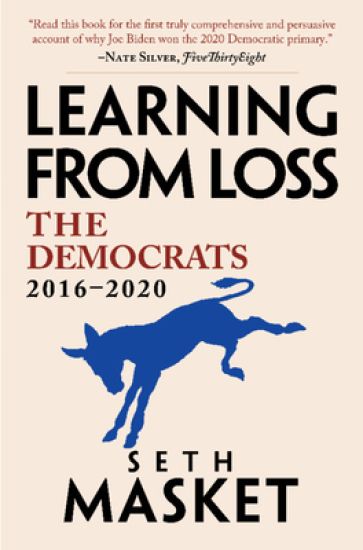
Learning from Loss

Learning from Loss

Seth Masket

Cambridge University Press
2020
sidottu
The Democrats' decision to nominate Joe Biden for 2020 was hardly a fluke but rather a strategic choice by a party that had elevated electability above all other concerns. In Learning from Loss, one of the nation's leading political analysts offers unique insight into the Democratic Party at a moment of uncertainty. Between 2017 and 2020, Seth Masket spoke with Democratic Party activists and followed the behavior of party leaders and donors to learn how the party was interpreting the 2016 election and thinking about a nominee for 2020. Masket traces the persistence of party factions and shows how interpretations of 2016 shaped strategic choices for 2020. Although diverse narratives emerged to explain defeat in 2016 - ranging from a focus on 'identity politics' to concerns about Clinton as a flawed candidate - these narratives collectively cleared the path for Biden.
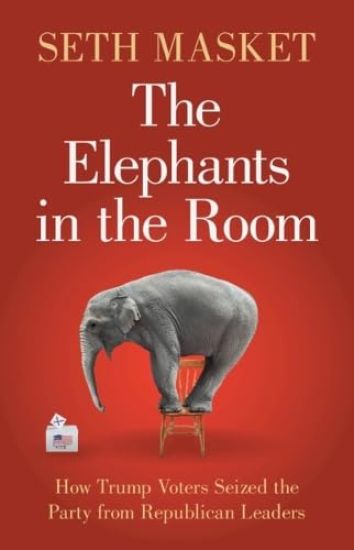
The Elephants in the Room

The Elephants in the Room

Seth Masket

Cambridge University Press
2026
sidottu
The 2024 nomination of Donald Trump was both predictable and wildly unusual. Parties almost never nominate someone who has previously lost the presidency - let alone a candidate who helped organize a riot and faced dozens of criminal indictments. Why, then, did Republicans nominate Trump for a third time? In this fascinating follow-up to Learning from Loss, leading scholar and political analyst Seth Masket conducted surveys and interviews with local Republican leaders across the country between 2021 and 2024. He finds that most were deeply wary of nominating Trump again but had lost any control they once had over their party to a passionate core of voters. The Elephants in the Room captures a political party in the act of making a fateful decision; attempts to understand what has happened within the Republican Party in recent years by focusing on the people most critical to it; and looks at how the party has changed, what we should be learning from it, and how the US political system has changed as result.