Kirjojen hintavertailu. Mukana 12 093 627 kirjaa ja 12 kauppaa.

Kirjahaku

Etsi kirjoja tekijän nimen, kirjan nimen tai ISBN:n perusteella.

3 kirjaa tekijältä Shahid Amin

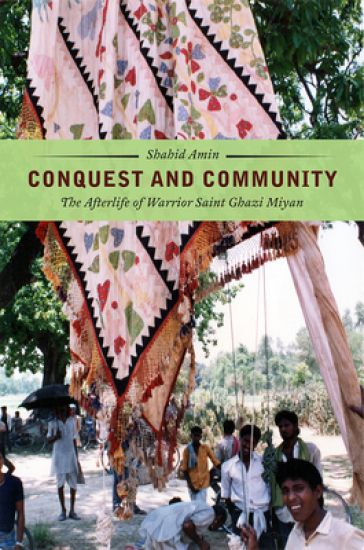
Conquest and Community

Conquest and Community

Shahid Amin

University of Chicago Press
2016
sidottu
Few topics in South Asian history are as contentious as that of the Turkic conquest of the Indian subcontinent that began in the twelfth century and led to a long period of Muslim rule. How is a historian supposed to write honestly about the bloody history of the conquest without falling into communitarian traps? Conquest and Community is Shahid Amin's answer. Covering more than eight hundred years of history, the book centers on the enduringly popular saint Ghazi Miyan, a youthful soldier of Islam whose shrines are found all over India. Amin details the warrior saint's legendary exploits, then tracks the many ways he has been commemorated in the centuries since. The intriguing stories, ballads, and proverbs that grew up around Ghazi Miyan were, Amin shows, a way of domesticating the conquest recognizing past conflicts and differences but nevertheless bringing diverse groups together into a community of devotees. What seems at first glance to be the story of one mythical figure becomes an allegory for the history of Hindu-Muslim relations over an astonishingly long period of time, and a timely contribution to current political and historical debates.

Conquest and Community

Conquest and Community

Shahid Amin

University of Chicago Press
2016
nidottu
Few topics in South Asian history are as contentious as that of the Turkic conquest of the Indian subcontinent that began in the twelfth century and led to a long period of Muslim rule. How is a historian supposed to write honestly about the bloody history of the conquest without falling into communitarian traps? Conquest and Community is Shahid Amin's answer. Covering more than eight hundred years of history, the book centers on the enduringly popular saint Ghazi Miyan, a youthful soldier of Islam whose shrines are found all over India. Amin details the warrior saint's legendary exploits, then tracks the many ways he has been commemorated in the centuries since. The intriguing stories, ballads, and proverbs that grew up around Ghazi Miyan were, Amin shows, a way of domesticating the conquest recognizing past conflicts and differences but nevertheless bringing diverse groups together into a community of devotees. What seems at first glance to be the story of one mythical figure becomes an allegory for the history of Hindu-Muslim relations over an astonishingly long period of time, and a timely contribution to current political and historical debates.
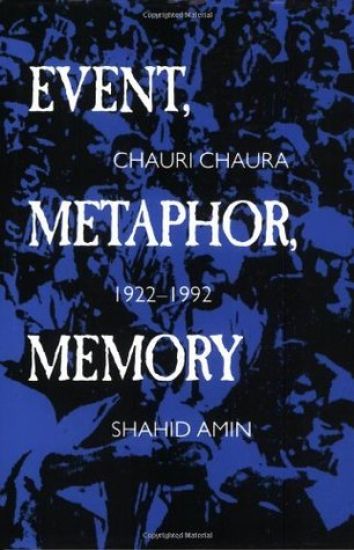
Event, Metaphor, Memory

Event, Metaphor, Memory

Shahid Amin

University of California Press
1995
pokkari
Taking Gandhi's statements about civil disobedience to heart, in February 1922 residents from the villages around the north Indian market town of Chauri Chaura attacked the local police station, burned it to the ground and murdered twenty-three constables. Appalled that his teachings were turned to violent ends, Gandhi called off his Noncooperation Movement and fasted to bring the people back to nonviolence. In the meantime, the British government denied that the riot reflected Indian resistance to its rule and tried the rioters as common criminals. These events have taken on great symbolic importance among Indians, both in the immediate region and nationally. Amin examines the event itself, but also, more significantly, he explores the ways it has been remembered, interpreted, and used as a metaphor for the Indian struggle for independence. The author, who was born fifteen miles from Chauri Chaura, brings to his study an empathetic knowledge of the region and a keen ear for the nuances of the culture and language of its people. In an ingenious negotiation between written and oral evidence, he combines brilliant archival work in the judicial records of the period with field interviews with local informants. In telling this intricate story of local memory and the making of official histories, Amin probes the silences and ambivalences that contribute to a nation's narrative. He extends his boundaries well beyond Chauri Chaura itself to explore the complex relationship between peasant politics and nationalist discourse and the interplay between memory and history.