Traditional strategies of technical assistance, technology transfer, appropriate technology, and self-reliance for science and technology development in the Third World, cannot be successfully implemented until Third World countries improve their fundamental organization of science and technology. In order to make those improvements - a process kn
This book discusses the concept, planning, and implementation of capacity-building in the area of science and technology development. It addresses science and technology issues, strategies, and implications of capacity-building for Third World science policymakers.
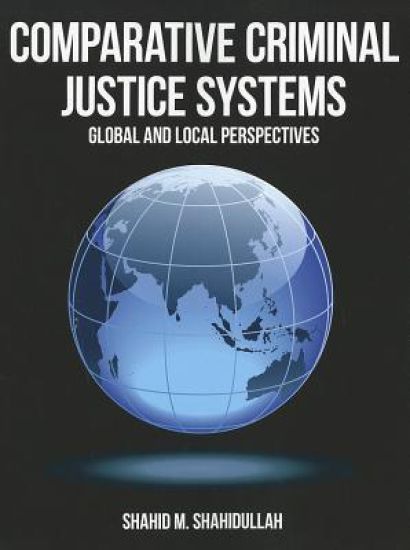
Written for students of criminal justice, Comparative Criminal Justice Systems: Global and Local Perspectives examines the nature of crime and justice in varying countries and cultures in North America, Europe, Asia, Africa, and Latin America. Using a topical approach, it compares different systems of crime and justice in terms of their differences from, and similarities to, the laws and institutions of modern criminal justice, focusing on the United States as a standard of comparison. By examining different criminal justice systems in terms of their local peculiarities and understanding their change and continuity, readers will gain a well-rounded international perspective of the world's varying systems of criminal justice. Key Features: -Explores the rise of modern criminology and the criminal justice system in the nineteenth century. It is critical for students to understand the history of modern systems to fully comprehend the varying nature of today's main legal systems, focusing on the United States as a standard of comparison. -Employs a topical approach to examine the criminal justice systems in varying countries in Europe, Asia, Africa, and Latin America, including comparative views on law enforcement, judicial systems, corrections, due process of law, and search and seizures. -Includes discussions on comparative processes of criminalization and decriminalization on such issues as domestic violence, child abuse, homosexuality, and sexual harassment. -Discusses new global crimes and their impact on modern and traditional criminal justice systems, including human smuggling, global sex trade, global illegal drug trade, illegal trafficking of conventional military weapons, money laundering, cybercrime, and global terrorism. -Discussion questions ensure that student's grasp the core theoretical concepts.
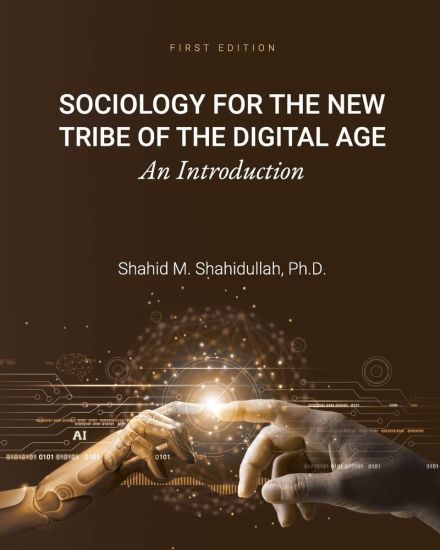
Built upon the understanding that the digital age has created demands for new knowledge, skills, and abilities, Sociology for the New Tribe of the Digital Age: An Introduction supports students' learning about scientific reasoning, the role of theorizing in science, and how to explain diverse social realities through the application of scientific theories, concepts, models, and methods.Through a sociological lens, students develop greater knowledge regarding critical thinking, the humanistic perspective, ethical and moral knowledge, global understanding, and more. They explore the social, political, and economic challenges that have accompanied the growth of the digital age and what those challenges mean for future leaders. Dedicated chapters introduce readers to the sociological perspective, the science of sociology, key theories and research, the structural-functional paradigm of society, social conflicts, and society as meanings and symbols. Developed to provide students with a thoroughly modern and well-researched introduction to the discipline, Sociology for the New Tribe of the Digital Age is an exemplary textbook for courses and programs in sociology.
Built upon the understanding that the digital age has created demands for new knowledge, skills, and abilities, Sociology for the New Tribe of the Digital Age: An Introduction supports students' learning about scientific reasoning, the role of theorizing in science, and how to explain diverse social realities through the application of scientific theories, concepts, models, and methods. Through a sociological lens, students develop greater knowledge regarding critical thinking, the humanistic perspective, ethical and moral knowledge, global understanding, and more. They explore the social, political, and economic challenges that have accompanied the growth of the digital age and what those challenges mean for future leaders. Dedicated chapters introduce readers to the sociological perspective, the science of sociology, key theories and research, the structural-functional paradigm of society, social conflicts, and society as meanings and symbols. Developed to provide students with a thoroughly modern and well-researched introduction to the discipline, Sociology for the New Tribe of the Digital Age is an exemplary textbook for courses and programs in sociology.
This book is a systematic examination of the nature of America's crime and criminal justice system as defined by its policy-makers at different times and in disparate contexts of social and political realities. By examining legislative documents and court cases and analyzing federal and state policy developments in such areas as drug crimes, juvenile crimes, sex crimes, and cyber crimes, this book provides a historically embedded and policy relevant understanding of how America's system of criminal justice was born, how it has grown, and where it is going.
This book is a systematic examination of the nature of America's crime and criminal justice system as defined by its policy-makers at different times and in disparate contexts of social and political realities. By examining legislative documents and court cases and analyzing federal and state policy developments in such areas as drug crimes, juvenile crimes, sex crimes, and cyber crimes, this book provides a historically embedded and policy relevant understanding of how America's system of criminal justice was born, how it has grown, and where it is going.
The second edition of Crime Policy in America describes the process of policy-making and the substantive nature of policy directions in crime and justice in America, particularly from the beginning of the 1970s. This book examines the nature of presidential policy-making in crime and justice from Nixon to Obama, congressional policy-making since the birth of the Bill of Rights, and judicial policy-making since the promulgation of the Judicial Act of 1789. The perspective of this book is deeply historical, sociological, and legalistic. Historically, the book has explored the evolution of different policy strategies at different periods of American history; sociologically, it scrutinized the impact of the get-tough policy paradigm on crime and justice, and from a legal perspective it has examined the conflict and the consensus of Congress and the federal judiciary on different issues of crime and justice from drug crimes to sex crimes to counterterrorism. The second edition of the book has particularly illuminated the changing directions of US crime policy from the dominance of the “get tough” approach in the 1980s and 1990s to a more balanced approach to crime control and prevention in the beginning of the 21sr century.
The second edition of Crime Policy in America describes the process of policy-making and the substantive nature of policy directions in crime and justice in America, particularly from the beginning of the 1970s. This book examines the nature of presidential policy-making in crime and justice from Nixon to Obama, congressional policy-making since the birth of the Bill of Rights, and judicial policy-making since the promulgation of the Judicial Act of 1789. The perspective of this book is deeply historical, sociological, and legalistic. Historically, the book has explored the evolution of different policy strategies at different periods of American history; sociologically, it scrutinized the impact of the get-tough policy paradigm on crime and justice, and from a legal perspective it has examined the conflict and the consensus of Congress and the federal judiciary on different issues of crime and justice from drug crimes to sex crimes to counterterrorism. The second edition of the book has particularly illuminated the changing directions of US crime policy from the dominance of the “get tough” approach in the 1980s and 1990s to a more balanced approach to crime control and prevention in the beginning of the 21sr century.