Kirjojen hintavertailu. Mukana 12 414 450 kirjaa ja 12 kauppaa.

Kirjahaku

Etsi kirjoja tekijän nimen, kirjan nimen tai ISBN:n perusteella.

9 kirjaa tekijältä Sharif Gemie

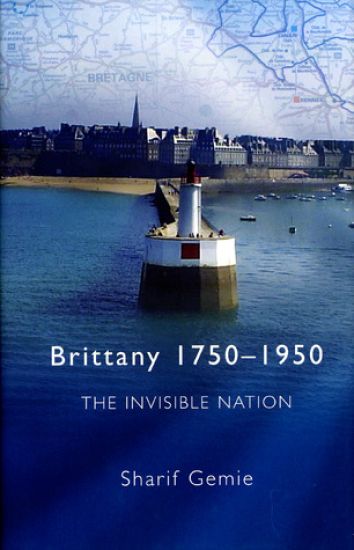
Brittany 1750-1950

Brittany 1750-1950

Sharif Gemie

University of Wales Press
2007
sidottu
Brittany presents a paradox: the region was incorporated into France in 1532, and has never known a substantial nationalist movement. Yet, in recent years, signs of a sense of separation from France are growing clearer. This paradox raises some fundamental questions about the processes of nation formation. This work provides an introduction to identity politics in Brittany, analysing its special status within France: the region forms at once a western border and a potential rival centre to Paris. These themes are explored through a discussion of representations of Brittany: in published forms, such as in literature, in political debates, but also in popular forms such as through religious pardons, through republican festivals and through popular protest.
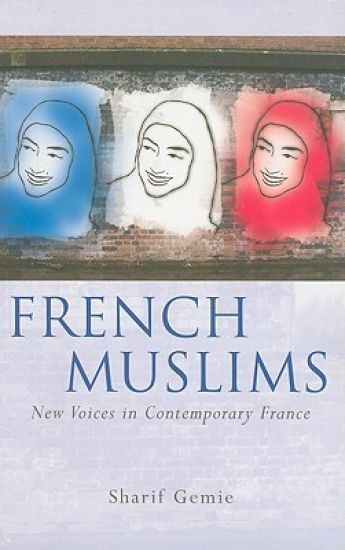
French Muslims

French Muslims

Sharif Gemie

University of Wales Press
2010
nidottu
This book provides a detailed analysis of the political arguments about the place of Muslims in contemporary France, and also discusses the ideas put forward by a range of Muslim thinkers. France has become the setting for one of the most important conflicts in the modern world. On the one hand, it possesses a rigidly organized, centralized state, whose bureaucrats and civil servants are animated by a code of secular activism. On the other hand, France is also the home for Europe's largest Muslim minority, variously estimated at numbering between four and six million people. This means that in terms of simple numbers, France can be counted as the world's fifteenth Islamic power. Previous conflicts with religion have left a deep impression on French political culture: from the sixteenth and seventeenth-century conflicts between Catholics and Protestants played to the formation of the collaborationist Vichy government in 1940. In recent decades, Muslims have been stigmatized as an irreconcilable minority unable to adapt to the secular culture of the majority of French citizens. This work draws out the political implications of the current conflict. It is based on events and publications produced in a single five year period, beginning with the shock of the 2002 Presidential elections, in which Le Pen was the second most successful candidate, ranging through the legislation of March 2004 which banned the Islamic headscarf from French state schools, and which sparked off a series of bad-tempered exchanges between left and right-wing French nationalists, anti-racism campaigners, secularists, anti-clericals and a variety of Muslim authors.
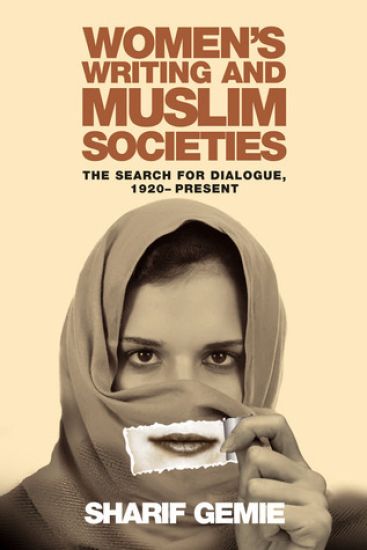
Women's Writing and Muslim Societies

Women's Writing and Muslim Societies

Sharif Gemie

University of Wales Press
2012
sidottu
Women's Writing and Muslim Societies looks at the rise in works concerning Muslim societies by both western and Muslim women - from pioneering female travellers like Freya Stark and Edith Wharton in the early twentieth century, whose accounts of the Orient were usually playful and humorous, to the present day and such works as Azar Nafisi's Reading Lolita in Tehran and Betty Mahmoody's Not Without My Daughter, which present a radically different view of Muslim Societies marked by fear, hostility and even disgust. The author, Sharif Gemie, also considers a new range of female Muslim writers whose works suggest a variety of other perspectives that speak of difficult journeys, the problems of integration, identity crises and the changing nature of Muslim cultures; in the process, this volume examines varied journeys across cultural, political and religious borders, discussing the problems faced by female travellers, the problems of trans-cultural romances and the difficulties of constructing dialogue between enemy camps.
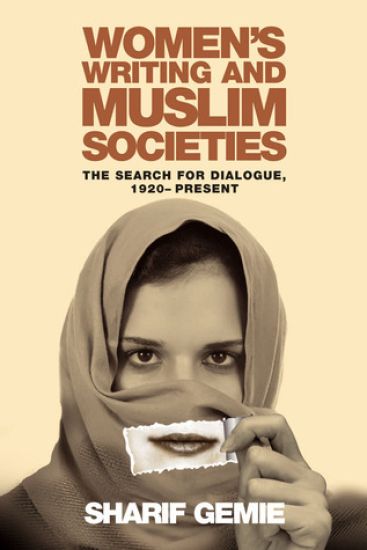
Women's Writing and Muslim Societies

Women's Writing and Muslim Societies

Sharif Gemie

University of Wales Press
2012
nidottu
Women's Writing and Muslim Societies looks at the rise in works concerning Muslim societies by both western and Muslim women - from pioneering female travellers like Freya Stark and Edith Wharton in the early twentieth century, whose accounts of the Orient were usually playful and humorous, to the present day and such works as Azar Nafisi's Reading Lolita in Tehran and Betty Mahmoody's Not Without My Daughter, which present a radically different view of Muslim Societies marked by fear, hostility and even disgust. The author, Sharif Gemie, also considers a new range of female Muslim writers whose works suggest a variety of other perspectives that speak of difficult journeys, the problems of integration, identity crises and the changing nature of Muslim cultures; in the process, this volume examines varied journeys across cultural, political and religious borders, discussing the problems faced by female travellers, the problems of trans-cultural romances and the difficulties of constructing dialogue between enemy camps.
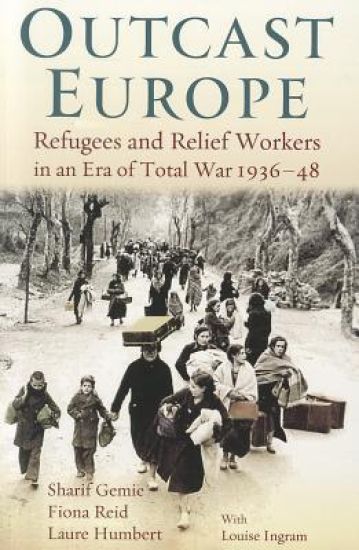
Outcast Europe

Outcast Europe

Sharif Gemie; Laure Humbert; Fiona Reid

Continuum Publishing Corporation
2012
nidottu
The period of the 'long' Second World War (1936-1948) was marked by mass movements of diverse populations: 60 million people either fled or were forced from their homes. This book considers the Spanish Republicans fleeing Franco's Spain in 1939, the French civilians trying to escape the Nazi invasion in 1940, and the millions of people displaced or expelled by the forces of Hitler's Third Reich. Throughout this period state and voluntary organisations were created to take care of the homeless and the displaced. National organisations dominated until the end of the war; afterwards, international organisations - the United Nations Relief and Rehabilitation Agency and the International Refugee Organisation - were formed to deal with what was clearly an international problem. Using case studies of displaced people and of relief workers, this book is unique in placing such crises at the centre rather than the margins of wartime experience, making the work nothing less than an alternative history of the Second World War.
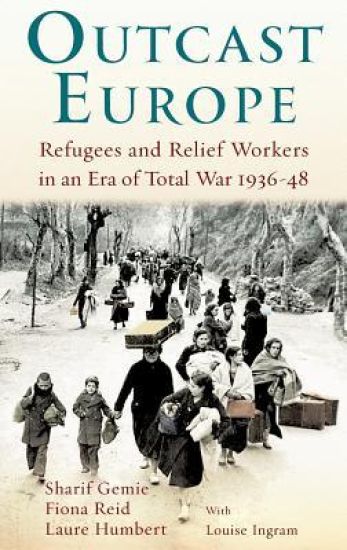
Outcast Europe

Outcast Europe

Sharif Gemie; Laure Humbert; Fiona Reid

Continuum Publishing Corporation
2012
sidottu
This is an original perspective on the experience of refugees and relief workers. The period of the 'long' Second World War (1936-1948) was marked by mass movements of diverse populations: 60 million people either fled or were forced from their homes. This book considers the Spanish Republicans fleeing Franco's Spain in 1939, the French civilians trying to escape the Nazi invasion in 1940, and the millions of people displaced or expelled by the forces of Hitler's Third Reich. Throughout this period state and voluntary organisations were created to take care of the homeless and the displaced. National organisations dominated until the end of the war; afterwards, international organisations - the United Nations Relief and Rehabilitation Agency and the International Refugee Organisation - were formed to deal with what was clearly an international problem. Using case studies of displaced people and of relief workers, this book is unique in placing such crises at the centre rather than the margins of wartime experience, making the work nothing less than an alternative history of the Second World War.
The Hippie Trail

The Hippie Trail

Sharif Gemie; Brian Ireland

Manchester University Press
2017
sidottu
This is the first history of the Hippie Trail. It records the joys and pains of budget travel to Kathmandu, India, Afghanistan and other ‘points east’ in the 1960s and 1970s. Written in a clear, simple style, it provides detailed analysis of the motivations and the experiences of hundreds of thousands of hippies who travelled eastwards. The book is structured around four key debates: were the travellers simply motivated by a search for drugs? Did they encounter love or sexual freedom on the road? Were they basically just tourists? Did they resemble pilgrims? It also considers how the travellers have been represented in films, novels and autobiographical accounts, and will appeal to those interested in the Trail or the 1960s counterculture, as well as students taking courses relating to the 1960s.