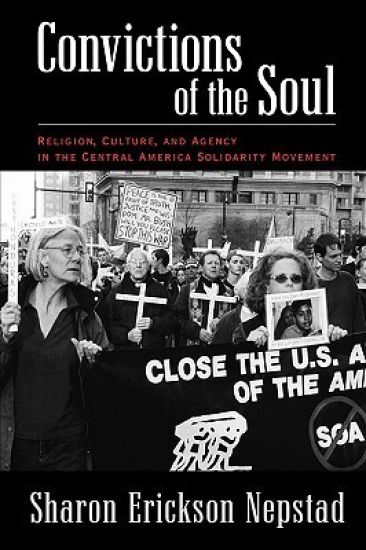
Many U.S. Christians were profoundly moved by the liberation struggles in Central America in the 1980s. Most learned about the situation from missionaries who had worked in the area and witnessed the repression firsthand. These missionaries, Sharon Erickson Nepstad shows, employed the church's institutional resources and the symbolic capital of Christianity to seize the attention of American congregations and remind them of the moral obligations of their faith. Drawing on in-depth interviews with fifty activists in eight separate solidarity organizations around the country, Nepstad offers a rich analysis of the experiences of religious leaders and church members in the solidarity movement. Shedding new light on the genesis and evolution of this important activist movement, Convictions of the Soul will be of interest to students and scholars of social movements, religion, and politics.
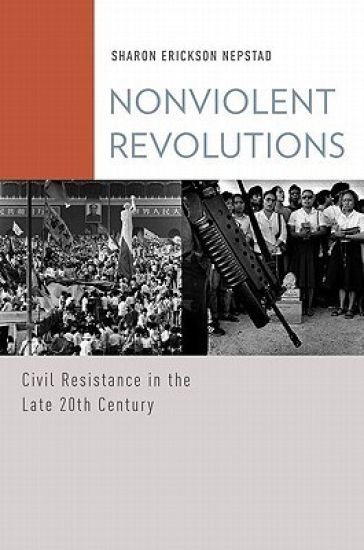
In the spring of 1989, Chinese workers and students captured global attention as they occupied Tiananmen Square, demanded political change, and then experienced a tragic crackdown at the hands of the Chinese army. Months later, East German civilians rose up nonviolently, bringing down the Berlin Wall and dismantling their regime. Although both movements used the tactics of civil resistance, their outcomes were different. In Nonviolent Revolutions, Sharon Erickson Nepstad examines these two movements, along with citizen uprisings in Panama, Chile, Kenya, and the Philippines. Through a comparative approach that includes both successful and failed cases, she analyzes the effects of movements' strategies along with the counter-strategies that regimes developed to retain power. Nepstad concludes that security force defections have a significant influence on revolutionary outcomes since those regimes that maintained troop loyalty were the least likely to collapse. Through a close analysis of these cases, she explores the reasons why soldiers defect or remain loyal and the conditions that increase the likelihood of mutiny. She also examines the impact of international sanctions, arguing that they sometimes harm movements by generating new allies for authoritarian leaders or by shifting the locus of power from local civil resisters to international actors. In conclusion, Nepstad finds that the dynamics of nonviolent revolution are not adequately captured by theories that have largely been derived from studies of armed struggles. Nonviolent Revolutions offers insights into the distinctive challenges that civil resisters face and it explores the reasons why some of these insurrectionary movements failed. As this form of struggle has increased in recent years--with the explosion of "color revolutions " in Serbia, Georgia, Ukraine, Lebanon, Kyrgyzstan and Burma--this book provides a valuable new framework for understanding civil resistance and nonviolent revolt.
In the spring of 1989, Chinese workers and students captured global attention as they occupied Tiananmen Square, demanded political change, and then experienced a tragic crackdown at the hands of the Chinese army. Months later, East German civilians rose up nonviolently, bringing down the Berlin Wall and dismantling their regime. Although both movements used the tactics of civil resistance, their outcomes were different. In Nonviolent Revolutions, Sharon Erickson Nepstad examines these two movements, along with citizen uprisings in Panama, Chile, Kenya, and the Philippines. Through a comparative approach that includes both successful and failed cases, she analyzes the effects of movements' strategies along with the counter-strategies that regimes developed to retain power. Nepstad concludes that security force defections have a significant influence on revolutionary outcomes since those regimes that maintained troop loyalty were the least likely to collapse. Through a close analysis of these cases, she explores the reasons why soldiers defect or remain loyal and the conditions that increase the likelihood of mutiny. She also examines the impact of international sanctions, arguing that they sometimes harm movements by generating new allies for authoritarian leaders or by shifting the locus of power from local civil resisters to international actors. In conclusion, Nepstad finds that the dynamics of nonviolent revolution are not adequately captured by theories that have largely been derived from studies of armed struggles. Nonviolent Revolutions offers insights into the distinctive challenges that civil resisters face and it explores the reasons why some of these insurrectionary movements failed. As this form of struggle has increased in recent years--with the explosion of "color revolutions " in Serbia, Georgia, Ukraine, Lebanon, Kyrgyzstan and Burma--this book provides a valuable new framework for understanding civil resistance and nonviolent revolt.
As the nuclear arms race exploded in the 1980s, a group of U.S. religious pacifists used radical nonviolence to intervene. Armed with hammers, they broke into military facilities to pound on missiles and pour blood on bombers, enacting the prophet Isaiah's vision: 'Nations shall beat their swords into plowshares and their spears into pruning hooks.' Calling themselves the Plowshares movement, these controversial activists received long prison sentences; nonetheless, their movement grew and expanded to Europe and Australia. In this book, Sharon Erickson Nepstad documents the emergence and international diffusion of this unique form of high-risk collective action. Drawing on interviews, original survey research, and archival data, Nepstad explains why some Plowshares groups have persisted over time while others have struggled or collapsed. Comparing the U.S. movement with less successful Plowshares groups overseas, Nepstad reveals how decisions about leadership, organization, retention, and cultural adaptations influence movements' long-term trajectories.
As the nuclear arms race exploded in the 1980s, a group of U.S. religious pacifists used radical nonviolence to intervene. Armed with hammers, they broke into military facilities to pound on missiles and pour blood on bombers, enacting the prophet Isaiah's vision: 'Nations shall beat their swords into plowshares and their spears into pruning hooks.' Calling themselves the Plowshares movement, these controversial activists received long prison sentences; nonetheless, their movement grew and expanded to Europe and Australia. In this book, Sharon Erickson Nepstad documents the emergence and international diffusion of this unique form of high-risk collective action. Drawing on interviews, original survey research, and archival data, Nepstad explains why some Plowshares groups have persisted over time while others have struggled or collapsed. Comparing the U.S. movement with less successful Plowshares groups overseas, Nepstad reveals how decisions about leadership, organization, retention, and cultural adaptations influence movements' long-term trajectories.
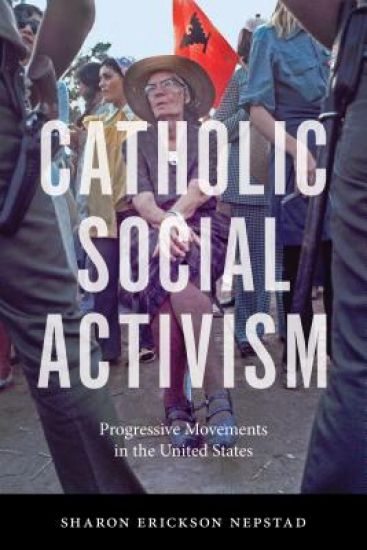
A history of Catholic social thought Many Americans assume that the Catholic Church is inherently conservative, based on its stances on abortion, contraception, and divorce. Yet there is a longstanding tradition of progressive Catholic movements in the United States that have addressed a variety of issues from labor, war, immigration, and environmental protection, to human rights, women's rights, exploitive development practices, and bellicose foreign policies. These Catholic social movements have helped to shift the Church from an institution that had historically supported incumbent governments and political elites to a Church that has increasingly sided with the vulnerable and oppressed. This book provides a concise history of progressively oriented Catholic Social Thought, which conveys the Catholic Church's position on a variety of social justice concerns. Sharon Erickson Nepstad introduces key papal encyclicals and other church documents, showing how lay Catholics in the United States have put these ideas into practice through a creative and sometimes provocative political engagement. Nepstad also explores how these progressive movements have pressured the religious hierarchy to respond to pressing social issues, such as women's ordination, conscription, and the morality of nuclear deterrence policies. Catholic Social Activism vividly depicts how these progressive movements have helped to shape the religious landscape of the United States, and how they have provoked controversy and debate among Catholics and non-Catholics alike.
A history of Catholic social thought Many Americans assume that the Catholic Church is inherently conservative, based on its stances on abortion, contraception, and divorce. Yet there is a longstanding tradition of progressive Catholic movements in the United States that have addressed a variety of issues from labor, war, immigration, and environmental protection, to human rights, women's rights, exploitive development practices, and bellicose foreign policies. These Catholic social movements have helped to shift the Church from an institution that had historically supported incumbent governments and political elites to a Church that has increasingly sided with the vulnerable and oppressed. This book provides a concise history of progressively oriented Catholic Social Thought, which conveys the Catholic Church's position on a variety of social justice concerns. Sharon Erickson Nepstad introduces key papal encyclicals and other church documents, showing how lay Catholics in the United States have put these ideas into practice through a creative and sometimes provocative political engagement. Nepstad also explores how these progressive movements have pressured the religious hierarchy to respond to pressing social issues, such as women's ordination, conscription, and the morality of nuclear deterrence policies. Catholic Social Activism vividly depicts how these progressive movements have helped to shape the religious landscape of the United States, and how they have provoked controversy and debate among Catholics and non-Catholics alike.