Kirjojen hintavertailu. Mukana 11 699 587 kirjaa ja 12 kauppaa.

Kirjahaku

Etsi kirjoja tekijän nimen, kirjan nimen tai ISBN:n perusteella.

5 kirjaa tekijältä Sharon R. Kaufman

And a Time to Die

And a Time to Die

Sharon R. Kaufman

University of Chicago Press
2006
nidottu
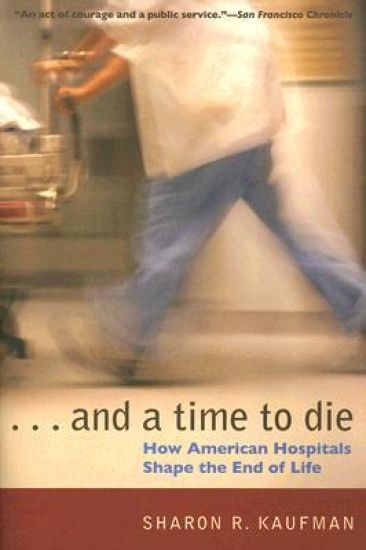
Over the past thirty years, the way Americans experience death has been dramatically altered. The advent of medical technology capable of sustaining life without restoring health has changed where, when, and how we die. In this revelatory study, medical anthropologist Sharon R. Kaufman examines the powerful center of those changes: the hospital, where most Americans die today. She deftly links the experiences of patients and families, the work of hospital staff, and the ramifications of institutional bureaucracy to show the invisible power of the hospital system in shaping death and our individual experience of it. In doing so, Kaufman also speaks to the ways we understand what it means to be human and to be alive. “An act of courage and a public service.”—San Francisco Chronicle “This beautifully synthesized and disquieting account of how hospital patients die melds disciplined description with acute analysis, incorporating the voices of doctors, nurses, social workers, and patients in a provocative analysis of the modern American quest for a ‘good death.’”—Publishers Weekly “Kaufman exposes the bureaucratic and ethical quandaries that hover over the modern deathbed.”—Psychology Today “Kaufman’s analysis illuminates the complexity of the care of critically ill and dying patients [and] the ambiguity of slogans such as ‘death with dignity,’ ‘quality of life,’ and ‘stopping life support.’ . . . Thought-provoking reading for everyone contemplating the fate of us all.”—New England Journal of Medicine
The Ageless Self

The Ageless Self

Sharon R. Kaufman

University of Wisconsin Press
1994
nidottu
Among the many studies of aging and the aged, there is comparatively little material in which the aged speak for themselves. In this compelling study, Sharon Kaufman encourages just such expression, recording and presenting the voices of a number of old Americans. Her informants tell their life stories and relate their most personal feelings about becoming old. Each story is unique, and yet, presented together, they inevitable weave a clear pattern, one that clashes sharply with much current gerontological thought. With this book, Sharon Kaufman allows us to understand the experience of the aging by listening to the aged themselves.Kaufman, while maintaining objectivity, is able to draw an intimate portrait of her subjects. We come to know these people as individuals and we become involved with their lives. Through their words, we find that the aging process is not merely a period of sensory, functional, economic, and social decline. Old people continue to participate in society, and—more important—continue to interpret their participation in the social world. Through themes constructed from these stories, we can see how the old not only cope with losses, but how they create new meaning as they reformulate and build viable selves. Creating identity, Kaufman stresses, is a lifelong process.Sharon Kaufman's book will be of interest and value not only to students of gerontology and life span development, and to professionals in the field of aging, but to everyone who is concerned with the aging process itself. As Sharon Kaufman says, "If we can find the sources of meaning held by the elderly and see how individuals put it all together, we will go a long way toward appreciating the complexity of human aging and the ultimate reality of coming to terms with one's whole life.
The Healer's Tale

The Healer's Tale

Sharon R. Kaufman

University of Wisconsin Press
1994
nidottu
There are many important questions raised in this book. The fragmentation of medical values, whether a good doctor requires as much knowledge of the person as of the disease, the claims created by a scientific medicine dependent upon the largesse of government grants, the conversion of medicine from ""cottage industry"" to entrepreneurial endeavour, all had their beginnings in medicine's Golden Age. Their heirs, today's practitioners, may have mistaken technology for their task, science for their religion, and business for their creed, but if the spirit of the physicians in this book wins out, medicine's Golden Age is yet in the future.
Ordinary Medicine

Ordinary Medicine

Sharon R. Kaufman

Duke University Press
2015
pokkari
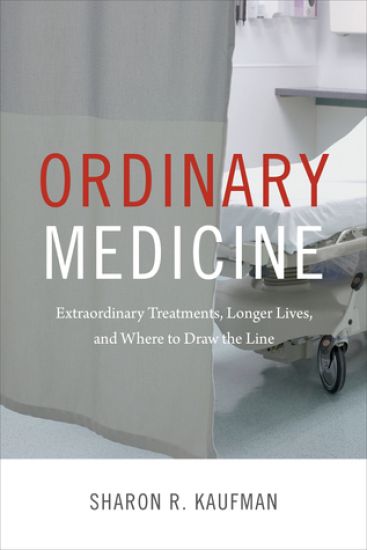
Most of us want and expect medicine’s miracles to extend our lives. In today’s aging society, however, the line between life-giving therapies and too much treatment is hard to see-it’s being obscured by a perfect storm created by the pharmaceutical and biomedical industries, along with insurance companies. In Ordinary Medicine Sharon R. Kaufman investigates what drives that storm’s “more is better” approach to medicine: a nearly invisible chain of social, economic, and bureaucratic forces that has made once-extraordinary treatments seem ordinary, necessary, and desirable. Since 2002 Kaufman has listened to hundreds of older patients, their physicians and family members express their hopes, fears, and reasoning as they faced the line between enough and too much intervention. Their stories anchor Ordinary Medicine. Today’s medicine, Kaufman contends, shapes nearly every American’s experience of growing older, and ultimately medicine is undermining its own ability to function as a social good. Kaufman’s careful mapping of the sources of our health care dilemmas should make it far easier to rethink and renew medicine’s goals.
Ordinary Medicine

Ordinary Medicine

Sharon R. Kaufman

Duke University Press
2015
sidottu
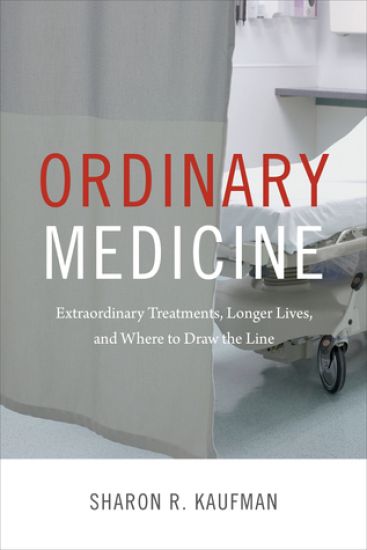
Most of us want and expect medicine’s miracles to extend our lives. In today’s aging society, however, the line between life-giving therapies and too much treatment is hard to see-it’s being obscured by a perfect storm created by the pharmaceutical and biomedical industries, along with insurance companies. In Ordinary Medicine Sharon R. Kaufman investigates what drives that storm’s “more is better” approach to medicine: a nearly invisible chain of social, economic, and bureaucratic forces that has made once-extraordinary treatments seem ordinary, necessary, and desirable. Since 2002 Kaufman has listened to hundreds of older patients, their physicians and family members express their hopes, fears, and reasoning as they faced the line between enough and too much intervention. Their stories anchor Ordinary Medicine. Today’s medicine, Kaufman contends, shapes nearly every American’s experience of growing older, and ultimately medicine is undermining its own ability to function as a social good. Kaufman’s careful mapping of the sources of our health care dilemmas should make it far easier to rethink and renew medicine’s goals.