Kirjojen hintavertailu. Mukana 12 390 323 kirjaa ja 12 kauppaa.

Kirjahaku

Etsi kirjoja tekijän nimen, kirjan nimen tai ISBN:n perusteella.

8 kirjaa tekijältä Sharon R. Krause

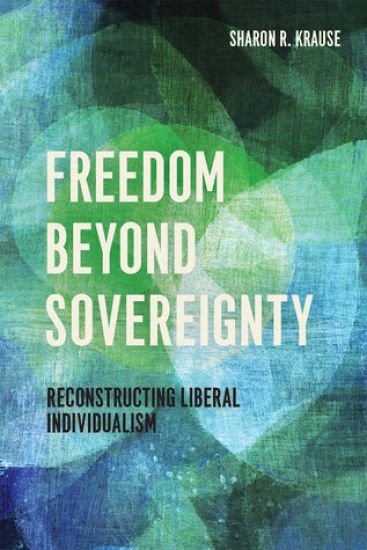
Freedom Beyond Sovereignty

Freedom Beyond Sovereignty

Sharon R. Krause

University of Chicago Press
2015
sidottu
What does it mean to be free? We invoke the word frequently, yet the freedom of countless Americans is compromised by social inequalities that systematically undercut what they are able to do and to become. If we are to remedy these failures of freedom, we must move beyond the common assumption, prevalent in political theory and American public life, that individual agency is best conceived as a kind of personal sovereignty, or as self-determination or control over one's actions. In Freedom Beyond Sovereignty, Sharon R Krause shows that individual agency is best conceived as a non-sovereign experience because our ability to act and affect the world depends on how other people interpret and respond to what we do. The intersubjective character of agency makes it vulnerable to the effects of social inequality, but it is never in a strict sense socially determined. The agency of the oppressed sometimes surprises us with its vitality. Only by understanding the deep dynamics of agency as simultaneously non-sovereign and robust can we remediate the failed freedom of those on the losing end of persistent inequalities and grasp the scope of our own responsibility for social change. Freedom Beyond Sovereignty brings the experiences of the oppressed to the center of political theory and the study of freedom. It fundamentally reconstructs liberal individualism and enables us to see human action, personal responsibility, and the meaning of liberty in a totally new light.
Liberalism with Honor

Liberalism with Honor

Sharon R. Krause

Harvard University Press
2002
sidottu
Why do men and women sometimes risk everything to defend their liberties? What motivates principled opposition to the abuse of power? In Liberalism with Honor, Sharon Krause explores honor as a motive for risky and difficult forms of political action. She shows the sense of honor to be an important source of such action and a spring of individual agency more generally.Krause traces the genealogy of honor, including its ties to conscientious objection and civil disobedience, beginning in old-regime France and culminating in the American civil rights movement. She examines the dangers intrinsic to honor and the tensions between honor and modern democracy, but demonstrates that the sense of honor has supported political agency in the United States from the founders to democratic reformers such as Elizabeth Cady Stanton and Martin Luther King, Jr.Honor continues to hold interest and importance today because it combines self-concern and personal ambition with principled higher purposes, and so challenges the disabling dichotomy between self-interest and self-sacrifice that currently pervades both political theory and American public life.
Civil Passions

Civil Passions

Sharon R. Krause

Princeton University Press
2008
sidottu
Must we put passions aside when we deliberate about justice? Can we do so? The dominant views of deliberation rightly emphasize the importance of impartiality as a cornerstone of fair decision making, but they wrongly assume that impartiality means being disengaged and passionless. In Civil Passions, Sharon Krause argues that moral and political deliberation must incorporate passions, even as she insists on the value of impartiality. Drawing on resources ranging from Hume's theory of moral sentiment to recent findings in neuroscience, Civil Passions breaks new ground by providing a systematic account of how passions can generate an impartial standpoint that yields binding and compelling conclusions in politics. Krause shows that the path to genuinely impartial justice in the public sphere--and ultimately to social change and political reform--runs through moral sentiment properly construed. This new account of affective but impartial judgment calls for a politics of liberal rights and democratic contestation, and it requires us to reconceive the meaning of public reason, the nature of sound deliberation, and the authority of law. By illuminating how impartiality feels, Civil Passions offers not only a truer account of how we deliberate about justice, but one that promises to engage citizens more effectively in acting for justice.
Civil Passions

Civil Passions

Sharon R. Krause

Princeton University Press
2013
pokkari
Must we put passions aside when we deliberate about justice? Can we do so? The dominant views of deliberation rightly emphasize the importance of impartiality as a cornerstone of fair decision making, but they wrongly assume that impartiality means being disengaged and passionless. In Civil Passions, Sharon Krause argues that moral and political deliberation must incorporate passions, even as she insists on the value of impartiality. Drawing on resources ranging from Hume's theory of moral sentiment to recent findings in neuroscience, Civil Passions breaks new ground by providing a systematic account of how passions can generate an impartial standpoint that yields binding and compelling conclusions in politics. Krause shows that the path to genuinely impartial justice in the public sphere--and ultimately to social change and political reform--runs through moral sentiment properly construed. This new account of affective but impartial judgment calls for a politics of liberal rights and democratic contestation, and it requires us to reconceive the meaning of public reason, the nature of sound deliberation, and the authority of law. By illuminating how impartiality feels, Civil Passions offers not only a truer account of how we deliberate about justice, but one that promises to engage citizens more effectively in acting for justice.
Eco-Emancipation

Eco-Emancipation

Sharon R. Krause

PRINCETON UNIVERSITY PRESS
2023
sidottu
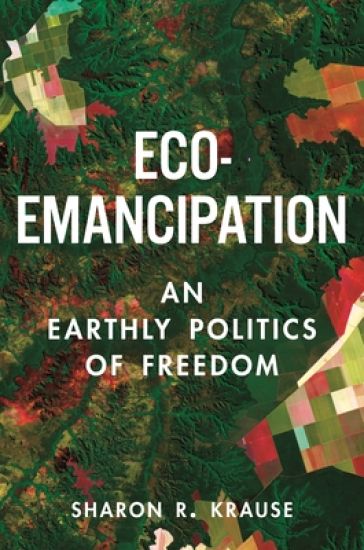
The case for an eco-emancipatory politics to release the Earth from human domination and free us all from lives that are both exploitative and exploitedHuman domination of nature shapes every aspect of our lives today, even as it remains virtually invisible to us. Because human beings are a part of nature, the human domination of nature circles back to confine and exploit people as well—and not only the poor and marginalized but also the privileged and affluent, even in the world’s most prosperous societies. Although modern democracy establishes constraints intended to protect people from domination as the arbitrary exercise of power, it offers few such protections for nonhuman parts of nature. The result is that, wherever we fall in human hierarchies, we inevitably find ourselves both complicit in and entrapped by a system that makes sustainable living all but impossible. It confines and exploits not only nature but people too, albeit in different ways. In Eco-Emancipation, Sharon Krause argues that we can find our way to a better, freer life by constraining the use of human power in relation to nature and promoting nature’s well-being alongside our own, thereby releasing the Earth from human domination and freeing us from a way of life that is both exploitative and exploited, complicit and entrapped. Eco-emancipation calls for new, more-than-human political communities that incorporate nonhuman parts of nature through institutions of representation and regimes of rights, combining these new institutional arrangements with political activism, a public ethos of respect for nature, and a culture of eco-responsibility.
Eco-Emancipation

Eco-Emancipation

Sharon R. Krause

PRINCETON UNIVERSITY PRESS
2025
pokkari
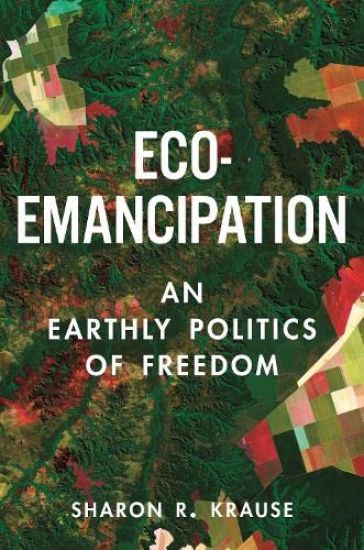
The case for an eco-emancipatory politics to release the Earth from human domination and free us all from lives that are both exploitative and exploitedHuman domination of nature shapes every aspect of our lives today, even as it remains virtually invisible to us. Because human beings are a part of nature, the human domination of nature circles back to confine and exploit people as well—and not only the poor and marginalized but also the privileged and affluent, even in the world’s most prosperous societies. Although modern democracy establishes constraints intended to protect people from domination as the arbitrary exercise of power, it offers few such protections for nonhuman parts of nature. The result is that, wherever we fall in human hierarchies, we inevitably find ourselves both complicit in and entrapped by a system that makes sustainable living all but impossible. It confines and exploits not only nature but people too, albeit in different ways. In Eco-Emancipation, Sharon Krause argues that we can find our way to a better, freer life by constraining the use of human power in relation to nature and promoting nature’s well-being alongside our own, thereby releasing the Earth from human domination and freeing us from a way of life that is both exploitative and exploited, complicit and entrapped. Eco-emancipation calls for new, more-than-human political communities that incorporate nonhuman parts of nature through institutions of representation and regimes of rights, combining these new institutional arrangements with political activism, a public ethos of respect for nature, and a culture of eco-responsibility.
Politics of Liberty

Politics of Liberty

Sharon R. Krause

BLOOMSBURY PUBLISHING PLC
2025
sidottu
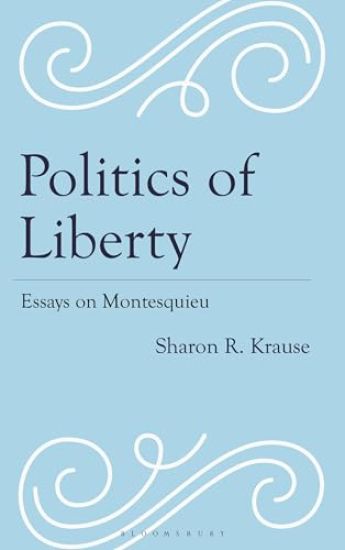
Politics of Liberty: Essays on Montesquieu brings together a series of essays that shine new light on the meaning, conditions, and effects of freedom. Montesquieu’s work embodies in a wholehearted way the liberal commitment to protection of all people from arbitrary power, and it offers specific recommendations for how to establish this protection. Yet his politics of liberty is a highly variegated phenomenon, meaning politics in the plural – not one form of political order or singular system, but many. And while freedom is the end or purpose of the politics of liberty, Montesquieu’s understanding of freedom is more nuanced than that of many other liberals, allowing for a richer moral psychology, a deeper sociality, and deeper respect for cultural diversity than one might expect. In all these ways, Montesquieu’s work challenges the conviction, present in much of democratic theory today, that liberalism is a thing of the past, and should be left there. Politics of Liberty returns us to Montesquieu’s mindful liberalism for the purpose of showing liberalism’s past in a new light, illuminating its value in the present, and making a case for its future.
Politics of Liberty

Politics of Liberty

Sharon R. Krause

BLOOMSBURY PUBLISHING PLC
2025
nidottu
Politics of Liberty: Essays on Montesquieu brings together a series of essays that shine new light on the meaning, conditions, and effects of freedom. Montesquieu’s work embodies in a wholehearted way the liberal commitment to protection of all people from arbitrary power, and it offers specific recommendations for how to establish this protection. Yet his politics of liberty is a highly variegated phenomenon, meaning politics in the plural – not one form of political order or singular system, but many. And while freedom is the end or purpose of the politics of liberty, Montesquieu’s understanding of freedom is more nuanced than that of many other liberals, allowing for a richer moral psychology, a deeper sociality, and deeper respect for cultural diversity than one might expect. In all these ways, Montesquieu’s work challenges the conviction, present in much of democratic theory today, that liberalism is a thing of the past, and should be left there. Politics of Liberty returns us to Montesquieu’s mindful liberalism for the purpose of showing liberalism’s past in a new light, illuminating its value in the present, and making a case for its future.