Kirjojen hintavertailu. Mukana 11 529 596 kirjaa ja 12 kauppaa.

Kirjahaku

Etsi kirjoja tekijän nimen, kirjan nimen tai ISBN:n perusteella.

8 kirjaa tekijältä Sharon Zukin

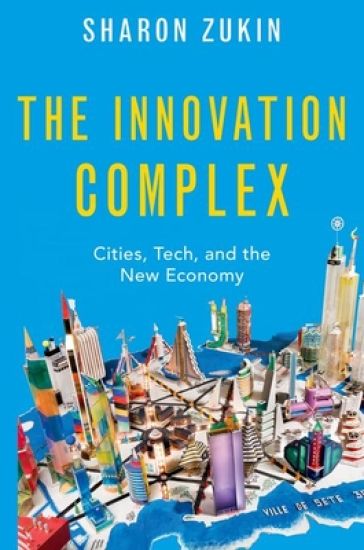
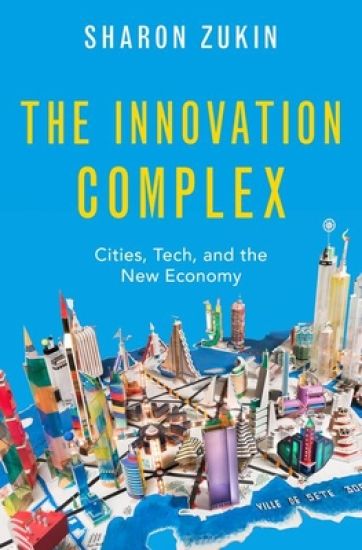
The Innovation Complex

The Innovation Complex

Sharon Zukin

Oxford University Press Inc
2020
sidottu
You hear a lot these days about "innovation and entrepreneurship" and about how "good jobs" in tech will save our cities. Yet these common tropes hide a stunning reality: local lives and fortunes are tied to global capital. You see this clearly in metropolises such as San Francisco and New York that have emerged as "superstar cities." In these cities, startups bloom, jobs of the future multiply, and a meritocracy trained in digital technology, backed by investors who control deep pools of capital, forms a new class: the tech-financial elite. In The Innovation Complex, the eminent urbanist Sharon Zukin shows the way these forces shape the new urban economy through a rich and illuminating account of the rise of the tech sector in New York City. Drawing from original interviews with venture capitalists, tech evangelists, and economic development officials, she shows how the ecosystem forms and reshapes the city from the ground up. Zukin explores the people and plans that have literally rooted digital technology in the city. That in turn has shaped a workforce, molded a mindset, and generated an archipelago of tech spaces, which in combination have produced a now-hegemonic "innovation" culture and geography. She begins with the subculture of hackathons and meetups, introduces startup founders and venture capitalists, and explores the transformation of the Brooklyn waterfront from industrial wasteland to "innovation coastline." She shows how, far beyond Silicon Valley, cities like New York are shaped by an influential "triple helix" of business, government, and university leaders--an alliance that joins C. Wright Mills's "power elite," real estate developers, and ambitious avatars of "academic capitalism." As a result, cities around the world are caught between the demands of the tech economy and communities' desires for growth--a massive and often--insurmountable challenge for those who hope to reap the rewards of innovation's success.
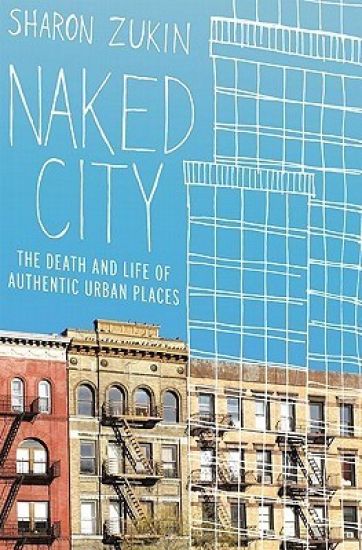
Naked City

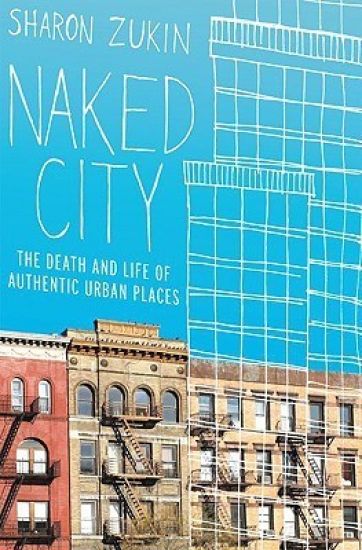
Naked City

Sharon Zukin

Oxford University Press Inc
2010
sidottu
As cities have gentrified, educated urbanites have come to prize what they regard as "authentic" urban life: aging buildings, art galleries, small boutiques, upscale food markets, neighborhood old-timers, funky ethnic restaurants, and old, family-owned shops. These signify a place's authenticity, in contrast to the bland standardization of the suburbs and exurbs. But as Sharon Zukin shows in Naked City, the rapid and pervasive demand for authenticity--evident in escalating real estate prices, expensive stores, and closely monitored urban streetscapes--has helped drive out the very people who first lent a neighborhood its authentic aura: immigrants, the working class, and artists. Zukin traces this economic and social evolution in six archetypal New York areas--Williamsburg, Harlem, the East Village, Union Square, Red Hook, and the city's community gardens--and travels to both the city's first IKEA store and the World Trade Center site. She shows that for followers of Jane Jacobs, this transformation is a perversion of what was supposed to happen. Indeed, Naked City is a sobering update of Jacobs' legendary 1962 book, The Death and Life of Great American Cities. Like Jacobs, Zukin looks at what gives neighborhoods a sense of place, but argues that over time, the emphasis on neighborhood distinctiveness has become a tool of economic elites to drive up real estate values and effectively force out the neighborhood "characters" that Jacobs so evocatively idealized. With a journalist's eye and the understanding of a longtime critic and observer, Zukin's panoramic survey of contemporary New York explains how our desire to consume authentic experience has become a central force in making cities more exclusive.
The Innovation Complex

The Innovation Complex

Sharon Zukin

OXFORD UNIVERSITY PRESS INC
2022
nidottu
An in-depth look at how New York adopted "innovation" and became a destination for startups and large tech companies. In recent years, the language of "innovation" has spurred visions of urban economic revival led by digital technology. Investors, mayors, and tech evangelists transform the city into an "innovation complex" that expands the tech industry while struggling to control its power. No city has been more ambitious in this pursuit than New York. In The Innovation Complex, Sharon Zukin looks to the people who created New York's tech economy and the places where it took root. She traces its origins to the city's response to the 2008 financial crisis and the aggressive leveraging of wealth from the US and overseas. Through interviews with venture capitalists, startup founders, and economic development officials, she explores the spaces where the rules of the new economy are made--transforming the city but increasing dependence on Big Tech firms, siphoning public subsidies, and enabling the rise of a new meritocratic elite. Updated with a preface on the effects of Covid-19, Zukin's provocative interpretation of the innovation complex is a warning to cities around the world.
Naked City

Naked City

Sharon Zukin

Oxford University Press Inc
2011
nidottu
As cities have gentrified, educated urbanites have come to prize what they regard as "authentic" urban life: aging buildings, art galleries, and funky ethnic restaurants. But as Sharon Zukin shows in Naked City, the pervasive demand for authenticity has helped drive out the very people who first lent a neighborhood its authentic aura: immigrants, the working class, and artists. Through a guided tour of six archetypal New York City neighborhoods, Zukin shows how the emphasis on distinctiveness has become a tool of economic elites to drive up real estate values and force out the neighborhood "characters" that people often idealize. With a journalist's eye and the understanding of a longtime observer, Zukin's panoramic survey of the city explains how our desire to consume authentic experience has become a central force in making cities more exclusive.
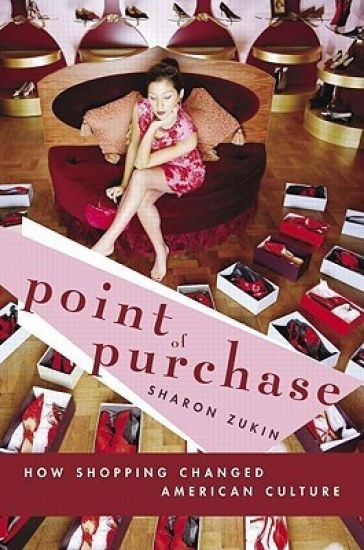
Point of Purchase

Point of Purchase

Sharon Zukin

Routledge
2005
nidottu
This accessible, smart, and expansive book on shopping's impact on American life is in part historical, stretching back to the mid-19th century, yet also has a contemporary focus, with material on recent trends in shopping from the internet to Zagat's guides.Drawing inspiration from both Pierre Bourdieu's work and Walter Benjamin's seminal essay on the shopping arcades of 19th-century Paris, Zukin explores the forces that have made shopping so central to our lives: the rise of consumer culture, the never-ending quest for better value, and shopping's ability to help us improve our social status and attain new social identities.
Landscapes of Power

Landscapes of Power

Sharon Zukin

University of California Press
1993
pokkari
The momentous changes which are transforming American life call for a new exploration of the economic and cultural landscape. In this book Sharon Zukin links our ever-expanding need to consume with two fundamental shifts: places of production have given way to spaces for services and paperwork, and the competitive edge has moved from industrial to cultural capital. From the steel mills of the Rust Belt, to the sterile malls of suburbia, to the gentrified urban centers of our largest cities, the "creative destruction" of our economy--a process by which a way of life is both lost and gained--results in a dramatically different landscape of economic power. Sharon Zukin probes the depth and diversity of this restructuring in a series of portraits of changed or changing American places. Beginning at River Rouge, Henry Ford's industrial complex in Dearborn, Michigan, and ending at Disney World, Zukin demonstrates how powerful interests shape the spaces we inhabit. Among the landscapes she examines are steeltowns in West Virginia and Michigan, affluent corporate suburbs in Westchester County, gentrified areas of lower Manhattan, and theme parks in Florida and California. In each of these case studies, new strategies of investment and employment are filtered through existing institutions, experience in both production and consumption, and represented in material products, aesthetic forms, and new perceptions of space and time. The current transformation differs from those of the past in that individuals and institutions now have far greater power to alter the course of change, making the creative destruction of landscape the most important cultural product of our time. Zukin's eclectic inquiry into the parameters of social action and the emergence of new cultural forms defines the interdisciplinary frontier where sociology, geography, economics, and urban and cultural studies meet.
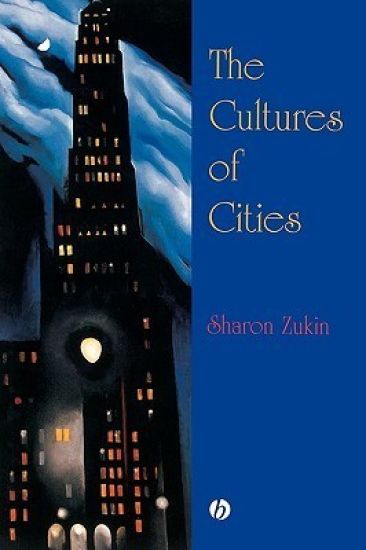
The Cultures of Cities

The Cultures of Cities

Sharon Zukin

JOHN WILEY AND SONS LTD
1995
nidottu
How do cities use culture today? Building on the experience of New York as a "culture capital" Sharon Zukin shows how three notions of culture - as ethnicity, aesthetic, and marketing tool - are reshaping urban places and conflicts over revitalization. She rejects the idea that cities have either a singular urban culture or many different subcultures to argue that cultures are constantly negotiated in the city's central spaces - the streets, parks, shops, museums, and restaurants - which are the great public spaces of modernity. While cultural gentrification may contribute to making our cities both safer and more civilised places to live, it has its darker side. Beneath the perceptions of "civility" and "security" nurtured by cultural strategies, Zukin shows an aggressive private-sector bid for control of public space, a relentless drive for expansion by art museums and other non-profit cultural institutions, and an increasing redesign of the built environment for the purposes of social control. Tying these developments to a new "symbolic economy" based on tourism, media and entertainment, Zukin traces the connections between real estate development and popular expression, and between elite visions of the arts and more democratic representations. Going beyond the immigrants, artists, street peddlers, and security guards who are the key figures in the symbolic economy, Zukin asks: Who really occupies the central spaces of cities? And whose culture is imposed as public culture? Combining cultural critique, interviews, autobiography and ethnography, The Culture of Cities is a compelling account of the public spaces of modernity as they are transformed into new, more troubling landscapes.
Innovatsionnyj kompleks. Goroda, tekhnologii i novaja ekonomika

Innovatsionnyj kompleks. Goroda, tekhnologii i novaja ekonomika

Sharon Zukin

Izdatelskij Dom "delo" Rankhigs
2023
sidottu
Novaja kniga izvestnogo urbanista, professora sotsiologii Sharon Zukin "Innovatsionnyj kompleks" pokazyvaet, kak novaja gorodskaja ekonomika formiruetsja predprijatijami i organizatsijami, rabotajuschimi v sfere tsifrovykh tekhnologij, gorodskimi vlastjami i tekhno-finansovoj meritokratiej. Vnimatelno izuchaja "innovatsii" v Nju-Jorke s momenta padenija ekonomiki goroda v rezultate krakha dotkomov v 2000 g. do ego stanovlenija kak vtoroj po velichine ekosistemy startapov v 2010-kh gg., kniga issleduet pojavlenie novykh organizatsionnykh, geograficheskikh i diskursivnykh prostranstv, kotorye bukvalno ukorenjajut tsifrovoe proizvodstvo na mestakh, formiruja tekhnicheski kompetentnuju rabochuju silu, gosudarstvenno-chastnye nekommercheskie partnerstva i agressivnuju predprinimatelskuju kulturu. Kniga nachinaetsja s izuchenija gorodskoj subkultury khakatonov i mitapov, opisyvaet kareru osnovatelej nju-jorkskikh startapov i venchurnykh kapitalistov, a takzhe proslezhivaet transformatsiju bruklinskoj naberezhnoj iz promyshlennoj pustoshi v "Bereg innovatsij". Analiziruja svjazi mezhdu mestnymi setjami i globalnym kapitalom, avtor pokazyvaet, kak model innovatsij Kremnievoj doliny urbaniziruetsja v bolshikh gorodakh, takikh kak Nju-Jork, gde vlijatelnyj aljans mezhdu delovymi krugami, gorodskimi vlastjami i rukovodstvom universitetov napominaet o ponjatii vlastvujuschej elity, predlozhennom Charlzom Rajtom Millsom. Paradoksalno, no v to vremja kak ekonomika XXI v. delaet goroda bolee uspeshnymi, oni takzhe stanovjatsja menee prigodnymi dlja zhizni tekh, kto ne mozhet pozhinat plody tekhnologicheskikh innovatsij.