Kirjojen hintavertailu. Mukana 12 083 983 kirjaa ja 12 kauppaa.

Kirjahaku

Etsi kirjoja tekijän nimen, kirjan nimen tai ISBN:n perusteella.

8 kirjaa tekijältä Shaul Magid

From Metaphysics to Midrash

From Metaphysics to Midrash

Shaul Magid

Indiana University Press
2008
sidottu
In From Metaphysics to Midrash, Shaul Magid explores the exegetical tradition of Isaac Luria and his followers within the historical context in 16th-century Safed, a unique community that brought practitioners of Judaism, Christianity, and Islam into close contact with one another. Luria's scripture became a theater in which kabbalists redrew boundaries of difference in areas of ethnicity, gender, and the human relation to the divine. Magid investigates how cultural influences altered scriptural exegesis of Lurianic Kabbala in its philosophical, hermeneutical, and historical perspectives. He suggests that Luria and his followers were far from cloistered. They used their considerable skills to weigh in on important matters of the day, offering, at times, some surprising solutions to perennial theological problems.
Hasidism on the Margin

Hasidism on the Margin

Shaul Magid

University of Wisconsin Press
2005
nidottu
Shaul Magid explores one of the most provocative and radical traditions of Hasidic thought, the school of Izbica and Radzin, that Rabbi Gershon Henokh founded in nineteenth-century Poland. Magid traces the intellectual history of this strand of Judaism into the present. He puts the Hasidism of Izbica-Radzin in context and provides a model for inquiry into other forms of Hasidism.
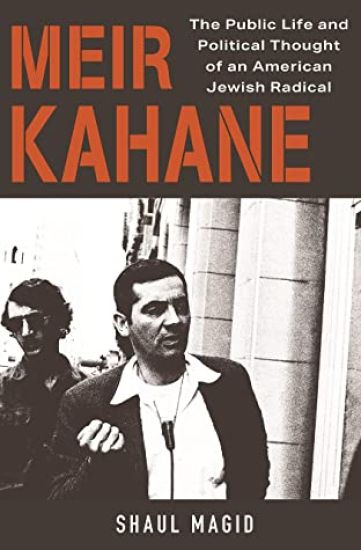
Meir Kahane

Meir Kahane

Shaul Magid

PRINCETON UNIVERSITY PRESS
2021
sidottu
The life and politics of an American Jewish activist who preached radical and violent means to Jewish survivalMeir Kahane came of age amid the radical politics of the counterculture, becoming a militant voice of protest against Jewish liberalism. Kahane founded the Jewish Defense League in 1968, declaring that Jews must protect themselves by any means necessary. He immigrated to Israel in 1971, where he founded KACH, an ultranationalist and racist political party. He would die by assassination in 1990. Shaul Magid provides an in-depth look at this controversial figure, showing how the postwar American experience shaped his life and political thought.Magid sheds new light on Kahane’s radical political views, his critique of liberalism, and his use of the “grammar of race” as a tool to promote Jewish pride. He discusses Kahane’s theory of violence as a mechanism to assure Jewish safety, and traces how his Zionism evolved from a fervent support of Israel to a belief that the Zionist project had failed. Magid examines how tradition and classical Jewish texts profoundly influenced Kahane’s thought later in life, and argues that Kahane’s enduring legacy lies not in his Israeli career but in the challenge he posed to the liberalism and assimilatory project of the postwar American Jewish establishment.This incisive book shows how Kahane was a quintessentially American figure, one who adopted the radicalism of the militant Left as a tenet of Jewish survival.
Meir Kahane

Meir Kahane

Shaul Magid

PRINCETON UNIVERSITY PRESS
2023
pokkari
The life and politics of an American Jewish activist who preached radical and violent means to Jewish survivalMeir Kahane came of age amid the radical politics of the counterculture, becoming a militant voice of protest against Jewish liberalism. Kahane founded the Jewish Defense League in 1968, declaring that Jews must protect themselves by any means necessary. He immigrated to Israel in 1971, where he founded KACH, an ultranationalist and racist political party. He would die by assassination in 1990. Shaul Magid provides an in-depth look at this controversial figure, showing how the postwar American experience shaped his life and political thought.Magid sheds new light on Kahane’s radical political views, his critique of liberalism, and his use of the “grammar of race” as a tool to promote Jewish pride. He discusses Kahane’s theory of violence as a mechanism to assure Jewish safety, and traces how his Zionism evolved from a fervent support of Israel to a belief that the Zionist project had failed. Magid examines how tradition and classical Jewish texts profoundly influenced Kahane’s thought later in life, and argues that Kahane’s enduring legacy lies not in his Israeli career but in the challenge he posed to the liberalism and assimilatory project of the postwar American Jewish establishment.This incisive book shows how Kahane was a quintessentially American figure, one who adopted the radicalism of the militant Left as a tenet of Jewish survival.
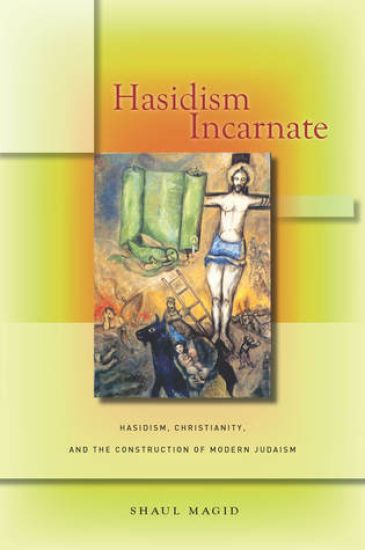
Hasidism Incarnate

Hasidism Incarnate

Shaul Magid

Stanford University Press
2014
sidottu
Hasidism Incarnate contends that much of modern Judaism in the West developed in reaction to Christianity and in defense of Judaism as a unique tradition. Ironically enough, this occurred even as modern Judaism increasingly dovetailed with Christianity with regard to its ethos, aesthetics, and attitude toward ritual and faith. Shaul Magid argues that the Hasidic movement in Eastern Europe constitutes an alternative "modernity," one that opens a new window on Jewish theological history. Unlike Judaism in German lands, Hasidism did not develop under a "Christian gaze" and had no need to be apologetic of its positions. Unburdened by an apologetic agenda (at least toward Christianity), it offered a particular reading of medieval Jewish Kabbalah filtered through a focus on the charismatic leader that resulted in a religious worldview that has much in common with Christianity. It is not that Hasidic masters knew about Christianity; rather, the basic tenets of Christianity remained present, albeit often in veiled form, in much kabbalistic teaching that Hasidism took up in its portrayal of the charismatic figure of the zaddik, whom it often described in supernatural terms.
Piety and Rebellion

Piety and Rebellion

Shaul Magid

Academic Studies Press
2019
sidottu
Piety and Rebellion examines the span of the Hasidic textual tradition from its earliest phases to the 20th century. The essays collected in this volume focus on the tension between Hasidic fidelity to tradition and its rebellious attempt to push the devotional life beyond the borders of conventional religious practice. Many of the essays exhibit a comparative perspective deployed to better articulate the innovative spirit, and traditional challenges, Hasidism presents to the traditional Jewish world. Piety and Rebellion is an attempt to present Hasidism as one case whereby maximalist religion can yield a rebellious challenge to conventional conceptions of religious thought and practice.
Piety and Rebellion

Piety and Rebellion

Shaul Magid

Academic Studies Press
2019
pokkari
Piety and Rebellion examines the span of the Hasidic textual tradition from its earliest phases to the 20th century. The essays collected in this volume focus on the tension between Hasidic fidelity to tradition and its rebellious attempt to push the devotional life beyond the borders of conventional religious practice. Many of the essays exhibit a comparative perspective deployed to better articulate the innovative spirit, and traditional challenges, Hasidism presents to the traditional Jewish world. Piety and Rebellion is an attempt to present Hasidism as one case whereby maximalist religion can yield a rebellious challenge to conventional conceptions of religious thought and practice.
The Scourge of Jewish Nationalism

The Scourge of Jewish Nationalism

Shaul Magid

University of California Press
2026
pokkari
A free ebook version of this title is available through Luminos, University of California Press’s Open Access publishing program. Visit www.luminosoa.org to learn more. The Scourge of Jewish Nationalism is the first book-length study of the theopolitical writings of Rabbi Yoel Teitelbaum of Satmar (1887–1979). A towering figure in twentieth-century Judaism, Teitelbaum was the founder and spiritual leader of the ultra-Orthodox Satmar Hasidic sect, today the largest Hasidic sect in the world. He emerged in the post-Holocaust years as one of the most provocative thinkers in traditional Judaism. The book situates Teitelbaum’s dense rabbinic writing in the larger context of contemporary political thought and theology on questions of nationalism, messianism, and Jewish covenantal theology. Introducing readers to Teitelbaum’s anti-Zionist writings, Shaul Magid argues that Teitelbaum’s anti-Zionist ideas were among the most significant Jewish theological interventions of the twentieth century. Putting his work into dialogue with important philosophers, theologians, and theorists inside and outside of Judaism, The Scourge of Jewish Nationalism closely examines Teitelbaum’s work as an illustration of how the Jewish tradition challenges, and is challenged by, the modern nationalist project and its Jewish articulation in Zionism.