Kirjojen hintavertailu. Mukana 11 785 965 kirjaa ja 12 kauppaa.

Kirjahaku

Etsi kirjoja tekijän nimen, kirjan nimen tai ISBN:n perusteella.

24 kirjaa tekijältä Sheila Fitzpatrick

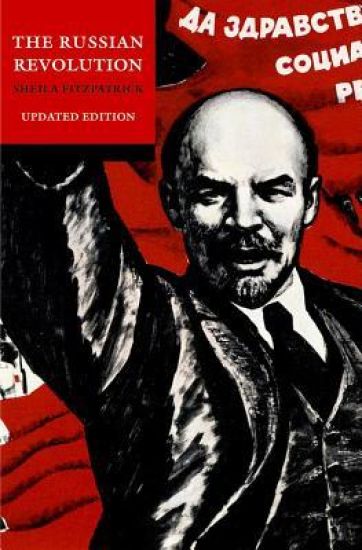
The Russian Revolution

The Russian Revolution

Sheila Fitzpatrick

Oxford University Press
2017
nidottu
The Russian Revolution had a decisive impact on the history of the twentieth century. In the years following the collapse of the Soviet regime and the opening of its archives, it has become possible to step back and see the full picture. Starting with an overview of the roots of the revolution, Fitzpatrick takes the story from 1917, through Stalin's 'revolution from above', to the great purges of the 1930s. She tells a gripping story of a Marxist revolution that was intended to transform the world, visited enormous suffering on the Russian people, and, like the French Revolution before it, ended up by devouring its own children. This updated edition contains a fully revised bibliography and updated introduction to address the centenary, what does it all mean in retrospect.
The Shortest History of the Soviet Union

The Shortest History of the Soviet Union

Sheila Fitzpatrick

Columbia University Press
2022
sidottu
In 1917, Bolshevik revolutionaries came to power in the war-torn Russian Empire in a way that defied all predictions, including their own. Scarcely a lifespan later, in 1991, the Soviet Union collapsed as accidentally as it arose. The decades between witnessed drama on an epic scale--the chaos and hope of revolution, famines and purges, hard-won victory in history's most destructive war, and worldwide geopolitical conflict, all entwined around the dream of building a better society. This book is a lively and authoritative distillation of this complex history, told with vivid details, a grand sweep, and wry wit. The acclaimed historian Sheila Fitzpatrick chronicles the Soviet Age--its rise, reign, and unexpected fall, as well as its afterlife in today's Russia. She underscores the many ironies of the Soviet experience: An ideology that claimed to offer humanity the reins of history wrangled with contingency. An avowedly internationalist and anti-imperialist state birthed an array of nationalisms. And a vision of transcending economic and social inequality and injustice gave rise to a country that was, in its way, surprisingly normal. Moving seamlessly from Lenin to Stalin to Gorbachev to Putin, The Shortest History of the Soviet Union provides an indispensable guide to one of the twentieth century's great powers and the enduring fascination it still exerts.
The Shortest History of the Soviet Union

The Shortest History of the Soviet Union

Sheila Fitzpatrick

Columbia University Press
2022
nidottu
In 1917, Bolshevik revolutionaries came to power in the war-torn Russian Empire in a way that defied all predictions, including their own. Scarcely a lifespan later, in 1991, the Soviet Union collapsed as accidentally as it arose. The decades between witnessed drama on an epic scale--the chaos and hope of revolution, famines and purges, hard-won victory in history's most destructive war, and worldwide geopolitical conflict, all entwined around the dream of building a better society. This book is a lively and authoritative distillation of this complex history, told with vivid details, a grand sweep, and wry wit. The acclaimed historian Sheila Fitzpatrick chronicles the Soviet Age--its rise, reign, and unexpected fall, as well as its afterlife in today's Russia. She underscores the many ironies of the Soviet experience: An ideology that claimed to offer humanity the reins of history wrangled with contingency. An avowedly internationalist and anti-imperialist state birthed an array of nationalisms. And a vision of transcending economic and social inequality and injustice gave rise to a country that was, in its way, surprisingly normal. Moving seamlessly from Lenin to Stalin to Gorbachev to Putin, The Shortest History of the Soviet Union provides an indispensable guide to one of the twentieth century's great powers and the enduring fascination it still exerts.
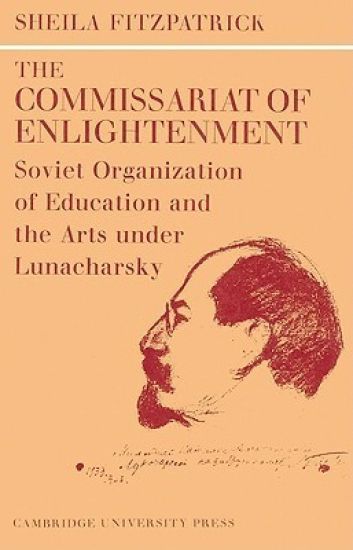
The Commissariat of Enlightenment

The Commissariat of Enlightenment

Sheila Fitzpatrick

Cambridge University Press
2002
pokkari
A study in the formation and development of a Soviet government institution after the Revolution of October 1917. The commissariat - which was responsible both for education and the arts - was the main channel of communication between the government and Bolshevik party on the one hand, and the Russian intelligentsia on the other. The commissar, Anatoly Vasilyevich Lunacharsky, was, in his own words, 'a Bolshevik among intellectuals and an intellectual among Bolsheviks'; his closest colleagues were Lenin's wife Krupskaya and the historian Pokrovsky.
Education and Social Mobility in the Soviet Union 1921–1934

Education and Social Mobility in the Soviet Union 1921–1934

Sheila Fitzpatrick

Cambridge University Press
2002
pokkari
This is a history of Soviet education policy 1921–34 that places special emphasis upon the theme of social mobility through education. One of the hitherto untold stories of Soviet history is the making of the ‘Brezhnev generation’, a cohort of young workers and Communists sent to higher education during the First Five-Year Plan (1928–1932) and subsequently catapulted into leadership positions in the wake of the Great Purge of 1937/38. A focal point of this book is the educational policies which not only produced the ‘Brezhnev generation’, but also linked Stalin’s regime with the massive upward mobility of the industrializing 1930s. The book is the first comprehensive history of Soviet education in the 1920s and early 1930s, and provides a sequel to the author’s highly praised Commissariat of Enlightenment. In this, as in the earlier study, the author has used Soviet archival sources not previously available to Western scholars.
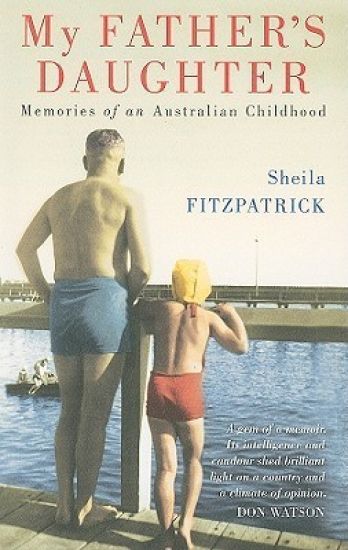
My Father's Daughter

My Father's Daughter

Sheila Fitzpatrick

Melbourne University Press
2010
nidottu
How does a daughter tell the story of her father? Sheila Fitzpatrick was taught from an early age to question authority. She learnt it from her father, the journalist and radical historian Brian Fitzpatrick. But very soon, she began to turn her questioning gaze on him. Teasing apart the many layers of memory, Fitzpatrick reveals a complex portrait of an Australian family against a Cold War backdrop. As her relationship with her father fades from girlhood adoration to adolescent scepticism, she flees Melbourne for Oxford to start a new life. But it's not so easy to escape being her father's daughter. My Father's Daughter is a vivid evocation of an Australian childhood; a personal memoir told with the piercing insight of a historian.
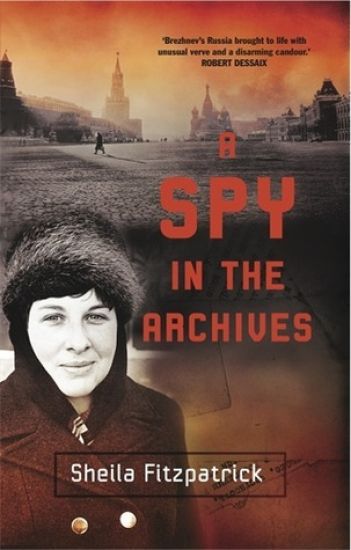
A Spy in the Archives

A Spy in the Archives

Sheila Fitzpatrick

Melbourne University Press
2013
pokkari
In 1968 historian Sheila Fitzpatrick was 'outed' by the Russian newspaper Sovetskaya Rossiya as all but a spy for Western intelligence. She was in Moscow at the time, working in Soviet archives for her doctoral thesis on AV Lunacharsky, the first Soviet Commissar of Enlightenment after the 1917 Bolshevik Revolution.Despite KGB attention, and the impossibility of finding a suitable winter coat, Sheila felt more at ease in Moscow than in Britainâ??a feeling cemented by her friendships with Lunacharsky's daughter, Irina, and brother-in-law, Igor, a reform-minded old Bolshevik who became a surrogate father and a intellectual mentor. An affair with young Communist activist, Sasha, pulled her further into a world in which she already felt at home. For the Soviet authorities and archives, however, she would always be marked as a foreigner, and so potentially a spy.Punctuated by letters to her mother in Melbourne and her diary entries of the time, and borne along by Fitzpatrick's wry, insightful narrative, A Spy in the Archives captures the life and times of Cold War Russia.
Tear Off the Masks!

Tear Off the Masks!

Sheila Fitzpatrick

Princeton University Press
2005
pokkari
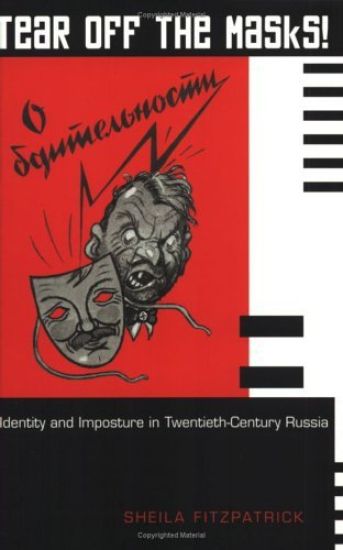
When revolutions happen, they change the rules of everyday life--both the codified rules concerning the social and legal classifications of citizens and the unwritten rules about how individuals present themselves to others. This occurred in Russia after the Bolshevik Revolution of 1917, which laid the foundations of the Soviet state, and again in 1991, when that state collapsed. Tear Off the Masks! is about the remaking of identities in these times of upheaval. Sheila Fitzpatrick here brings together in a single volume years of distinguished work on how individuals literally constructed their autobiographies, defended them under challenge, attempted to edit the "file-selves" created by bureaucratic identity documentation, and denounced others for "masking" their true social identities. Marxist class-identity labels--"worker," "peasant," "intelligentsia," "bourgeois"--were of crucial importance to the Soviet state in the 1920s and 1930s, but it turned out that the determination of a person's class was much more complicated than anyone expected. This in turn left considerable scope for individual creativity and manipulation. Outright imposters, both criminal and political, also make their appearance in this book. The final chapter describes how, after decades of struggle to construct good Soviet socialist personae, Russians had to struggle to make themselves fit for the new, post-Soviet world in the 1990s--by "de-Sovietizing" themselves. Engaging in style and replete with colorful detail and characters drawn from a wealth of sources, Tear Off the Masks! offers unique insight into the elusive forms of self-presentation, masking, and unmasking that made up Soviet citizenship and continue to resonate in the post-Soviet world.
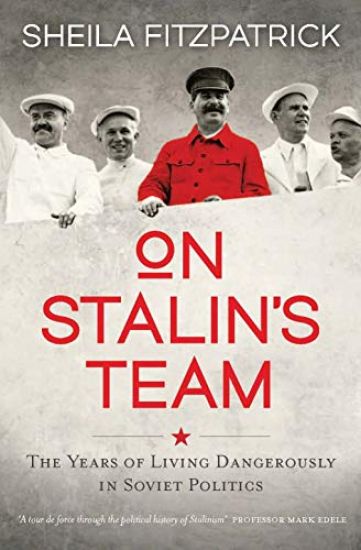
On Stalin's Team

On Stalin's Team

Sheila Fitzpatrick

Princeton University Press
2015
sidottu
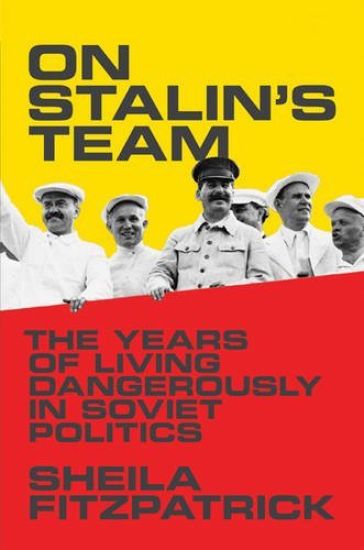
Stalin was the unchallenged dictator of the Soviet Union for so long that most historians have dismissed the officials surrounding him as mere yes-men and political window dressing. On Stalin's Team overturns this view, revealing that behind Stalin was a group of loyal men who formed a remarkably effective team with him from the late 1920s until his death in 1953. Drawing on extensive original research, Sheila Fitzpatrick provides the first in-depth account of this inner circle and their families. She vividly describes how these dedicated comrades-in-arms not only worked closely with Stalin, but also constituted his social circle. Stalin's team included the wily security chief Beria; Andreev, who traveled to provincial purges while listening to Beethoven on a portable gramophone; and Khrushchev, who finally disbanded the team four years after Stalin's death. Taking readers from the cataclysms of the Great Purges and World War II to the paranoia of Stalin's final years, On Stalin's Team paints an entirely new picture of Stalin within his milieu--one that transforms our understanding of how the Soviet Union was ruled during much of its existence.
On Stalin's Team

On Stalin's Team

Sheila Fitzpatrick

Princeton University Press
2017
pokkari
Stalin was the unchallenged dictator of the Soviet Union for so long that most historians have dismissed the officials surrounding him as mere yes-men and political window dressing. On Stalin's Team overturns this view, revealing that behind Stalin was a group of loyal men who formed a remarkably effective team with him from the late 1920s until his death in 1953. Drawing on extensive original research, Sheila Fitzpatrick provides the first in-depth account of this inner circle and their families. She vividly describes how these dedicated comrades-in-arms not only worked closely with Stalin, but also constituted his social circle. Stalin's team included the wily security chief Beria; Andreev, who traveled to provincial purges while listening to Beethoven on a portable gramophone; and Khrushchev, who finally disbanded the team four years after Stalin's death. Taking readers from the cataclysms of the Great Purges and World War II to the paranoia of Stalin's final years, On Stalin's Team paints an entirely new picture of Stalin within his milieu--one that transforms our understanding of how the Soviet Union was ruled during much of its existence.
Lost Souls

Lost Souls

Sheila Fitzpatrick

PRINCETON UNIVERSITY PRESS
2024
sidottu
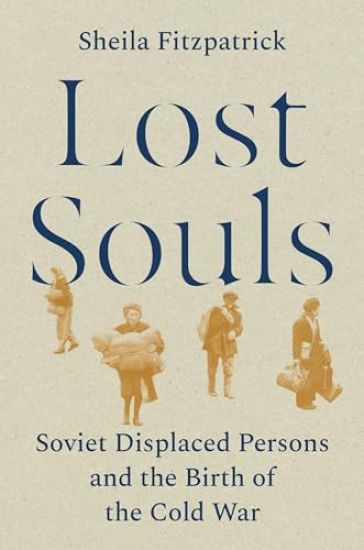
A vivid history of how Cold War politics helped solve one of the twentieth century’s biggest refugee crisesWhen World War II ended, about one million people whom the Soviet Union claimed as its citizens were outside the borders of the USSR, mostly in the Western-occupied zones of Germany and Austria. These “displaced persons,” or DPs—Russians, prewar Soviet citizens, and people from West Ukraine and the Baltic states forcibly incorporated into the Soviet Union in 1939—refused to repatriate to the Soviet Union despite its demands. Thus began one of the first big conflicts of the Cold War. In Lost Souls, Sheila Fitzpatrick draws on new archival research, including Soviet interviews with hundreds of DPs, to offer a vivid account of this crisis, from the competitive maneuverings of politicians and diplomats to the everyday lives of DPs.American enthusiasm for funding the refugee organizations taking care of DPs quickly waned after the war. It was only after DPs were redefined—from “victims of war and Nazism” to “victims of Communism”—in 1947 that a solution was found: the United States would pay for the mass resettlement of DPs in America, Australia, and other countries outside Europe. The Soviet Union protested this “theft” of its citizens. But it was a coup for the United States. The choice of DPs to live a free life in the West, and the West’s welcome of them, became an important theme in America’s Cold War propaganda battle with the Soviet Union.A compelling story of the early Cold War, Lost Souls is also a rare chronicle of a refugee crisis that was solved.
The Cultural Front

The Cultural Front

Sheila Fitzpatrick

Cornell University Press
1992
pokkari
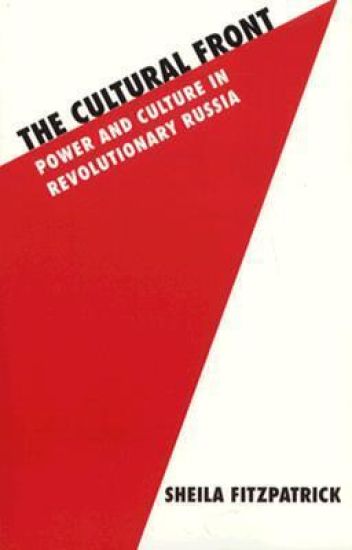
When Lenin asked, "Who will beat whom?" (Kto kogo?), he had no plan to wage revolutionary class war in culture. Many young Communists thought differently, however. Seeking in the name of the proletariat to wrest "cultural hegemony" from the intelligentsia, they turned culture into a battlefield in the 1920s. But was this, as Communist militants thought, a genuine class struggle between "proletarian" Communists and the "bourgeois" intelligentsia? Or was it, as the intelligentsia believed, an onslaught by the ruling Communist Party on the eternal principles of cultural autonomy and intellectual freedom? In this volume, one of the foremost historians of the Soviet Union chronicles the fierce battle on "the cultural front" from the October Revolution through the Stalinist 1930s. Sheila Fitzpatrick brings together ten of her essays—two previously unpublished and all revised for inclusion here—which illuminate key arenas of the prolonged struggle over cultural values and institutional control. Individual essays deal with such major issues as the Cultural Revolution, the formation of the new Stalinist elite, and socialist realism, as well as recounting colorful episodes including the uproar over Shostakovich's opera Lady Macbeth of the Mtsensk District, arguments over sexual mores, and the new consumerism of the 1930s. Closely examining the cultural elites and orthodoxies that developed under Stalin, Fitzpatrick offers a provocative reinterpretation of the struggle's final outcome in which the intelligentsia, despite its loss of autonomy and the debasement of its culture, emerged as a partial victor. The Cultural Front is essential reading for anyone interested in the formative history of the Soviet Union and the dynamic relationship between culture and politics.
"White Russians, Red Peril"

"White Russians, Red Peril"

Sheila Fitzpatrick

Taylor Francis Ltd
2021
sidottu
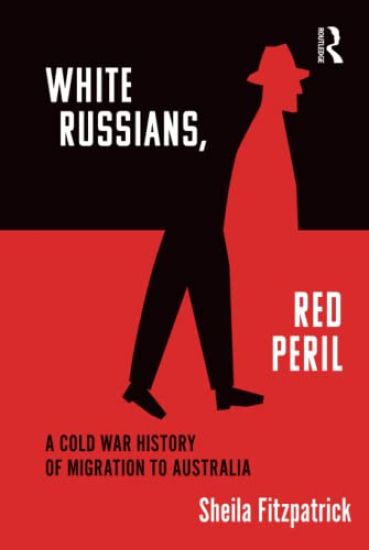
Over 20,000 ethnic Russians migrated to Australia after World War II – yet we know very little about their experiences. Some came via China, others from refugee camps in Europe.Many preferred to keep a low profile in Australia, and some attempted to ‘pass’ as Polish, West Ukrainian or Yugoslavian. They had good reason to do so: to the Soviet Union, Australia’s resettling of Russians amounted to the theft of its citizens, and undercover agents were deployed to persuade them to repatriate. Australia regarded the newcomers with wary suspicion, even as it sought to build its population by opening its door to more immigrants.Making extensive use of newly discovered Russian-language archives and drawing on a lifetime’s study of Soviet history and politics, award-winning author Sheila Fitzpatrick examines the early years of a diverse and disunited Russian-Australian community and how Australian and Soviet intelligence agencies attempted to track and influence them. While anti-Communist ‘White’ Russians dreamed a war of liberation would overthrow the Soviet regime, a dissident minority admired its achievements and thought of returning home.
"White Russians, Red Peril"

"White Russians, Red Peril"

Sheila Fitzpatrick

Taylor Francis Ltd
2021
nidottu
Over 20,000 ethnic Russians migrated to Australia after World War II – yet we know very little about their experiences. Some came via China, others from refugee camps in Europe.Many preferred to keep a low profile in Australia, and some attempted to ‘pass’ as Polish, West Ukrainian or Yugoslavian. They had good reason to do so: to the Soviet Union, Australia’s resettling of Russians amounted to the theft of its citizens, and undercover agents were deployed to persuade them to repatriate. Australia regarded the newcomers with wary suspicion, even as it sought to build its population by opening its door to more immigrants.Making extensive use of newly discovered Russian-language archives and drawing on a lifetime’s study of Soviet history and politics, award-winning author Sheila Fitzpatrick examines the early years of a diverse and disunited Russian-Australian community and how Australian and Soviet intelligence agencies attempted to track and influence them. While anti-Communist ‘White’ Russians dreamed a war of liberation would overthrow the Soviet regime, a dissident minority admired its achievements and thought of returning home.
Mischka's War

Mischka's War

Sheila Fitzpatrick

Bloomsbury Academic
2021
nidottu
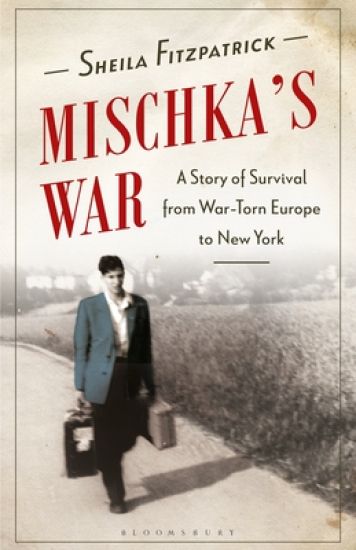
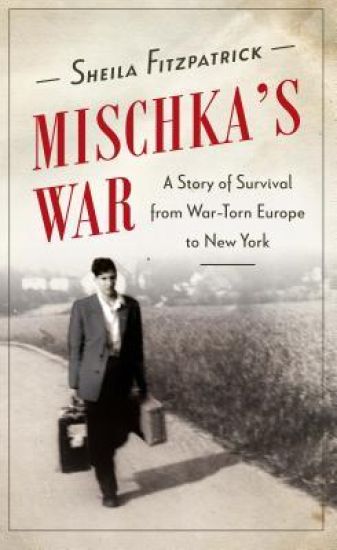
On a winter's day in 1943, 21-year-old Latvian Mischka Danos chanced on a terrible sight - a pit filled with the bodies of Jews killed by the occupying Germans. In order to escape conscription to the Waffen-SS - the authors of such atrocities - Mischka volunteered to go on a student exchange to Germany. He did not then know that he was part Jewish. Whilst in Germany, he narrowly escaped death in the Allied fire-bombing of Dresden. Surviving Hitler's Reich, he became a displaced person in occupied Germany, where in 1951 he earned a PhD at the exceptional Heidelberg Physics Institute. In the 1950s Mischka was sponsored as an immigrant to the US by a Jewish survivor whom his mother, Olga, had saved during Riga's worst period of Jewish arrests. As refugee experiences go, Mischka was among the lucky ones - but even luck leaves scars. The author Sheila Fitzpatrick, who met and married Mischka forty years after these events, turns her skills as a historian and wry eye as a memoirist to telling the remarkable story of Mischka's odyssey and survival.
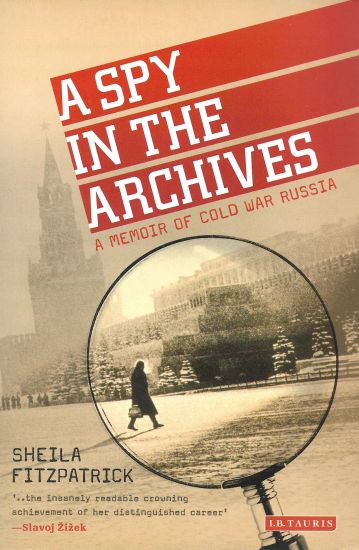
A Spy in the Archives

A Spy in the Archives

Sheila Fitzpatrick

I.B. Tauris
2015
nidottu
Moscow in the 1960s was the other side of the Iron Curtain: mysterious, exotic, even dangerous. In 1966 the historian Sheila Fitzpatrick travelled to Moscow to research in the Soviet archives. This was the era of Brezhnev, of a possible 'thaw' in the Cold War, when the Soviets couldn't decide either to thaw out properly or re-freeze. Moscow, the world capital of socialism, was renowned for its drabness. The buses were overcrowded; there were endemic shortages and endless queues. This was also the age of regular spying scandals and tit-for-tat diplomatic expulsions and it was no surprise that visiting students were subject to intense scrutiny by the KGB. Many of Fitzpatrick's friends were involved in espionage activities - and indeed others were accused of being spies or kept under close surveillance. In this book, Sheila Fitzpatrick provides a unique insight into everyday life in Soviet Moscow. Full of drama and colourful characters, her remarkable memoir highlights the dangers and drudgery faced by Westerners living under communism.
Mischka's War

Mischka's War

Sheila Fitzpatrick

I.B. Tauris
2017
sidottu
ON a winter's day in 1943, 21-year-old Latvian Mischka Danos chanced on a terrible sight - a pit filled with the bodies of Jews killed by the occupying Germans. In order to escape conscription to the Waffen-SS - the authors of such atrocities - Mischka volunteered to go on a student exchange to Germany. He did not then know that he was part Jewish. Whilst in Germany, he narrowly escaped death in the Allied fire-bombing of Dresden. Surviving Hitler's Reich, he became a displaced person in occupied Germany, where in 1951 he earned a PhD at the exceptional Heidelberg Physics Institute. In the 1950s Mischka was sponsored as an immigrant to the US by a Jewish survivor whom his mother, Olga, had saved during Riga's worst period of Jewish arrests. As refugee experiences go, Mischka was among the lucky ones - but even luck leaves scars. The author Sheila Fitzpatrick, who met and married Mischka forty years after these events, turns her skills as a historian and wry eye as a memoirist to telling the remarkable story of Mischka's odyssey and survival.