Kirjojen hintavertailu. Mukana 11 748 148 kirjaa ja 12 kauppaa.

Kirjahaku

Etsi kirjoja tekijän nimen, kirjan nimen tai ISBN:n perusteella.

10 kirjaa tekijältä Sheldon Anderson

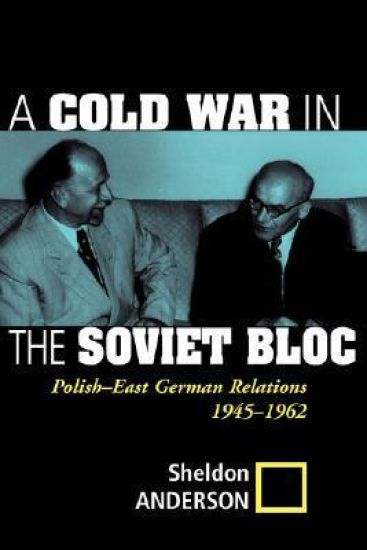
A Cold War In The Soviet Bloc

A Cold War In The Soviet Bloc

Sheldon Anderson

Routledge
2019
sidottu
In A Cold War in the Soviet Bloc, Sheldon Anderson uses recently declassified documents from Polish and East German communist party and foreign ministry archives to examine the interplay of national interests with the exigencies of communist party relations within the Soviet bloc during the Cold War. Anderson explores how Polish-East German relations were strained over the permanence of the Oder-Neisse border, the correct road to socialism, German repatriation from Poland, and trade policy; he provides an inside account of the heated debates that seriously divided the Polish and East German communists.Anderson delves into how and why the rift culminated in the return of the anti-Stalinist Wladyslaw Gomulka in October 1956, and he delineates how the Polish-East German conflict undermined the unity of the Soviet bloc on its most strategic flank. In doing so, he reveals the persistence of nationalism and ethnic prejudice in the former communist countries. In this timely text, Anderson pinpoints how nationalism has reemerged as a powerful political force following the end of the Cold War. With A Cold War in the Soviet Bloc, Anderson markedly fills the gap in the existing scholarship on postwar relations between the countries of East Europe.
Condemned to Repeat It

Condemned to Repeat It

Sheldon Anderson

Lexington Books
2007
sidottu
Foreign policymakers frequently invoke historical analogies to make and justify decisions in the belief that history teaches particular lessons. Yet historians and philosophers are not so sure. Arthur Schlesinger once wrote that, "Santayana's aphorism must be reversed; too often it is those who can remember the past who are condemned to repeat it." Condemned to Repeat It addresses six historical myths that underwrote U.S. containment policy during the Cold War. The collapse of the Soviet empire seemed to confirm the wisdom of U.S. containment policy and these "lessons of history" as universal truths that still influence U.S. foreign policy thinking today. 1) A European states system based on realism, balance-of-power, raison d'etat, and great power diplomacy did not keep a 'long peace' from 1815 to 1914. 2) The punitive Versailles Treaty with Germany did not cause the rise of Adolf Hitler and World War Two. 3) Erroneous analogies to Neville Chamberlain's failed attempt to avert war at Munich in 1938 worked its way into virtually every debate on the use of force to stop communist aggression during the Cold War. 4) Franklin Roosevelt did not "give away" Eastern Europe to Stalin at the Yalta Conference in 1945. The conventional version of Yalta as a deal to divide Europe is fictional. 5) U.S. containment policy did not create a stable bi-polar world, and like the nineteenth-century balance-of-power system, preserve another "long peace" for forty-five years after World War Two. 6) Ronald Reagan's military build-up and ideological crusade against the Soviet Union did not cause the fall of communism in 1989. Mikhail Gorbachev gave up the Soviet Empire. The Reagan 'victory school' version of the end of the Cold War has given American leaders the dubious belief that the United States alone possesses the power to create a liberal democratic, free market world order. Condemned to Repeat It appeals to anyone with an interest in the legacy of the Cold War, including undergraduate students.
Condemned to Repeat It

Condemned to Repeat It

Sheldon Anderson

Lexington Books
2007
nidottu
Foreign policymakers frequently invoke historical analogies to make and justify decisions in the belief that history teaches particular lessons. Yet historians and philosophers are not so sure. Arthur Schlesinger once wrote that, 'Santayana's aphorism must be reversed; too often it is those who can remember the past who are condemned to repeat it.' Condemned to Repeat It addresses six historical myths that underwrote U.S. containment policy during the Cold War. The collapse of the Soviet empire seemed to confirm the wisdom of U.S. containment policy and these 'lessons of history' as universal truths that still influence U.S. foreign policy thinking today. 1) A European states system based on realism, balance-of-power, raison d'etat, and great power diplomacy did not keep a 'long peace' from 1815 to 1914. 2) The punitive Versailles Treaty with Germany did not cause the rise of Adolf Hitler and World War Two. 3) Erroneous analogies to Neville Chamberlain's failed attempt to avert war at Munich in 1938 worked its way into virtually every debate on the use of force to stop communist aggression during the Cold War. 4) Franklin Roosevelt did not 'give away' Eastern Europe to Stalin at the Yalta Conference in 1945. The conventional version of Yalta as a deal to divide Europe is fictional. 5) U.S. containment policy did not create a stable bi-polar world, and like the nineteenth-century balance-of-power system, preserve another 'long peace' for forty-five years after World War Two. 6) Ronald Reagan's military build-up and ideological crusade against the Soviet Union did not cause the fall of communism in 1989. Mikhail Gorbachev gave up the Soviet Empire. The Reagan 'victory school' version of the end of the Cold War has given American leaders the dubious belief that the United States alone possesses the power to create a liberal democratic, free market world order. Condemned to Repeat It appeals to anyone with an interest in the legacy of the Cold War, including undergraduate students.
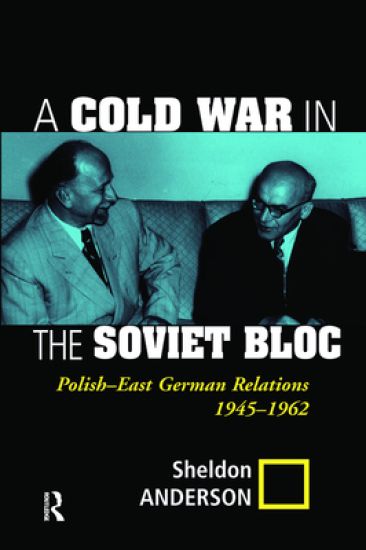
A Cold War In The Soviet Bloc

A Cold War In The Soviet Bloc

Sheldon Anderson

Westview Press Inc
2000
nidottu
In A Cold War in the Soviet Bloc, Sheldon Anderson uses recently declassified documents from Polish and East German communist party and foreign ministry archives to examine the interplay of national interests with the exigencies of communist party relations within the Soviet bloc during the Cold War. Anderson explores how Polish-East German relations were strained over the permanence of the Oder-Neisse border, the correct road to socialism, German repatriation from Poland, and trade policy; he provides an inside account of the heated debates that seriously divided the Polish and East German communists.Anderson delves into how and why the rift culminated in the return of the anti-Stalinist Wladyslaw Gomulka in October 1956, and he delineates how the Polish-East German conflict undermined the unity of the Soviet bloc on its most strategic flank. In doing so, he reveals the persistence of nationalism and ethnic prejudice in the former communist countries. In this timely text, Anderson pinpoints how nationalism has reemerged as a powerful political force following the end of the Cold War. With A Cold War in the Soviet Bloc, Anderson markedly fills the gap in the existing scholarship on postwar relations between the countries of East Europe.
Schools for Scandal

Schools for Scandal

Sheldon Anderson

UNIVERSITY OF MISSOURI PRESS
2024
sidottu
For well over a century, big-time college sports has functioned as a business enterprise, one that serves to undermine the mission of institutions of higher education. This book chronicles the long and tortured history of the NCAA’s attempt to maintain the myth of amateurism and the student-athlete, along with the attendant fiction that the players’ academic achievement is the top priority of Division-I athletic programs. It is an indictment of the current system, making the case that big-time college sports cannot continue its connection to universities without undermining the mission of higher education. It concludes with bold proposals to separate big-time college sports from the university, transforming them into on-campus business operations.
The Forgotten Legacy of Stella Walsh

The Forgotten Legacy of Stella Walsh

Sheldon Anderson

Rowman Littlefield
2017
sidottu
Stella Walsh, who was born in Poland but raised in the United States, competed for Poland at the 1932 and 1936 Olympics, winning gold and silver in the 100 meters. Running and jumping competitively for three decades, Walsh also won more than 40 U.S. national championships and set dozens of world records. In 1975, she was inducted into the National Track and Field Hall of Fame, yet Stella Walsh’s impressive accomplishments have been almost entirely ignored. In The Forgotten Legacy of Stella Walsh: The Greatest Female Athlete of Her Time, Sheldon Anderson tells the story of her remarkable life. A pioneer in women’s sports, Walsh was one of the first globetrotting athletes, running in meets all over North America, Europe, and Asia. While her accomplishments are undeniable, Walsh’s legacy was called into question after her murder in 1980. Walsh’s autopsy revealed she had ambiguous genitalia, which prompted many to demand that her awards be rescinded. In addition to telling her fascinating story, The Forgotten Legacy of Stella Walsh provides a close look at the early days of women’s track and field. This book also examines the complicated and controversial question of sex and gender identity in athletics—an issue very much in the news today. Featuring numerous photographs that help bring to life Walsh’s story and the times in which she lived, this biography will interest and inform historians of sport and women’s studies, as well as anyone who wants to learn more about a Polish immigrant who was once the fastest woman alive.
Jump Shooting to a Higher Degree

Jump Shooting to a Higher Degree

Sheldon Anderson

University of Nebraska Press
2021
pokkari
Jump Shooting to a Higher Degree chronicles Sheldon Anderson’s basketball career from grade school in small-town Moorhead, Minnesota, in the 1960s, to inner-city high school and college ball in Minneapolis, to a professional career in West Germany, and finally to communist Poland, where he did PhD research while on a basketball junket behind the Iron Curtain in the late 1980s. Because he was the only American player in the league at the time, and with help from a Polish scholar, Anderson was one of the first Western scholars to gain access to Communist Party documents. He's also likely the only American scholar to have funded his research by playing semi-pro basketball in a communist country.Jump Shooting to a Higher Degree is much more than a basketball story. Anderson provides insights into the everyday lives of people on either side of the Iron Curtain, such as the English coach he played for in West Germany, an elderly woman he visited many times in East Germany, and a sailmaker’s family he lived with in Warsaw. He reflects on German, Polish, and Cold War history, providing a commentary on the times and the places where he lived and played, and the importance of basketball along the way.
The Politics and Culture of Modern Sports

The Politics and Culture of Modern Sports

Sheldon Anderson

Lexington Books
2015
sidottu
This study examines the role of modern sports in constructing national identities and the way leaders have exploited sports to achieve domestic and foreign policy goals. The book focuses on the development of national sporting cultures in Great Britain and the United States, the particular processes by which the rest of Europe and the world adopted or rejected their games, and the impact of sports on domestic politics and foreign affairs. Teams competing in international sporting events provide people a shared national experience and a means to differentiate “us” from “them.” Particular attention is paid to the transnational influences on the construction of sporting communities, and why some areas resisted dominant sporting cultures while others adopted them and changed them to fit their particular political or societal needs. A recurrent theme of the book is that as much as they try, politicians have been frustrated in their attempts to achieve political ends through sport. The book provides a basis for understanding the political, economic, social, and diplomatic contexts in which these games were played, and to present issues that spur further discussion and research.
The Politics and Culture of Modern Sports

The Politics and Culture of Modern Sports

Sheldon Anderson

Lexington Books
2017
nidottu
This study examines the role of modern sports in constructing national identities and the way leaders have exploited sports to achieve domestic and foreign policy goals. The book focuses on the development of national sporting cultures in Great Britain and the United States, the particular processes by which the rest of Europe and the world adopted or rejected their games, and the impact of sports on domestic politics and foreign affairs. Teams competing in international sporting events provide people a shared national experience and a means to differentiate “us” from “them.” Particular attention is paid to the transnational influences on the construction of sporting communities, and why some areas resisted dominant sporting cultures while others adopted them and changed them to fit their particular political or societal needs. A recurrent theme of the book is that as much as they try, politicians have been frustrated in their attempts to achieve political ends through sport. The book provides a basis for understanding the political, economic, social, and diplomatic contexts in which these games were played, and to present issues that spur further discussion and research.