Kirjojen hintavertailu. Mukana 12 083 983 kirjaa ja 12 kauppaa.

Kirjahaku

Etsi kirjoja tekijän nimen, kirjan nimen tai ISBN:n perusteella.

3 kirjaa tekijältä Sheldon Hsiao-Peng Lu

Transnational Chinese Cinemas

Transnational Chinese Cinemas

Sheldon Hsiao-Peng Lu

University of Hawai'i Press
1997
nidottu
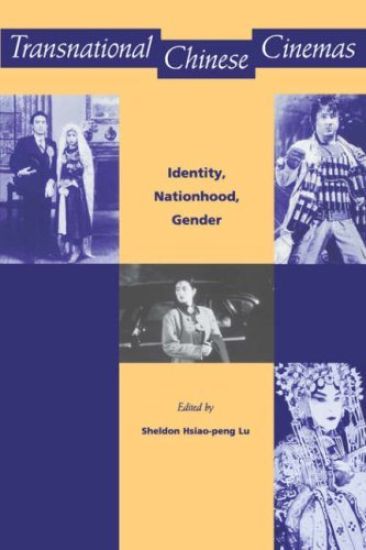
With the increasing popularity of the Chinese film industry, a large amount of foreign captial has been invested in the productions. Internationalization on this scale at both the production and consumption levels has raised the question of what constitutes ""Chinese cinema"". In this book the authors discuss the central topic of a national cinema and analyze the emergence of ""transnational cinema"" in Chinese film studies. Applying different methodologies and approaches, they explore the interrelations of national cinematic style, global capitalism, the evolution of the modern nation-state, cultural politics, censorship and gender identity. Among the film artists discussed are Cai Chusheng, Xie Jin, Chen Kaige, Zhang Yimou, Ang Lee and Jackie Chan. The volume opens with essays tracing the early decades of the 20th century, through to the Mao era and the age of transnational capitalism. Other essays consider what have been the peripheral and marginalized traditions in relation to mainstream Chinese cinema.
Chinese Modernity and Global Biopolitics

Chinese Modernity and Global Biopolitics

Sheldon Hsiao-Peng Lu

University of Hawai'i Press
2007
sidottu
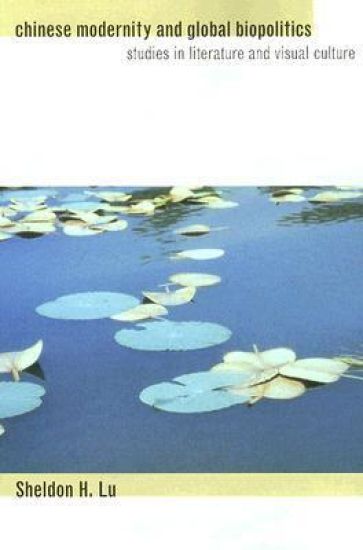
This ambitious work is a multimedia, interdisciplinary study of Chinese modernity in the context of globalization from the late nineteenth century to the present. Sheldon Lu draws on Chinese literature, film, art, photography, and video to broadly map the emergence of modern China in relation to the capitalist world-system in the economic, social, and political realms. Central to his study is the investigation of biopower and body politics, namely, the experience of globalization on a personal level. Lu first outlines the trajectory of the body in modern Chinese literature by focusing on the adventures, pleasures, and sufferings of the male (and female) body in the writings of selected authors. He then turns to avant-garde and performance art, tackling the physical self more directly through a consideration of work that takes the body as its very theme, material, and medium. In an exploration of mass visual culture, Lu analyzes artistic reactions to the multiple, uneven effects of globalization and modernization on both the physical landscape of China and the interior psyche of its citizens. This is followed by an inquiry into contemporary Chinese urban space in popular cinema and experimental photography and art. Examples are offered that capture the daily lives of contemporary Chinese as they struggle to make the transition from the vanishing space of the socialist lifestyle to the new capitalist economy of commodities. Lu reexamines the history and implications of China's belated integration into the capitalist world system before closing with a postscript that traces the genealogy of the term ""postsocialism"" and points to the real relevance of the idea for the investigation of everyday life in China in the twenty-first century.
Chinese Modernity and Global Biopolitics

Chinese Modernity and Global Biopolitics

Sheldon Hsiao-Peng Lu

University of Hawai'i Press
2007
nidottu
This ambitious work is a multimedia, interdisciplinary study of Chinese modernity in the context of globalization from the late nineteenth century to the present. Sheldon Lu draws on Chinese literature, film, art, photography, and video to broadly map the emergence of modern China in relation to the capitalist world-system in the economic, social, and political realms. Central to his study is the investigation of biopower and body politics, namely, the experience of globalization on a personal level. Lu first outlines the trajectory of the body in modern Chinese literature by focusing on the adventures, pleasures, and sufferings of the male (and female) body in the writings of selected authors. He then turns to avant-garde and performance art, tackling the physical self more directly through a consideration of work that takes the body as its very theme, material, and medium. In an exploration of mass visual culture, Lu analyzes artistic reactions to the multiple, uneven effects of globalization and modernization on both the physical landscape of China and the interior psyche of its citizens. This is followed by an inquiry into contemporary Chinese urban space in popular cinema and experimental photography and art. Examples are offered that capture the daily lives of contemporary Chinese as they struggle to make the transition from the vanishing space of the socialist lifestyle to the new capitalist economy of commodities. Lu reexamines the history and implications of China's belated integration into the capitalist world system before closing with a postscript that traces the genealogy of the term ""postsocialism"" and points to the real relevance of the idea for the investigation of everyday life in China in the twenty-first century.