Kirjojen hintavertailu. Mukana 12 016 292 kirjaa ja 12 kauppaa.

Kirjahaku

Etsi kirjoja tekijän nimen, kirjan nimen tai ISBN:n perusteella.

2 kirjaa tekijältä Sheldon M. Ebenholtz

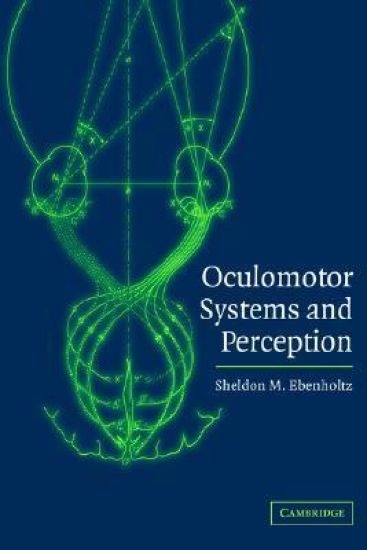
Oculomotor Systems and Perception

Oculomotor Systems and Perception

Sheldon M. Ebenholtz

Cambridge University Press
2005
pokkari
This 2001 text was the first to emphasize the role of oculomotor systems in perception. Oculomotor systems that regulate eye movements play an important role in accounting for certain qualities of visual experience. They are implicated in a wide array of perceptual topics, from apparent size, depth, and distance, to apparent slant and vertical orientation. The text begins with a brief introduction to the basic characteristics of such oculomotor systems as those controlling vergence, pursuit, the vestibulo-ocular response, and saccadic eye movements. Also introduced are fundamental concepts in physiological optics. Next explored are mechanisms of perception, with a particular focus on eye movements, and the remarkably diverse implications of oculomotor research, which extend to motion sickness and life in space orbit. Insights into dysfunctional vision are also offered. This book complements standard texts on visual perception, yet may be read independently by those with a modest background in vision science.
Oculomotor Systems and Perception

Oculomotor Systems and Perception

Sheldon M. Ebenholtz

Cambridge University Press
2001
sidottu
This text is the first to emphasize the role of oculomotor systems in perception. Oculomotor systems that regulate eye movements play an important role in accounting for certain qualities of visual experience. They are implicated in a wide array of perceptual topics, from apparent size, depth, and distance, to apparent slant and vertical orientation. The text begins with a brief introduction to the basic characteristics of such oculomotor systems as those controlling vergence, pursuit, the vestibulo-ocular response, and saccadic eye movements. Also introduced are fundamental concepts in physiological optics. Next explored are mechanisms of perception, with a particular focus on eye movements, and the remarkably diverse implications of oculomotor research, which extend to motion sickness and life in space orbit. Insights into dysfunctional vision are also offered. This book complements standard texts on visual perception, yet may be read independently by those with a modest background in vision science.