Kirjojen hintavertailu. Mukana 11 717 486 kirjaa ja 12 kauppaa.

Kirjahaku

Etsi kirjoja tekijän nimen, kirjan nimen tai ISBN:n perusteella.

3 kirjaa tekijältä Sheldon Pollack

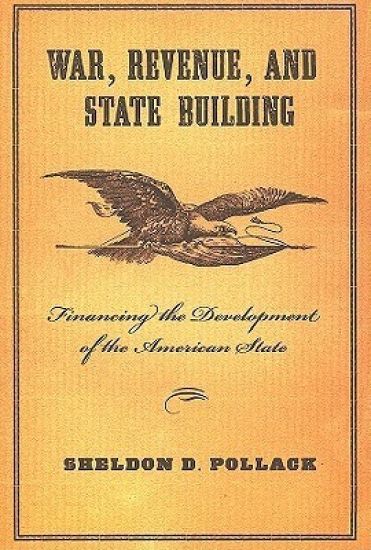
War, Revenue, and State Building

War, Revenue, and State Building

Sheldon Pollack

Cornell University Press
2009
sidottu
In a relatively short time, the American state developed from a weak, highly decentralized confederation composed of thirteen former English colonies into the foremost global superpower. This remarkable institutional transformation would not have been possible without the revenue raised by a particularly efficient system of public finance, first crafted during the Civil War and then resurrected and perfected in the early twentieth century. That revenue financed America's participation in two global wars as well as the building of a modern system of social welfare programs.Sheldon D. Pollack shows how war, revenue, and institutional development are inextricably linked, no less in the United States than in Europe and in the developing states of the Third World. He delineates the mechanisms of political development and reveals to us the ways in which the United States, too, once was and still may be a "developing nation." Without revenue, states cannot maintain political institutions, undergo development, or exert sovereignty over their territory. Rulers and their functionaries wield the coercive powers of the state to extract that revenue from the population under their control. From this perspective, the state is seen as a highly efficient machine for extracting societal revenue that is used by the state to sustain itself.War, Revenue, and State Building traces the sources of public revenue available to the American state at specific junctures of its history (in particular, during times of war), the revenue strategies pursued by its political leaders in response to these factors, and the consequential impact of those strategies on the development of the American state.

War, Revenue, and State Building

War, Revenue, and State Building

Sheldon Pollack

CORNELL UNIVERSITY PRESS
2011
muu
Pollack shows how war, revenue, and institutional development are inextricably linked in the United States, delineating the mechanisms of political development and revealing the ways in which the United States, too, once was a "developing nation."
War, Revenue, and State Building

War, Revenue, and State Building

Sheldon Pollack

Cornell University Press
2009
pokkari
In a relatively short time, the American state developed from a weak, highly decentralized confederation composed of thirteen former English colonies into the foremost global superpower. This remarkable institutional transformation would not have been possible without the revenue raised by a particularly efficient system of public finance, first crafted during the Civil War and then resurrected and perfected in the early twentieth century. That revenue financed America's participation in two global wars as well as the building of a modern system of social welfare programs.Sheldon D. Pollack shows how war, revenue, and institutional development are inextricably linked, no less in the United States than in Europe and in the developing states of the Third World. He delineates the mechanisms of political development and reveals to us the ways in which the United States, too, once was and still may be a "developing nation." Without revenue, states cannot maintain political institutions, undergo development, or exert sovereignty over their territory. Rulers and their functionaries wield the coercive powers of the state to extract that revenue from the population under their control. From this perspective, the state is seen as a highly efficient machine for extracting societal revenue that is used by the state to sustain itself.War, Revenue, and State Building traces the sources of public revenue available to the American state at specific junctures of its history (in particular, during times of war), the revenue strategies pursued by its political leaders in response to these factors, and the consequential impact of those strategies on the development of the American state.