Kirjojen hintavertailu. Mukana 11 342 296 kirjaa ja 12 kauppaa.

Kirjahaku

Etsi kirjoja tekijän nimen, kirjan nimen tai ISBN:n perusteella.

11 kirjaa tekijältä Sherrow O. Pinder

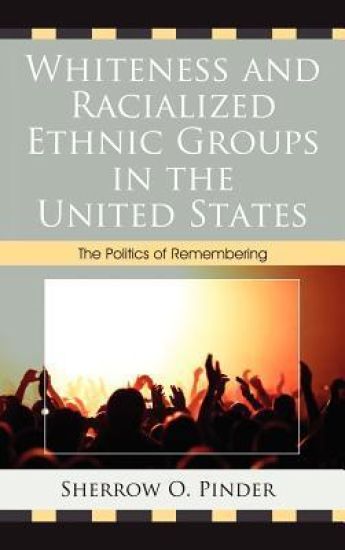
Whiteness and Racialized Ethnic Groups in the United States
Whiteness and Racialized Ethnic Groups in the United States, in order to account for the never ending discrimination toward racialized ethnic groups including First Nations, blacks, Chinese, and Mexicans, revisits the history of whiteness in the United States. It shows the difference between remembering a history of human indignities and recreating one that composes its own textual memory. More specifically, it reformulates how the historically reliant positionality of whiteness, as a part of the everyday practice and discourse of white supremacy, would later become institutionalized. Even though “whiteness studies,” with the intention of exposing white privilege, has entered the realm of academic research and is moving toward antiracist forms of whiteness or, at least, toward antiracist approaches for a different form of whiteness, it is not equipped to relinquish the privilege that comes with normalized whiteness. Hence, in order to construct a post white identity, whiteness would have to be denormalized and freed of it of its presumptive hegemony.
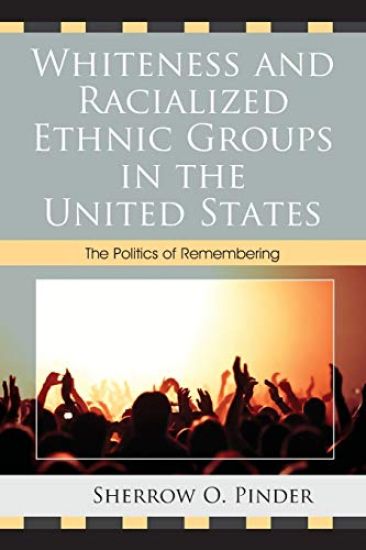
Whiteness and Racialized Ethnic Groups in the United States
Whiteness and Racialized Ethnic Groups in the United States, in order to account for the never ending discrimination toward racialized ethnic groups including First Nations, blacks, Chinese, and Mexicans, revisits the history of whiteness in the United States. It shows the difference between remembering a history of human indignities and recreating one that composes its own textual memory. More specifically, it reformulates how the historically reliant positionality of whiteness, as a part of the everyday practice and discourse of white supremacy, would later become institutionalized. Even though “whiteness studies,” with the intention of exposing white privilege, has entered the realm of academic research and is moving toward antiracist forms of whiteness or, at least, toward antiracist approaches for a different form of whiteness, it is not equipped to relinquish the privilege that comes with normalized whiteness. Hence, in order to construct a post white identity, whiteness would have to be denormalized and freed of it of its presumptive hegemony.
Michael Jackson and the Quandary of a Black Identity

Michael Jackson and the Quandary of a Black Identity

Sherrow O. Pinder

State University of New York Press
2021
sidottu
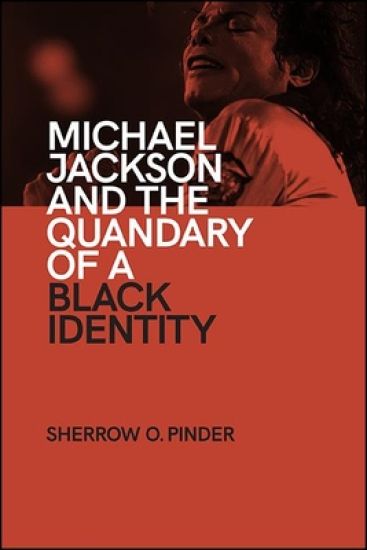
A close examination of the complexity inherent in Michael Jackson's ambiguous racial identity.In Michael Jackson and the Quandary of a Black Identity, Sherrow O. Pinder explores the ways in which the late singer's racial identification process problematizes conceptualizations of race and the presentation of blackness that reduces blacks to a bodily mark. Pinder is particularly interested in how Michael Jackson simultaneously performs his racial identity and posits it against strict binary racial definitions, neither black nor white. While Jackson's self-fashioning deconstructs and challenges the corporeal notions of "natural bodies" and fixed identities, negative readings of the King of Pop fuel epithets such as "weird" or "freak," subjecting him to a form of antagonism that denies the black body its self-determination. Thus, for Jackson, racial identification becomes a deeply ambivalent process, which leads to the fragmentation of his identity into plural identities. Pinder shows how Jackson as a racialized subject is discursively confined to a "third space," a liminal space of ambivalence.
Michael Jackson and the Quandary of a Black Identity

Michael Jackson and the Quandary of a Black Identity

Sherrow O. Pinder

STATE UNIVERSITY OF NEW YORK PRESS
2022
pokkari
A close examination of the complexity inherent in Michael Jackson's ambiguous racial identity.In Michael Jackson and the Quandary of a Black Identity, Sherrow O. Pinder explores the ways in which the late singer's racial identification process problematizes conceptualizations of race and the presentation of blackness that reduces blacks to a bodily mark. Pinder is particularly interested in how Michael Jackson simultaneously performs his racial identity and posits it against strict binary racial definitions, neither black nor white. While Jackson's self-fashioning deconstructs and challenges the corporeal notions of "natural bodies" and fixed identities, negative readings of the King of Pop fuel epithets such as "weird" or "freak," subjecting him to a form of antagonism that denies the black body its self-determination. Thus, for Jackson, racial identification becomes a deeply ambivalent process, which leads to the fragmentation of his identity into plural identities. Pinder shows how Jackson as a racialized subject is discursively confined to a "third space," a liminal space of ambivalence.
Black Women, Work, and Welfare in the Age of Globalization
Pinder explores how globalization has shaped, and continues to shape, the American economy, which impacts the welfare state in markedly new ways. In the United States, the transformation from a manufacturing economy to a service economy escalated the need for an abundance of flexible, exploitable, cheap workers. The implementation of the Personal Responsibility Work Opportunity Reconciliation Act (PRWORA), whose generic term is workfare, is one of the many ways in which the government responded to capital need for cheap labor. While there is a clear link between welfare and low-wage markets, workfare forces welfare recipients, including single mothers with young children, to work outside of the home in exchange for their welfare checks. More importantly, workfare provides an “underclass” of labor that is trapped in jobs that pay minimum wage. This “underclass” is characteristically gendered and racialized, and the book builds on these insights and seeks to illuminate a crucial but largely overlooked aspect of the negative impact of workfare on black single mother welfare recipients. The stereotype of the “underclass,” which is infused with racial meaning, is used to describe and illustrate the position of black single mother welfare recipients and is an implicit way of talking about poor women with an invidious racist and sexist subtext, which Pinder suggests is one of the ways in which “gendered racism” presents itself in the United States. Ultimately, the book analyzes the intersectionality of race, gender, and class in terms of welfare policy reform in the United States.
Black Women, Work, and Welfare in the Age of Globalization
Pinder explores how globalization has shaped, and continues to shape, the American economy, which impacts the welfare state in markedly new ways. In the United States, the transformation from a manufacturing economy to a service economy escalated the need for an abundance of flexible, exploitable, cheap workers. The implementation of the Personal Responsibility Work Opportunity Reconciliation Act (PRWORA), whose generic term is workfare, is one of the many ways in which the government responded to capital need for cheap labor. While there is a clear link between welfare and low-wage markets, workfare forces welfare recipients, including single mothers with young children, to work outside of the home in exchange for their welfare checks. More importantly, workfare provides an “underclass” of labor that is trapped in jobs that pay minimum wage. This “underclass” is characteristically gendered and racialized, and the book builds on these insights and seeks to illuminate a crucial but largely overlooked aspect of the negative impact of workfare on black single mother welfare recipients. The stereotype of the “underclass,” which is infused with racial meaning, is used to describe and illustrate the position of black single mother welfare recipients and is an implicit way of talking about poor women with an invidious racist and sexist subtext, which Pinder suggests is one of the ways in which “gendered racism” presents itself in the United States. Ultimately, the book analyzes the intersectionality of race, gender, and class in terms of welfare policy reform in the United States.
David Walker

David Walker

Sherrow O. Pinder

JOHN WILEY AND SONS LTD
2024
sidottu
David Walker, a free (with a small f) black man, was one of the most significant African-American abolitionists of the nineteenth century. Born in a slave society before moving to Boston where, after the American Revolutionary War, slavery was abolished, Walker devoted his life to fighting slavery and antiblack racism. In this book, Sherrow O. Pinder brings to light Walker’s lived experience, activism, and the synchronizing of his Christian principles and reformist radicalism to demonstrate why and how slavery must be eliminated. Walker’s call for blacks to regain their natural rights culminated in his Appeal to the Coloured Citizens of the World, an enormously influential work that is now considered a founding text of black studies. Today, given the escalation of antiblack racism manifested in the upholding of institutionalized violence by the state and the continued marginality of African-Americans, we cannot afford to forget Walker’s push for racial egalitarianism: it is more urgent than ever.
David Walker

David Walker

Sherrow O. Pinder

JOHN WILEY AND SONS LTD
2024
nidottu
David Walker, a free (with a small f) black man, was one of the most significant African-American abolitionists of the nineteenth century. Born in a slave society before moving to Boston where, after the American Revolutionary War, slavery was abolished, Walker devoted his life to fighting slavery and antiblack racism. In this book, Sherrow O. Pinder brings to light Walker’s lived experience, activism, and the synchronizing of his Christian principles and reformist radicalism to demonstrate why and how slavery must be eliminated. Walker’s call for blacks to regain their natural rights culminated in his Appeal to the Coloured Citizens of the World, an enormously influential work that is now considered a founding text of black studies. Today, given the escalation of antiblack racism manifested in the upholding of institutionalized violence by the state and the continued marginality of African-Americans, we cannot afford to forget Walker’s push for racial egalitarianism: it is more urgent than ever.