In 1919 a middle-aged Chicago advertising writer from Ohio, a failure as a businessman, husband, and father, published a small yellow book of short stories intended to "reform" American literature. Against all expectations, Winesburg, Ohio: A Group of Tales of Ohio Small Town Life achieved what its author intended: after 1919 and after Winesburg, Ohio, American literature would be written and read freshly and differently. Winesburg, Ohio has never been out of print, but never has Anderson's book been published in the form and with the editorial care that the work has needed and deserved. The present text, authorized by the Sherwood Anderson Literary Estate Trust, is an expert text. The editor has relied on years of experience in editing Sherwood Anderson and has consulted all Anderson manuscripts, typescripts, letters, and diaries and all editions of the book to present the masterpiece in its intended state. New to this expert edition of Winesburg, Ohio are historical and cultural annotations, documentation of changes in the various editions, identification of the Ohio originals for Anderson's characters, and maps bearing the streets and buildings of the real town of Clyde, Ohio, which is the basis of Anderson's fictional account. Included as well are unique photographs of Anderson and Clyde, Ohio, illustrations that deepen knowledge and feeling for the author's actual hometown and time, revealing Winesburg, Ohio to be an intensely local narrative—very much an "Ohio" book—and yet a book that has found and held worldwide attention.
In 1919 a middle-aged Chicago advertising writer from Ohio, a failure as a businessman, husband, and father, published a small yellow book of short stories intended to "reform" American literature. Against all expectations, Winesburg, Ohio: A Group of Tales of Ohio Small Town Life achieved what its author intended: after 1919 and after Winesburg, Ohio, American literature would be written and read freshly and differently. Winesburg, Ohio has never been out of print, but never has Anderson's book been published in the form and with the editorial care that the work has needed and deserved. The present text, authorized by the Sherwood Anderson Literary Estate Trust, is an expert text. The editor has relied on years of experience in editing Sherwood Anderson and has consulted all Anderson manuscripts, typescripts, letters, and diaries and all editions of the book to present the masterpiece in its intended state. New to this expert edition of Winesburg, Ohio are historical and cultural annotations, documentation of changes in the various editions, identification of the Ohio originals for Anderson's characters, and maps bearing the streets and buildings of the real town of Clyde, Ohio, which is the basis of Anderson's fictional account. Included as well are unique photographs of Anderson and Clyde, Ohio, illustrations that deepen knowledge and feeling for the author's actual hometown and time, revealing Winesburg, Ohio to be an intensely local narrative—very much an "Ohio" book—and yet a book that has found and held worldwide attention.
Winesburg, Ohio (full title: Winesburg, Ohio: A Group of Tales of Ohio Small-Town Life) is a 1919 short story cycle by the American author Sherwood Anderson. The work is structured around the life of protagonist George Willard, from the time he was a child to his growing independence and ultimate abandonment of Winesburg as a young man. It is set in the fictional town of Winesburg, Ohio (not to be confused with the actual Winesburg), which is based loosely on the author's childhood memories of Clyde, Ohio. Mostly written from late 1915 to early 1916, with a few stories completed closer to publication, they were "...conceived as complementary parts of a whole, centered in the background of a single community."The book consists of twenty-two stories, with the first story, "The Book of the Grotesque", serving as an introduction. Each of the stories shares a specific character's past and present struggle to overcome the loneliness and isolation that seems to permeate the town. Stylistically, because of its emphasis on the psychological insights of characters over plot, and plain-spoken prose, Winesburg, Ohio is known as one of the earliest works of Modernist literature. Winesburg, Ohio was received well by critics despite some reservations about its moral tone and unconventional storytelling. Though its reputation waned in the 1930s, it has since rebounded and is now considered one of the most influential portraits of pre-industrial small-town life in the United States. In 1998, the Modern Library ranked Winesburg, Ohio 24th on its list of the 100 best English-language novels of the 20th century. 6]Though there is practically no argument about the unity of structure within Winesburg, Ohio, few scholars have concluded that it fits the standards of a conventional novel.Instead, it is typically placed "...midway between the novel proper and the mere collection of stories," known as the short story cycle. 10] Aside from its structural unity, the common setting, characters, symbolism and "consistency of mood" are all additional qualities that tie the stories together despite their initial publication as separate tales. Promoted to younger writers by Anderson himself, 12] Winesburg, Ohio has served as a representative early example of the modern short story cycle in American letters. Comparisons between Winesburg, Ohio and Jean Toomer's Cane (1923), Ernest Hemingway's In Our Time (1925), William Faulkner's Go Down, Moses (1942), and several of John Steinbeck's works, among others, demonstrate the pervasiveness of the formal innovations made in Anderson's book. The focus on George Willard's development as a young man and a writer has also led some critics to put Winesburg, Ohio within the tradition of "the American boy book, the Bildungsroman, and the K nstlerroman
Winesburg, Ohio (full title: Winesburg, Ohio: A Group of Tales of Ohio Small-Town Life) is a 1919 short story cycle by the American author Sherwood Anderson. The work is structured around the life of protagonist George Willard, from the time he was a child to his growing independence and ultimate abandonment of Winesburg as a young man. It is set in the fictional town of Winesburg, Ohio (not to be confused with the actual Winesburg), which is based loosely on the author's childhood memories of Clyde, Ohio. Mostly written from late 1915 to early 1916, with a few stories completed closer to publication, they were "...conceived as complementary parts of a whole, centered in the background of a single community." 1] The book consists of twenty-two stories, with the first story, "The Book of the Grotesque", serving as an introduction. Each of the stories shares a specific character's past and present struggle to overcome the loneliness and isolation that seems to permeate the town. Stylistically, because of its emphasis on the psychological insights of characters over plot, and plain-spoken prose, Winesburg, Ohio is known as one of the earliest works of Modernist literature
Winesburg, Ohio (full title: Winesburg, Ohio: A Group of Tales of Ohio Small-Town Life) is a 1919 short story cycle by the American author Sherwood Anderson. The work is structured around the life of protagonist George Willard, from the time he was a child to his growing independence and ultimate abandonment of Winesburg as a young man. It is set in the fictional town of Winesburg, Ohio (not to be confused with the actual Winesburg), which is based loosely on the author's childhood memories of Clyde, Ohio. Mostly written from late 1915 to early 1916, with a few stories completed closer to publication, they were "...conceived as complementary parts of a whole, centered in the background of a single community."The book consists of twenty-two stories, with the first story, "The Book of the Grotesque", serving as an introduction. Each of the stories shares a specific character's past and present struggle to overcome the loneliness and isolation that seems to permeate the town. Stylistically, because of its emphasis on the psychological insights of characters over plot, and plain-spoken prose, Winesburg, Ohio is known as one of the earliest works of Modernist literature. Winesburg, Ohio was received well by critics despite some reservations about its moral tone and unconventional storytelling. Though its reputation waned in the 1930s, it has since rebounded and is now considered one of the most influential portraits of pre-industrial small-town life in the United States.In 1998, the Modern Library ranked Winesburg, Ohio 24th on its list of the 100 best English-language novels of the 20th century.... Sherwood Anderson (September 13, 1876 - March 8, 1941) was an American novelist and short story writer, known for subjective and self-revealing works. Self-educated, he rose to become a successful copywriter and business owner in Cleveland and Elyria, Ohio. In 1912, Anderson had a nervous breakdown that led him to abandon his business and family to become a writer. At the time, he moved to Chicago and was eventually married three more times. His most enduring work is the short-story sequence Winesburg, Ohio, which launched his career. Throughout the 1920s, Anderson published several short story collections, novels, memoirs, books of essays, and a book of poetry. Though his books sold reasonably well, Dark Laughter (1925), a novel inspired by Anderson's time in New Orleans during the 1920s, was the only bestseller of his career. Early life Sherwood Berton Anderson was born on September 13, 1876 in Camden, Ohio, a farming town with a population of around 650 (according to the 1870 census). He was the third of seven children born to Emma Jane (n e Smith) and former Union soldier and harness-maker Irwin McLain Anderson. Considered reasonably well-off financially-Anderson's father was seen as an up-and-comer by his Camden contemporaries, the family left town just before Sherwood's first birthday. Reasons for the departure are uncertain; most biographers note rumors of debts incurred by either Irwin or his brother Benjamin. The Andersons headed north to Caledonia by way of a brief stay in a village of a few hundred called Independence (now Butler). Four or five years were spent in Caledonia, years which formed Anderson's earliest memories. This period later inspired his semi-autobiographical novel Tar: A Midwest Childhood (1926). In Caledonia Anderson's father began drinking excessively, which led to financial difficulties, eventually causing the family to leave the town....
Winesburg, Ohio (full title: Winesburg, Ohio: A Group of Tales of Ohio Small-Town Life) is a 1919 short story cycle by the American author Sherwood Anderson. The work is structured around the life of protagonist George Willard, from the time he was a child to his growing independence and ultimate abandonment of Winesburg as a young man. It is set in the fictional town of Winesburg, Ohio (not to be confused with the actual Winesburg), which is based loosely on the author's childhood memories of Clyde, Ohio. Mostly written from late 1915 to early 1916, with a few stories completed closer to publication, they were "...conceived as complementary parts of a whole, centered in the background of a single community."The book consists of twenty-two stories, with the first story, "The Book of the Grotesque", serving as an introduction. Each of the stories shares a specific character's past and present struggle to overcome the loneliness and isolation that seems to permeate the town. Stylistically, because of its emphasis on the psychological insights of characters over plot, and plain-spoken prose, Winesburg, Ohio is known as one of the earliest works of Modernist literature. Winesburg, Ohio was received well by critics despite some reservations about its moral tone and unconventional storytelling. Though its reputation waned in the 1930s, it has since rebounded and is now considered one of the most influential portraits of pre-industrial small-town life in the United States.In 1998, the Modern Library ranked Winesburg, Ohio 24th on its list of the 100 best English-language novels of the 20th century............. Sherwood Anderson (September 13, 1876 - March 8, 1941) was an American novelist and short story writer, known for subjective and self-revealing works. Self-educated, he rose to become a successful copywriter and business owner in Cleveland and Elyria, Ohio. In 1912, Anderson had a nervous breakdown that led him to abandon his business and family to become a writer. At the time, he moved to Chicago and was eventually married three more times. His most enduring work is the short-story sequence Winesburg, Ohio, which launched his career. Throughout the 1920s, Anderson published several short story collections, novels, memoirs, books of essays, and a book of poetry. Though his books sold reasonably well, Dark Laughter (1925), a novel inspired by Anderson's time in New Orleans during the 1920s, was the only bestseller of his career. Early life Sherwood Berton Anderson was born on September 13, 1876 in Camden, Ohio, a farming town with a population of around 650 (according to the 1870 census). He was the third of seven children born to Emma Jane (n e Smith) and former Union soldier and harness-maker Irwin McLain Anderson. Considered reasonably well-off financially-Anderson's father was seen as an up-and-comer by his Camden contemporaries, the family left town just before Sherwood's first birthday. Reasons for the departure are uncertain; most biographers note rumors of debts incurred by either Irwin or his brother Benjamin. The Andersons headed north to Caledonia by way of a brief stay in a village of a few hundred called Independence (now Butler). Four or five years were spent in Caledonia, years which formed Anderson's earliest memories. This period later inspired his semi-autobiographical novel Tar: A Midwest Childhood (1926). In Caledonia Anderson's father began drinking excessively, which led to financial difficulties, eventually causing the family to leave the town. With each move, Irwin Anderson's prospects dimmed; while in Camden he was the proprietor of a successful shop and could employ an assistant; by the time the Andersons finally settled down in Clyde, Ohio in 1884, a frontier town, Irwin could only get work as a hired man to harness manufacturers. ...
"Nothing quite like it has ever been done in America. . . . It is so vivid, so full of insight, so shiningly life-like and glowing, that the book is lifted into a category all its own," wrote H.L. Mencken, speaking of Anderson's "Winesburg, Ohio." Anderson, he said, is "America's Most Distinctive Novelist." "Windy McPherson's Son," Anderson's 1916 first novel, concerns a boy's life in Iowa. Like all of Anderson's tales, it's an important social commentary, and not to be overlooked....... Sherwood Anderson (September 13, 1876 - March 8, 1941) was an American novelist and short story writer, known for subjective and self-revealing works. Self-educated, he rose to become a successful copywriter and business owner in Cleveland and Elyria, Ohio. In 1912, Anderson had a nervous breakdown that led him to abandon his business and family to become a writer. At the time, he moved to Chicago and was eventually married three more times. His most enduring work is the short-story sequence Winesburg, Ohio, which launched his career. Throughout the 1920s, Anderson published several short story collections, novels, memoirs, books of essays, and a book of poetry. Though his books sold reasonably well, Dark Laughter (1925), a novel inspired by Anderson's time in New Orleans during the 1920s, was the only bestseller of his career. Early life Sherwood Berton Anderson was born on September 13, 1876 in Camden, Ohio, a farming town with a population of around 650 (according to the 1870 census). He was the third of seven children born to Emma Jane (n e Smith) and former Union soldier and harness-maker Irwin McLain Anderson. Considered reasonably well-off financially-Anderson's father was seen as an up-and-comer by his Camden contemporaries, the family left town just before Sherwood's first birthday. Reasons for the departure are uncertain; most biographers note rumors of debts incurred by either Irwin or his brother Benjamin. The Andersons headed north to Caledonia by way of a brief stay in a village of a few hundred called Independence (now Butler). Four or five years were spent in Caledonia, years which formed Anderson's earliest memories. This period later inspired his semi-autobiographical novel Tar: A Midwest Childhood (1926). In Caledonia Anderson's father began drinking excessively, which led to financial difficulties, eventually causing the family to leave the town. With each move, Irwin Anderson's prospects dimmed; while in Camden he was the proprietor of a successful shop and could employ an assistant; by the time the Andersons finally settled down in Clyde, Ohio in 1884, a frontier town, Irwin could only get work as a hired man to harness manufacturers. That job was short-lived, and for the rest of Sherwood Anderson's childhood, his father barely supported the family as an occasional sign-painter and paperhanger, while his mother took in washing to make ends meet. Partly as a result of these misfortunes, young Sherwood became adept at finding various odd jobs to help his family, earning the nickname "Jobby." Though he was a decent student, Anderson's attendance at school declined as he began picking up work, and he finally left school for good at age 14 after about nine months of high school. From the time he began to cut school to the time he left town, Anderson worked as a "...newsboy, errand boy, waterboy, cow-driver, stable groom, and perhaps printer's devil, not to mention assistant to Irwin Anderson, Sign Painter..." in addition to assembling bicycles for the Elmore Manufacturing Company. Even in his teens, Anderson's talent for selling was evident, a talent he would later draw on it in a successful career in advertising. As a newsboy he was said to have convinced a tired farmer in a saloon to buy two copies of the same evening paper. With the exception of work, Anderson's childhood resembled that of other boys his age....
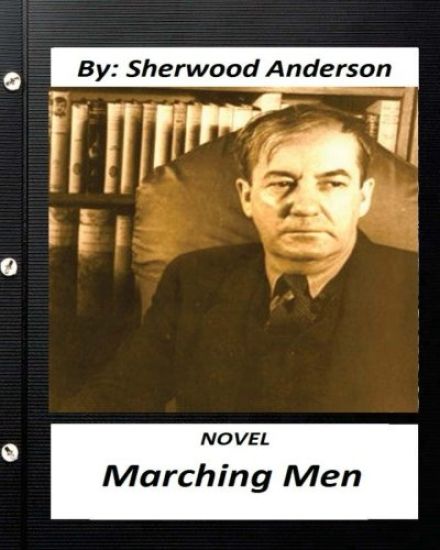
Marching Men is a 1917 novel by American author Sherwood Anderson. Published by John Lane, the novel is Anderson's second book; the first being the 1916 novel Windy McPherson's Son. Marching Men is the story of Norman "Beaut" McGregor, a young man discontented with the powerlessness and lack of personal ambition among the miners of his hometown. After moving to Chicago he discovers his purpose is to empower workers by having them march in unison. Major themes of the novel include the organization of laborers, eradication of disorder, and the role of the exceptional man in society. The latter theme led post-World War II critics to compare Anderson's militaristic approach to homosocial order and the fascists of the War's Axis powers. Marching Men was written as a hobby project while Sherwood Anderson was still working in advertising. A combination of a small first run, mediocre reviews, and poor sales, convinced Anderson's publisher not to give Marching Men a second run. The novel has since been reprinted several times by other publishers including a 1927 Russian translation, yet is generally forgotten by the reading public except as a step in the development of its author.... Sherwood Anderson (September 13, 1876 - March 8, 1941) was an American novelist and short story writer, known for subjective and self-revealing works. Self-educated, he rose to become a successful copywriter and business owner in Cleveland and Elyria, Ohio. In 1912, Anderson had a nervous breakdown that led him to abandon his business and family to become a writer. At the time, he moved to Chicago and was eventually married three more times. His most enduring work is the short-story sequence Winesburg, Ohio, which launched his career. Throughout the 1920s, Anderson published several short story collections, novels, memoirs, books of essays, and a book of poetry. Though his books sold reasonably well, Dark Laughter (1925), a novel inspired by Anderson's time in New Orleans during the 1920s, was the only bestseller of his career. Early life Sherwood Berton Anderson was born on September 13, 1876 in Camden, Ohio, a farming town with a population of around 650 (according to the 1870 census). He was the third of seven children born to Emma Jane (n e Smith) and former Union soldier and harness-maker Irwin McLain Anderson. Considered reasonably well-off financially-Anderson's father was seen as an up-and-comer by his Camden contemporaries, the family left town just before Sherwood's first birthday. Reasons for the departure are uncertain; most biographers note rumors of debts incurred by either Irwin or his brother Benjamin. The Andersons headed north to Caledonia by way of a brief stay in a village of a few hundred called Independence (now Butler). Four or five years were spent in Caledonia, years which formed Anderson's earliest memories. This period later inspired his semi-autobiographical novel Tar: A Midwest Childhood (1926). In Caledonia Anderson's father began drinking excessively, which led to financial difficulties, eventually causing the family to leave the town....
It is the story of an inventor, Hugh McVey, who rises from poverty on the bank of the Mississippi River. The novel shows the influence of industrialism on the rural heartland of America........ Sherwood Anderson (September 13, 1876 - March 8, 1941) was an American novelist and short story writer, known for subjective and self-revealing works. Self-educated, he rose to become a successful copywriter and business owner in Cleveland and Elyria, Ohio. In 1912, Anderson had a nervous breakdown that led him to abandon his business and family to become a writer. At the time, he moved to Chicago and was eventually married three more times. His most enduring work is the short-story sequence Winesburg, Ohio, which launched his career. Throughout the 1920s, Anderson published several short story collections, novels, memoirs, books of essays, and a book of poetry. Though his books sold reasonably well, Dark Laughter (1925), a novel inspired by Anderson's time in New Orleans during the 1920s, was the only bestseller of his career. Early life Sherwood Berton Anderson was born on September 13, 1876 in Camden, Ohio, a farming town with a population of around 650 (according to the 1870 census). He was the third of seven children born to Emma Jane (n e Smith) and former Union soldier and harness-maker Irwin McLain Anderson. Considered reasonably well-off financially-Anderson's father was seen as an up-and-comer by his Camden contemporaries, the family left town just before Sherwood's first birthday. Reasons for the departure are uncertain; most biographers note rumors of debts incurred by either Irwin or his brother Benjamin. The Andersons headed north to Caledonia by way of a brief stay in a village of a few hundred called Independence (now Butler). Four or five years were spent in Caledonia, years which formed Anderson's earliest memories. This period later inspired his semi-autobiographical novel Tar: A Midwest Childhood (1926). In Caledonia Anderson's father began drinking excessively, which led to financial difficulties, eventually causing the family to leave the town. With each move, Irwin Anderson's prospects dimmed; while in Camden he was the proprietor of a successful shop and could employ an assistant; by the time the Andersons finally settled down in Clyde, Ohio in 1884, a frontier town, Irwin could only get work as a hired man to harness manufacturers. That job was short-lived, and for the rest of Sherwood Anderson's childhood, his father barely supported the family as an occasional sign-painter and paperhanger, while his mother took in washing to make ends meet. Partly as a result of these misfortunes, young Sherwood became adept at finding various odd jobs to help his family, earning the nickname "Jobby." Though he was a decent student, Anderson's attendance at school declined as he began picking up work, and he finally left school for good at age 14 after about nine months of high school. From the time he began to cut school to the time he left town, Anderson worked as a "...newsboy, errand boy, waterboy, cow-driver, stable groom, and perhaps printer's devil, not to mention assistant to Irwin Anderson, Sign Painter..." in addition to assembling bicycles for the Elmore Manufacturing Company. Even in his teens, Anderson's talent for selling was evident, a talent he would later draw on it in a successful career in advertising. As a newsboy he was said to have convinced a tired farmer in a saloon to buy two copies of the same evening paper. With the exception of work, Anderson's childhood resembled that of other boys his age. In addition to participating in local events and spending time with his friends, Anderson was a voracious reader....