
Kirjahaku
Etsi kirjoja tekijän nimen, kirjan nimen tai ISBN:n perusteella.
4 kirjaa tekijältä Shuang Wang
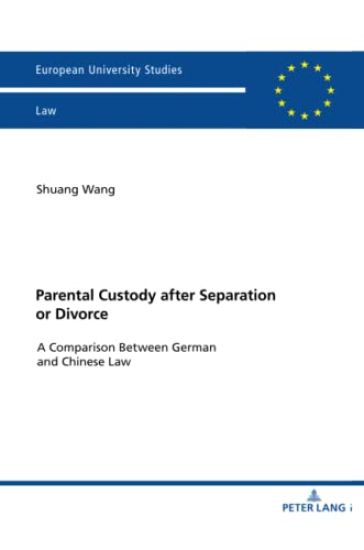
Different from the traditional legislation in family issues which focused on marriage and divorce, current legislation in Germany has come to highlight the relationship between parents and children. The book focuses on parental custody after separation or divorce in Germany and China before a legal comparison is drawn. Furthermore, the book explores possible legal reforms in this field in the two legal systems.
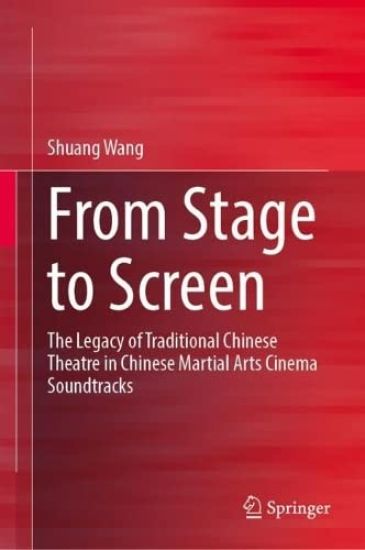
Chinese martial arts cinema is held to be a synthesis drawing on artistic conventions of traditional Chinese theatre. Film sound and music perform as the legitimate heirs of some of the aesthetic ideas and norms of traditional Chinese theatre. This book critically examines the history of this under-explored field of inquiry from a theoretically comparative perspective, demonstrating that the musical codes drawn from traditional theatre are a constantly changing component integral to Chinese martial arts cinema. It explores the interaction between traditional Chinese theatre and Chinese martial arts cinema in how the musical codes of the former have shaped the aesthetics of the latter uniquely. This departs from conventional existing studies that focus on “adaptation.” The book’s historical and theoretical approach connects film, theatre and music, and re-defines the status of distinctive domains of filmic expression, grounding theatre as the pivot – or “hinge” – of film aesthetics. Thebook proffers this unique angle of research to rethink and re-imagine film sound and audiovisual synchronisation. Primarily intended for scholars in Chinese cinema, film music, Chinese theatre and visual culture, this monograph also presents introductory and comprehensive material for undergraduate and graduate-level courses in film and media studies, film music, Chinese cinema, and Chinese theatre.
Chinese martial arts cinema is held to be a synthesis drawing on artistic conventions of traditional Chinese theatre. Film sound and music perform as the legitimate heirs of some of the aesthetic ideas and norms of traditional Chinese theatre. This book critically examines the history of this under-explored field of inquiry from a theoretically comparative perspective, demonstrating that the musical codes drawn from traditional theatre are a constantly changing component integral to Chinese martial arts cinema. It explores the interaction between traditional Chinese theatre and Chinese martial arts cinema in how the musical codes of the former have shaped the aesthetics of the latter uniquely. This departs from conventional existing studies that focus on “adaptation.” The book’s historical and theoretical approach connects film, theatre and music, and re-defines the status of distinctive domains of filmic expression, grounding theatre as the pivot – or “hinge” – of film aesthetics. Thebook proffers this unique angle of research to rethink and re-imagine film sound and audiovisual synchronisation. Primarily intended for scholars in Chinese cinema, film music, Chinese theatre and visual culture, this monograph also presents introductory and comprehensive material for undergraduate and graduate-level courses in film and media studies, film music, Chinese cinema, and Chinese theatre.