Kirjojen hintavertailu. Mukana 12 417 986 kirjaa ja 12 kauppaa.

Kirjahaku

Etsi kirjoja tekijän nimen, kirjan nimen tai ISBN:n perusteella.

10 kirjaa tekijältä Sidney Homan

How and Why We Teach Shakespeare

How and Why We Teach Shakespeare

Sidney Homan

Routledge
2019
sidottu
In How and Why We Teach Shakespeare, 19 distinguished college teachers and directors draw from their personal experiences and share their methods and the reasons why they teach Shakespeare. The collection is divided into four sections: studying the text as a script for performance; exploring Shakespeare by performing; implementing specific techniques for getting into the plays; and working in different classrooms and settings.The contributors offer a rich variety of topics, including:working with cues in Shakespeare, such as line and mid-line endings that lead to questions of interpretationseeing Shakespeare’s stage directions and the Elizabethan playhouse itself as contributing to a play’s meaningusing the "gamified" learning model or cue-cards to get into the textthinking of the classroom as a rehearsalplaying the Friar to a student’s Juliet in a production of Romeo and Juliet teaching Shakespeare to inner-city students or in a country torn by political and social upheavals.For fellow instructors of Shakespeare, the contributors address their own philosophies of teaching, the relation between scholarship and performance, and—perhaps most of all—why in this age the study of Shakespeare is so important.Chapter 10 of this book is freely available as a downloadable Open Access PDF at http://www.taylorfrancis.com under a Creative Commons Attribution-Non Commercial-No Derivatives (CC-BY-NC-ND) 4.0 license.
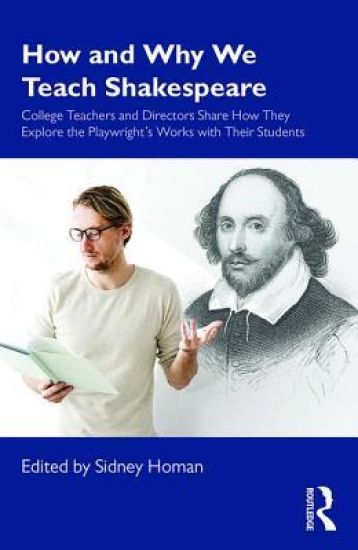
How and Why We Teach Shakespeare

How and Why We Teach Shakespeare

Sidney Homan

Routledge
2019
nidottu
In How and Why We Teach Shakespeare, 19 distinguished college teachers and directors draw from their personal experiences and share their methods and the reasons why they teach Shakespeare. The collection is divided into four sections: studying the text as a script for performance; exploring Shakespeare by performing; implementing specific techniques for getting into the plays; and working in different classrooms and settings.The contributors offer a rich variety of topics, including:working with cues in Shakespeare, such as line and mid-line endings that lead to questions of interpretationseeing Shakespeare’s stage directions and the Elizabethan playhouse itself as contributing to a play’s meaningusing the "gamified" learning model or cue-cards to get into the textthinking of the classroom as a rehearsalplaying the Friar to a student’s Juliet in a production of Romeo and Juliet teaching Shakespeare to inner-city students or in a country torn by political and social upheavals.For fellow instructors of Shakespeare, the contributors address their own philosophies of teaching, the relation between scholarship and performance, and—perhaps most of all—why in this age the study of Shakespeare is so important.Chapter 10 of this book is freely available as a downloadable Open Access PDF at http://www.taylorfrancis.com under a Creative Commons Attribution-Non Commercial-No Derivatives (CC-BY-NC-ND) 4.0 license.
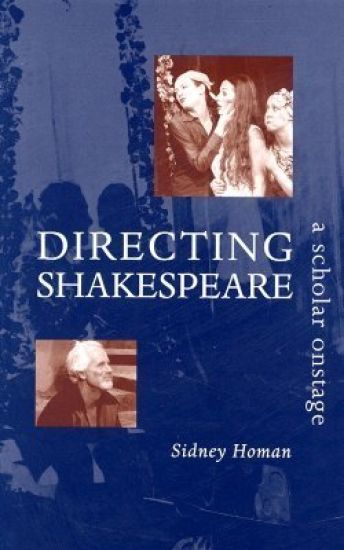
Directing Shakespeare

Directing Shakespeare

Sidney Homan

Ohio University Press
2004
sidottu
An impossible question from a Chinese actor—"Why is Shakespeare eternal?"—drove Sidney Homan after fifty years in the theater to ponder just what makes Shakespeare…well, Shakespeare. The result, Directing Shakespeare, reflects the two worlds in which Homan operates—as a scholar and teacher on campus, and as a director and actor in professional and university theaters. His concern is the entire process, beginning in the lonely period when the director develops a concept, and moving into increasingly larger realms: interaction with stage designers; rehearsals; and performances in which the audience's response further shapes the play. Homan recounts the experience of staging King Lear accompanied by a musical score for piano, violin, and cello played live onstage. He discusses the challenge of making and trying to justify cuts in Hamlet. A casual remark from an actress leads to a feminist production of A Midsummer Night's Dream. He describes the delicate collaboration between director and performer as he works with actors preparing for The Merchant of Venice, King Lear, and Hamlet. Other chapters treat a set designer's bold red drapes that influenced the director's concept for Julius Caesar, and the cross-influence of back-to-back runs of Stoppard's Rosencrantz and Guildenstsern Are Dead and Hamlet. In a highly personal concluding chapter, Homan tells of joyously working with a spontaneous young actor playing Puck and with an audience of unruly teenagers who wept at a performance of Lear. Delightfully written, and filled with practical insights, Directing Shakespeare draws together scholars, critics, and those who work in the theater to bring the written word to life.
Pivotal Lines in Shakespeare and Others

Pivotal Lines in Shakespeare and Others

Sidney Homan

TAYLOR FRANCIS LTD
2023
sidottu
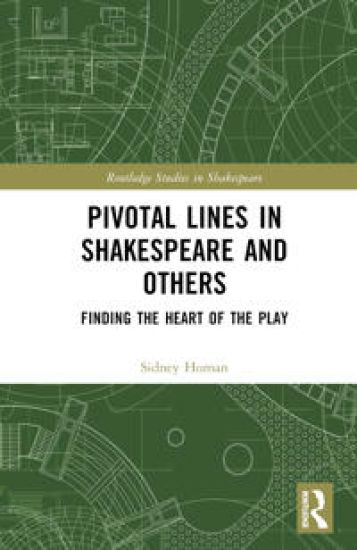
Sidney Homan defines a pivotal line as “a moment in the script that serves as a pathway into the larger play … a magnet to which the rest of the play, scenes before and after, adheres.” He offers his personal choices of such lines in five plays by Shakespeare and works by Beckett, Brecht, Pinter, Shepard, and Stoppard. Drawing on his own experience in the theatre as actor and director and on campus as a teacher and scholar, he pairs a Shakespearean play with one by a modern playwright as mirrors for each other. One reviewer calls his approach “ground-breaking.” Another observes that his “experience with the particular plays he has chosen is invaluable” since it allows us to find “a wedge into such iconic texts.” Academics and students alike will find this volume particularly useful in aiding their own discovery of a pivotal line or moment in the experience of reading about, watching, or performing in a play.
Pivotal Lines in Shakespeare and Others

Pivotal Lines in Shakespeare and Others

Sidney Homan

TAYLOR FRANCIS LTD
2024
nidottu
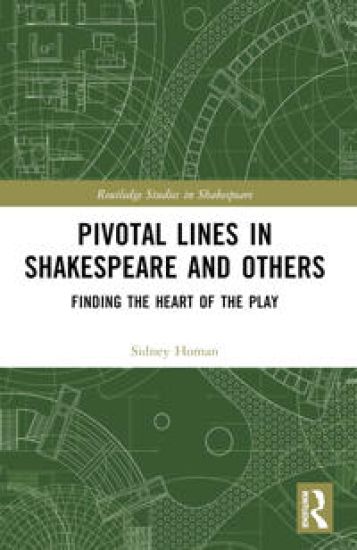
Sidney Homan defines a pivotal line as “a moment in the script that serves as a pathway into the larger play … a magnet to which the rest of the play, scenes before and after, adheres.” He offers his personal choices of such lines in five plays by Shakespeare and works by Beckett, Brecht, Pinter, Shepard, and Stoppard. Drawing on his own experience in the theatre as actor and director and on campus as a teacher and scholar, he pairs a Shakespearean play with one by a modern playwright as mirrors for each other. One reviewer calls his approach “ground-breaking.” Another observes that his “experience with the particular plays he has chosen is invaluable” since it allows us to find “a wedge into such iconic texts.” Academics and students alike will find this volume particularly useful in aiding their own discovery of a pivotal line or moment in the experience of reading about, watching, or performing in a play.
Staging Modern Playwrights

Staging Modern Playwrights

Sidney Homan

Bucknell University Press
2003
sidottu
In this performance criticism Sidney Homan examines his own work in the theater as actor and director, as well as that of others. Staging Modern Playwrights offers a topical approach to various issues, both artistic and philosophical, involved in staging modern dramatists. Implicit in Staging Modern Playwrights are two compatible arguments. One is that the play's full "text" is realized only in performance, or rather, through the sum of all its performances. For the text embraces not just the playwright's dialogue but also the actor's subtext, blocking, gestures, and movement, along with the lighting, sound, set, costumes, props, indeed, the entire picture presented by the stage. Two is that, despite the actor's need to "play the moment," or the director's notion of theatrical presence, a play is not just for the moment but rather exists within the larger world of space and time surrounding the theater. Here that text exists in a context that is simultaneously historical and economic, political and philosophical. As such, scholars and people working in the theater have much to say to each other. Staging Modern Playwrights is therefore meant to appeal to those both in the study and on the stage, the audience in and outside the house.
Comedy Acting for Theatre

Comedy Acting for Theatre

Sidney Homan; Brian Rhinehart

Methuen Drama
2018
sidottu
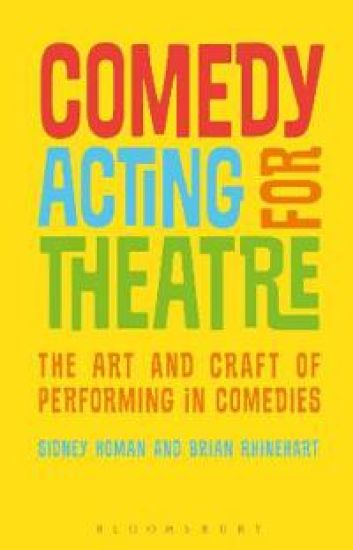
Analysing why we laugh and what we laugh at, and describing how performers can elicit this response from their audience, this book enables actors to create memorable – and hilarious – performances.Rooted in performance and performance criticism, Sidney Homan and Brian Rhinehart provide a detailed explanation of how comedy works, along with advice on how to communicate comedy from the point of view of both the performer and the audience. Combining theory and performance, the authors analyse a variety of plays, both modern and classic. Playwrights featured include Harold Pinter, Tom Stoppard, Christopher Durang, and Michael Frayn. Acting in Shakespeare's comedies is also covered in depth.
Comedy Acting for Theatre

Comedy Acting for Theatre

Sidney Homan; Brian Rhinehart

Methuen Drama
2018
nidottu
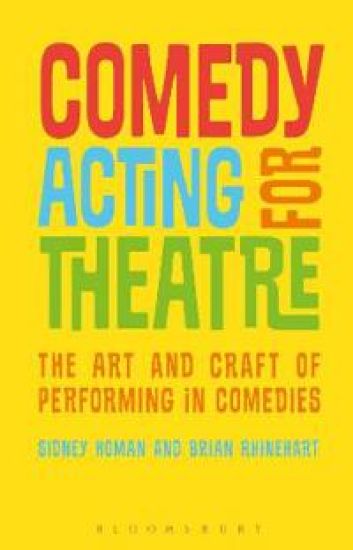
Analysing why we laugh and what we laugh at, and describing how performers can elicit this response from their audience, this book enables actors to create memorable – and hilarious – performances.Rooted in performance and performance criticism, Sidney Homan and Brian Rhinehart provide a detailed explanation of how comedy works, along with advice on how to communicate comedy from the point of view of both the performer and the audience. Combining theory and performance, the authors analyse a variety of plays, both modern and classic. Playwrights featured include Harold Pinter, Tom Stoppard, Christopher Durang, and Michael Frayn. Acting in Shakespeare's comedies is also covered in depth.
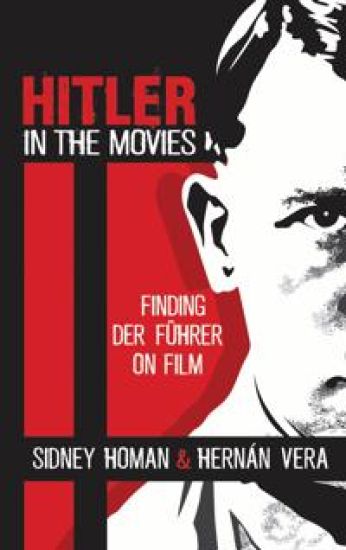
Hitler in the Movies

Hitler in the Movies

Sidney Homan; Hernán Vera

Fairleigh Dickinson University Press
2016
sidottu
In Hitler in the Movies: Finding Der Führer on Film, a Shakespearean and a sociologist explore the fascination our popular culture has with Adolf Hitler. What made him … Hitler? Do our explanations tell us more about the perceiver than the actual historical figure? We ask such question by viewing the Hitler character in the movies. How have directors, actors, film critics, and audiences accounted for this monster in a medium that reflects public tastes and opinions? The book first looks at comedic films, such as Chaplain’s The Great Dictator or Ernst Lubitsch’s To Be or Not to Be (1942), along with the Mel Brooks’s 1983 version. Then, there is the Hitler of fantasy, from trash films like The Saved Hitler’s Brain to a serious work like The Boys from Brazil where Hitler is cloned. Psychological portraits include Anthony Hopkins’s The Bunker, the surreal The Empty Mirror, and Max, a portrait of Hitler in his days in Vienna as a would-be artist. Documentaries and docudramas range from Leni Reinfenstahl’s iconic The Triumph of the Will or The Hidden Führer, to the controversial Hitler: A Film from Germany and Quentin Tarantino’s fanciful Inglourious Basterds. Hitler in the Movies also considers the ways Der Führer remains today, as a ghostly presence, if not an actual character. Why is he still with us in everything from political smears to video games to merchandise? In trying to explain this and the man himself, what might we learn about ourselves and our society?
Hitler in the Movies

Hitler in the Movies

Sidney Homan; Hernán Vera

Fairleigh Dickinson University Press
2018
nidottu
In Hitler in the Movies: Finding Der Führer on Film, a Shakespearean and a sociologist explore the fascination our popular culture has with Adolf Hitler. What made him … Hitler? Do our explanations tell us more about the perceiver than the actual historical figure? We ask such question by viewing the Hitler character in the movies. How have directors, actors, film critics, and audiences accounted for this monster in a medium that reflects public tastes and opinions? The book first looks at comedic films, such as Chaplain’s The Great Dictator or Ernst Lubitsch’s To Be or Not to Be (1942), along with the Mel Brooks’s 1983 version. Then, there is the Hitler of fantasy, from trash films like The Saved Hitler’s Brain to a serious work like The Boys from Brazil where Hitler is cloned. Psychological portraits include Anthony Hopkins’s The Bunker, the surreal The Empty Mirror, and Max, a portrait of Hitler in his days in Vienna as a would-be artist. Documentaries and docudramas range from Leni Reinfenstahl’s iconic The Triumph of the Will or The Hidden Führer, to the controversial Hitler: A Film from Germany and Quentin Tarantino’s fanciful Inglourious Basterds. Hitler in the Movies also considers the ways Der Führer remains today, as a ghostly presence, if not an actual character. Why is he still with us in everything from political smears to video games to merchandise? In trying to explain this and the man himself, what might we learn about ourselves and our society?