Kirjojen hintavertailu. Mukana 12 016 292 kirjaa ja 12 kauppaa.

Kirjahaku

Etsi kirjoja tekijän nimen, kirjan nimen tai ISBN:n perusteella.

14 kirjaa tekijältä Sidney Pollard

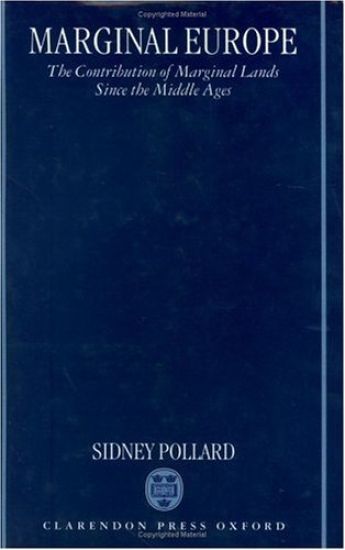
Marginal Europe

Marginal Europe

Sidney Pollard

Clarendon Press
1997
sidottu
The momentum of the British industrial revolution arose mostly in regions poorly endowed by nature, badly located and considered backward and poor by contemporaries. Sidney Pollard examines the initially surprising contribution made by the population of these and other `marginal areas' (mountains, forests and marshes) to the economic development of Europe since the Middle Ages. He provides case studies of periods in which marginal areas took the lead in economic development, such as the Dutch economy in its Golden Age, and in the British industrial revolution. The traditional perception of the populations inhabiting these regions was that they were poor, backward, and intellectually inferior; but Sidney Pollard shows how they also had certain peculiar qualities which predisposed them to initiate progress. Healthy living, freedom, a martial spirit, and the hardiness to survive in harsh conditions enabled them to contribute a unique pioneering ability to pivotal economic periods; illustrating some of the effects of geography upon the development of societies.

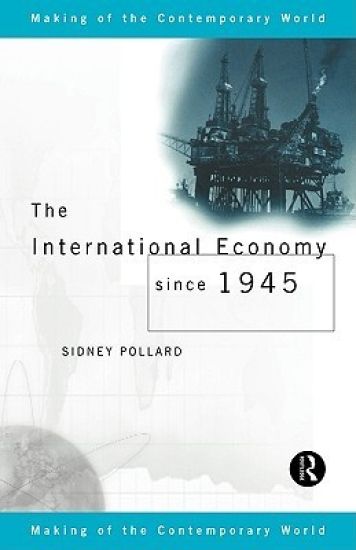
The International Economy since 1945
In The International Economy Since 1945, Sidney Pollard describes the most important global developments in economics during the last half century. In this comprehensive history the author covers all geographical regions and considers the effects of the major countries on each other.The International Economy Since 1945 analyses institutional issues, such as monetary policy or the multinational company, as well as worldwide issues. The author considers the impact of policies on economic life and includes discussion of:* the threat to the environment caused by economic change* advances in technology as they relate to growth* fluctuations in standards of living in all parts of the world* policies pursued and how they influence growth* reactions of other nations to the plight of the Third World* the Communist and Far Eastern economies* the impact of World War II on the global economy.The International Economy Since 1945 debates the key issues of current global and national policy-making and the effects of greater economic integration on inflation and employment.
The Integration of the European Economy since 1815
Sidney Pollard has provided a concise survey of economic issues for students of the European community. Going back to 1815, he links the progress of industrialisation in Europe to the relative ease with which ideas, men and capital were able to cross national frontiers. European frontiers make little economic sense and frequently cut across vital natural links. Professor Pollard shows how open frontiers speeded progress, in the particular circumstances of the spread of industrialisation from Britain to Western Europe and then to the rest of the continent, adn opened up new markets and opportunities of learning and technology transfer. Closed frontiers and the national selfishness of economic warfare led in contrast to stagnation, hostility and at times to all-out war. This classic study was first published in 1981.
The Wasting of the British Economy (Routledge Revivals)
Originally published in 1982, this book examines the problem and looks at the causes of the repeated crises which the country has undergone since the war. The basic cause is stated to be the failure to invest in the modernisation of the British capital equipment and the consequent loss of competitive power. This failure, in turn, is seen to be the result of Government policies which, for the sake of a variety of short-term aims, sacrificed the future by deliberately inhibiting investment.
The Wasting of the British Economy (Routledge Revivals)
Originally published in 1982. This book examines the problem and looks at the causes of the repeated crises which the country has undergone since the war. The basic cause is stated to be the failure to invest in the modernisation of the British capital equipment and the consequent loss of competitive power; and this failure, in turn, is seen to be the result of Government policies which, for the sake of a variety of short-term aims, sacrificed the future by deliberately inhibiting investment.
Labour History and the Labour Movement in Britain
This volume focuses on labour history in Britain, but brings in comparative material on the Continent, in particular inter-war Germany. Special attention is given to wages and living and working conditions in the 19th century, to Robert Owen and Co-operation, and to the modern trade union movement and its attempts to keep up the interests of its members in the fluctuating conditions of the late 19th and earlier 20th centuries. The author defends the notion that wage-earners have common interests and frequently share common experiences, and that their organisations have both a strictly economic aspect (trade unions) and a wider political dimension. The profound changes which the labour organisations underwent in the 19th and 20th centuries are a major concern of these essays.
Essays on the Industrial Revolution in Britain
This volume has three main themes. First, there is the concept of the Industrial Revolution and its main characteristics, and the author defends both the term and the notions behind it against attempts to play down their significance. A particular interest is the comparison of what happened to Britain with similar processes in other European countries. The second theme is the set of problems facing the early entrepreneurs and managers. Their difficulties, as pioneers in the economic as well as the social sphere, are often underrated, and are here explored in detail. Last, there is an emphasis on the characteristic feature of industrialisation as a regional phenomenon, and on the significance of particular regions in the entire process. All three themes have called forth extended debate, in which these essays have played an important part.
The Development of the British Economy, 1914-1950

The Development of the British Economy, 1914-1950

Sidney Pollard

Hassell Street Press
2021
sidottu
This work has been selected by scholars as being culturally important and is part of the knowledge base of civilization as we know it.This work is in the public domain in the United States of America, and possibly other nations. Within the United States, you may freely copy and distribute this work, as no entity (individual or corporate) has a copyright on the body of the work.Scholars believe, and we concur, that this work is important enough to be preserved, reproduced, and made generally available to the public. To ensure a quality reading experience, this work has been proofread and republished using a format that seamlessly blends the original graphical elements with text in an easy-to-read typeface.We appreciate your support of the preservation process, and thank you for being an important part of keeping this knowledge alive and relevant.
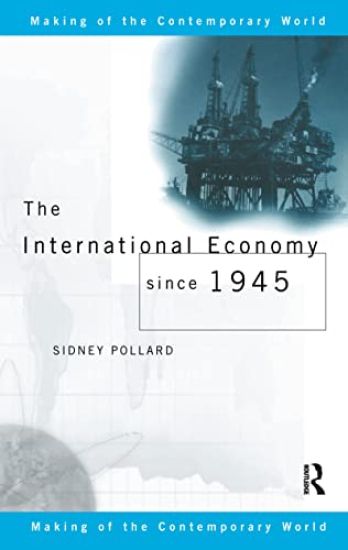
The International Economy since 1945
In The International Economy Since 1945, Sidney Pollard describes the most important global developments in economics during the last half century. In this comprehensive history the author covers all geographical regions and considers the effects of the major countries on each other.The International Economy Since 1945 analyses institutional issues, such as monetary policy or the multinational company, as well as worldwide issues. The author considers the impact of policies on economic life and includes discussion of:* the threat to the environment caused by economic change* advances in technology as they relate to growth* fluctuations in standards of living in all parts of the world* policies pursued and how they influence growth* reactions of other nations to the plight of the Third World* the Communist and Far Eastern economies* the impact of World War II on the global economy.The International Economy Since 1945 debates the key issues of current global and national policy-making and the effects of greater economic integration on inflation and employment.
The Integration of the European Economy Since 1815
Sidney Pollard has provided a concise survey of economic issues for students of the European community. Going back to 1815, he links the progress of industrialisation in Europe to the relative ease with which ideas, men and capital were able to cross national frontiers. European frontiers make little economic sense and frequently cut across vital natural links. Professor Pollard shows how open frontiers speeded progress, in the particular circumstances of the spread of industrialisation from Britain to Western Europe and then to the rest of the continent, adn opened up new markets and opportunities of learning and technology transfer. Closed frontiers and the national selfishness of economic warfare led in contrast to stagnation, hostility and at times to all-out war. This classic study was first published in 1981.