Kirjojen hintavertailu. Mukana 12 016 292 kirjaa ja 12 kauppaa.

Kirjahaku

Etsi kirjoja tekijän nimen, kirjan nimen tai ISBN:n perusteella.

3 kirjaa tekijältä Sidney Yip

Molecular Mechanisms in Materials

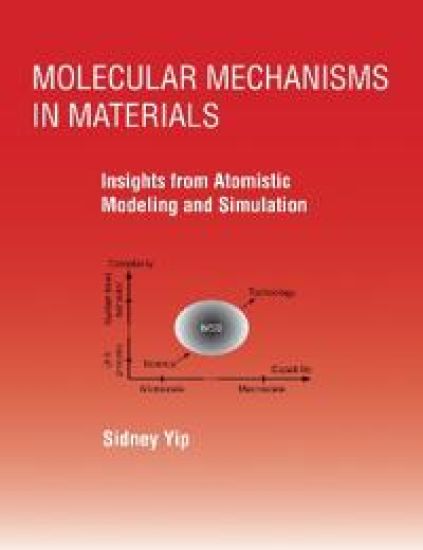
Molecular Mechanisms in Materials

Sidney Yip

MIT PRESS LTD
2023
pokkari
A student-oriented introduction to understanding mechanisms at the atomistic level controlling macroscopic materials phenomena through molecular dynamics simulations. Machine-learning-based computation in materials innovation, performance optimization, and sustainability offers exciting opportunities at the mesoscale research frontier. Molecular Mechanisms in Materials presents research findings and insights about material behavior at the molecular level and its impact on macroscopic properties. The book's fifteen essays represent author Sidney Yip's work in atomistic modeling and materials simulation over more than five decades. The phenomena are grouped into five basic types: fluctuations in simple fluids, crystal melting, plasticity and fracture, glassy relaxations, and amorphous rheology, all focused on molecular mechanisms in base materials. The organizing principle of Molecular Mechanisms in Materials is multiscale modeling and simulation, where conceptual models and simulation techniques are linked across the micro-to-macro length and time scales to control the outcome of specific materials processes. Each essay addresses a specific standalone topic of materials phenomena while also recognizing the larger context of materials science and technology. Individual case studies serve both as standalone essays and companion pieces to each other. Indeed, the global transformation of science and technology is well underway: in his epilogue, Yip discusses the potential of artificial intelligence and machine learning to enhance future materials for societal benefits in the face of global challenges such as climate change, energy sustainability, infrastructure renewal, and nuclear arms control.
Nuclear Radiation Interactions

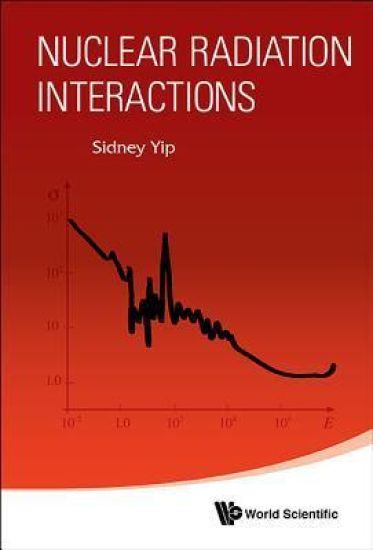
Nuclear Radiation Interactions

Sidney Yip

World Scientific Publishing Co Pte Ltd
2014
nidottu
This book is a treatment on the foundational knowledge of Nuclear Science and Engineering. It is an outgrowth of a first-year graduate-level course which the author has taught over the years in the Department of Nuclear Science and Engineering at MIT. The emphasis of the book is on concepts in nuclear science and engineering in contrast to the traditional nuclear physics in a nuclear engineering curriculum. The essential difference lies in the importance we give to the understanding of nuclear radiation and their interactions with matter. We see our students as nuclear engineers who work with all kinds of nuclear devices, from fission and fusion reactors to accelerators and detection systems. In all these complex systems nuclear radiation play a central role. In generating nuclear radiation and using them for beneficial purposes, scientists and engineers must understand the properties of the radiation and how they interact with their surroundings. It is through the control of radiation interactions that we can develop new devices or optimize existing ones to make them more safe, powerful, durable, or economical. This is why radiation interaction is the essence of this book.
Nuclear Radiation Interactions

Nuclear Radiation Interactions

Sidney Yip

World Scientific Publishing Co Pte Ltd
2014
sidottu
This book is a treatment on the foundational knowledge of Nuclear Science and Engineering. It is an outgrowth of a first-year graduate-level course which the author has taught over the years in the Department of Nuclear Science and Engineering at MIT. The emphasis of the book is on concepts in nuclear science and engineering in contrast to the traditional nuclear physics in a nuclear engineering curriculum. The essential difference lies in the importance we give to the understanding of nuclear radiation and their interactions with matter. We see our students as nuclear engineers who work with all kinds of nuclear devices, from fission and fusion reactors to accelerators and detection systems. In all these complex systems nuclear radiation play a central role. In generating nuclear radiation and using them for beneficial purposes, scientists and engineers must understand the properties of the radiation and how they interact with their surroundings. It is through the control of radiation interactions that we can develop new devices or optimize existing ones to make them more safe, powerful, durable, or economical. This is why radiation interaction is the essence of this book.