Kirjojen hintavertailu. Mukana 12 390 323 kirjaa ja 12 kauppaa.

Kirjahaku

Etsi kirjoja tekijän nimen, kirjan nimen tai ISBN:n perusteella.

30 kirjaa tekijältä Siegfried Kracauer

Siegfried Kracauer's American Writings

Siegfried Kracauer's American Writings

Siegfried Kracauer; Martin Jay

University of California Press
2012
sidottu
Siegfried Kracauer (1889-1966), friend and colleague of Walter Benjamin and Theodor Adorno, was one of the most influential film critics of the mid-twentieth century. In this book, Johannes von Moltke and Kristy Rawson have, for the first time assembled essays in cultural criticism, film, literature, and media theory that Kracauer wrote during the quarter century he spent in America after fleeing Nazi-occupied Europe. In the decades following his arrival in the United States, Kracauer commented on developments in American and European cinema, wrote on film noir and neorealism, examined unsettling political trends in mainstream cinema, and reviewed the contemporary experiments of avant-garde filmmakers. As a cultural critic, he also ranged far beyond cinema, intervening in debates regarding Jewish culture, unraveling national and racial stereotypes, and reflecting on the state of arts and humanities in the 1950s. These essays, together with the editors' introductions and an afterward by Martin Jay offer illuminating insights into the films and culture of the postwar years and provide a unique perspective on this eminent emigre intellectual.
Siegfried Kracauer's American Writings

Siegfried Kracauer's American Writings

Siegfried Kracauer; Martin Jay

University of California Press
2012
pokkari
Siegfried Kracauer (1889-1966), friend and colleague of Walter Benjamin and Theodor Adorno, was one of the most influential film critics of the mid-twentieth century. In this book, Johannes von Moltke and Kristy Rawson have, for the first time assembled essays in cultural criticism, film, literature, and media theory that Kracauer wrote during the quarter century he spent in America after fleeing Nazi-occupied Europe. In the decades following his arrival in the United States, Kracauer commented on developments in American and European cinema, wrote on film noir and neorealism, examined unsettling political trends in mainstream cinema, and reviewed the contemporary experiments of avant-garde filmmakers. As a cultural critic, he also ranged far beyond cinema, intervening in debates regarding Jewish culture, unraveling national and racial stereotypes, and reflecting on the state of arts and humanities in the 1950s. These essays, together with the editors' introductions and an afterward by Martin Jay offer illuminating insights into the films and culture of the postwar years and provide a unique perspective on this eminent emigre intellectual.
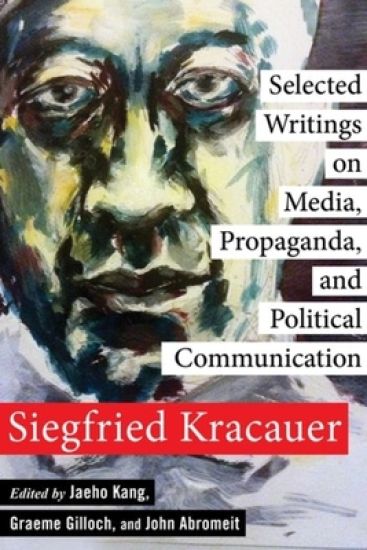
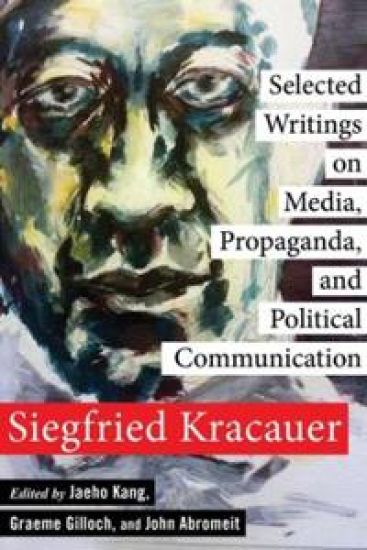
Selected Writings on Media, Propaganda, and Political Communication
Siegfried Kracauer stands out as one of the most significant theorists and critics of the twentieth century, acclaimed for his analyses of film and popular culture. However, his writing on propaganda and politics has been overshadowed by the works of his contemporaries and colleagues associated with the Frankfurt School.This book brings together a broad selection of Kracauer’s work on media and political communication, much of it previously unavailable in English. It features writings spanning more than two decades, from studies of totalitarian propaganda written in the 1930s to wartime work on Nazi newsreels and anti-Semitism through to examinations of American and Soviet political messaging in the early Cold War period. These varied texts illuminate the interplay among politics, mass culture, and the media, and they encompass Kracauer’s core concerns: the individual and the masses, the conditions of cultural production, and the critique of modernity.The introduction and afterword explore the significance of Kracauer’s contributions to critical theory, film and media studies, and the analysis of political communication both in his era and the present day. At a time when demagoguery and bigotry loom over world politics, Kracauer’s inquiries into topics such as the widespread appeal of fascist propaganda and the relationship of new media forms and technologies to authoritarianism are strikingly relevant.
Selected Writings on Media, Propaganda, and Political Communication
Siegfried Kracauer stands out as one of the most significant theorists and critics of the twentieth century, acclaimed for his analyses of film and popular culture. However, his writing on propaganda and politics has been overshadowed by the works of his contemporaries and colleagues associated with the Frankfurt School.This book brings together a broad selection of Kracauer’s work on media and political communication, much of it previously unavailable in English. It features writings spanning more than two decades, from studies of totalitarian propaganda written in the 1930s to wartime work on Nazi newsreels and anti-Semitism through to examinations of American and Soviet political messaging in the early Cold War period. These varied texts illuminate the interplay among politics, mass culture, and the media, and they encompass Kracauer’s core concerns: the individual and the masses, the conditions of cultural production, and the critique of modernity.The introduction and afterword explore the significance of Kracauer’s contributions to critical theory, film and media studies, and the analysis of political communication both in his era and the present day. At a time when demagoguery and bigotry loom over world politics, Kracauer’s inquiries into topics such as the widespread appeal of fascist propaganda and the relationship of new media forms and technologies to authoritarianism are strikingly relevant.
The Mass Ornament

The Mass Ornament

Siegfried Kracauer

Harvard University Press
1995
nidottu
Siegfried Kracauer was one of the twentieth century’s most brilliant cultural critics, a daring and prolific scholar, and an incisive theorist of film. In this volume his finest writings on modern society make their long-awaited appearance in English.This book is a celebration of the masses—their tastes, amusements, and everyday lives. Taking up themes of modernity, such as isolation and alienation, urban culture, and the relation between the group and the individual, Kracauer explores a kaleidoscope of topics: shopping arcades, the cinema, bestsellers and their readers, photography, dance, hotel lobbies, Kafka, the Bible, and boredom. For Kracauer, the most revelatory facets of modern life in the West lie on the surface, in the ephemeral and the marginal. Of special fascination to him is the United States, where he eventually settled after fleeing Germany and whose culture he sees as defined almost exclusively by “the ostentatious display of surface.”With these essays, written in the 1920s and early 1930s and edited by the author in 1963, Kracauer was the first to demonstrate that studying the everyday world of the masses can bring great rewards. The Mass Ornament today remains a refreshing tribute to popular culture, and its impressively interdisciplinary essays continue to shed light not only on Kracauer’s later work but also on the ideas of the Frankfurt School, the genealogy of film theory and cultural studies, Weimar cultural politics, and, not least, the exigencies of intellectual exile.In his introduction, Thomas Levin situates Kracauer in a turbulent age, illuminates the forces that influenced him—including his friendships with Walter Benjamin, Theodor Adorno, and other Weimar intellectuals—and provides the context necessary for understanding his ideas. Until now, Kracauer has been known primarily for his writings on the cinema. This volume brings us the full scope of his gifts as one of the most wide-ranging and penetrating interpreters of modern life.
Theory of Film

Theory of Film

Siegfried Kracauer

Princeton University Press
1997
pokkari
Siegfried Kracauer's classic study, originally published in 1960, explores the distinctive qualities of the cinematic medium. The book takes its place alongside works in classical film theory by such figures as Bela Balazs, Rudolf Arnheim, and Andre Bazin, among others, and has met with much critical dispute. In this new edition, Miriam Bratu Hansen, examining the book in the context of Kracauer's extensive film criticism from the 1920s, provides a framework for appreciating the significance of Theory of Film for contemporary film theory.
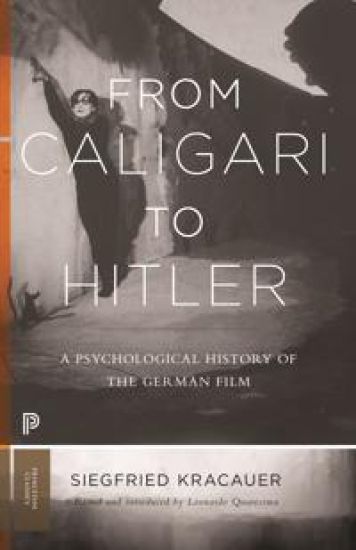
From Caligari to Hitler

From Caligari to Hitler

Siegfried Kracauer

Princeton University Press
2019
pokkari
An essential work of the cinematic history of the Weimar Republic by a leading figure of film criticismFirst published in 1947, From Caligari to Hitler remains an undisputed landmark study of the rich cinematic history of the Weimar Republic. Prominent film critic Siegfried Kracauer examines German society from 1921 to 1933, in light of such movies as The Cabinet of Dr. Caligari, M, Metropolis, and The Blue Angel. He explores the connections among film aesthetics, the prevailing psychological state of Germans in the Weimar era, and the evolving social and political reality of the time. Kracauer makes a startling (and still controversial) claim: films as popular art provide insight into the unconscious motivations and fantasies of a nation.With a critical introduction by Leonardo Quaresima which provides context for Kracauer’s scholarship and his contributions to film studies, this Princeton Classics edition makes an influential work available to new generations of cinema enthusiasts.
Theory of Film: The Redemption of Physical Reality

Theory of Film: The Redemption of Physical Reality

Siegfried Kracauer

Literary Licensing, LLC
2012
sidottu
Theory of Film: The Redemption of Physical Reality is a book written by Siegfried Kracauer, a German film critic and philosopher. Originally published in 1960, the book is considered a classic in the field of film theory and analysis.In this book, Kracauer explores the relationship between film and reality, arguing that film has the ability to redeem physical reality by capturing and preserving it in a way that is unique to the medium. He examines the ways in which film can reveal hidden aspects of reality and provide insight into the human experience.Kracauer also delves into the technical aspects of film, discussing the use of camera angles, lighting, and editing to create meaning and emotion. He analyzes specific films from both Hollywood and European cinema, including Fritz Lang's Metropolis and Jean Renoir's The Rules of the Game.Overall, Theory of Film: The Redemption of Physical Reality is a thought-provoking and influential work that continues to be studied and referenced in the field of film theory.This scarce antiquarian book is a facsimile reprint of the old original and may contain some imperfections such as library marks and notations. Because we believe this work is culturally important, we have made it available as part of our commitment for protecting, preserving, and promoting the world's literature in affordable, high quality, modern editions, that are true to their original work.
History

History

Siegfried Kracauer

Markus Wiener Publishing Inc
1995
nidottu
A study of the relationship between past and present, and the relation between histories in different levels of generality. One after another Siegfried Kracauer examines various theories of history and exposes their strengths and weaknesses.
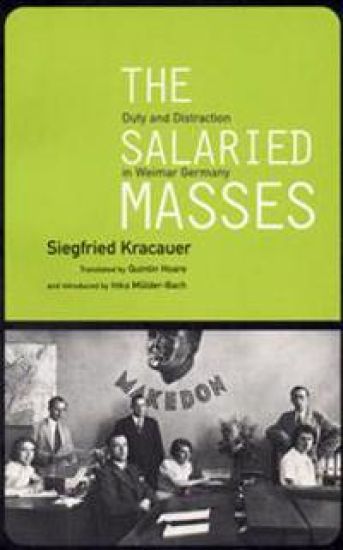
The Salaried Masses

The Salaried Masses

Siegfried Kracauer

Verso Books
1998
nidottu
First published in 1930, Siegfried Kracauer's work was greeted with great acclaim and soon attained the status of a classic. The object of his inquiry was the new class of salaried employees who populated the cities of Weimar Germany.Spiritually homeless, divorced from all custom and tradition, these white-collar workers sought refuge in entertainment-or the "distraction industries," as Kracauer put it-but, only three years later, were to flee into the arms of Adolf Hitler. Eschewing the instruments of traditional sociological scholarship, but without collapsing into mere journalistic reportage, Kracauer explores the contradictions of this caste. Drawing on conversations, newspapers, adverts and personal correspondence, he charts the bland horror of the everyday. In the process he succeeds in writing not just a prescient account of the declining days of the Weimar Republic, but also a path-breaking exercise in the sociology of culture which has sharp relevance for today.
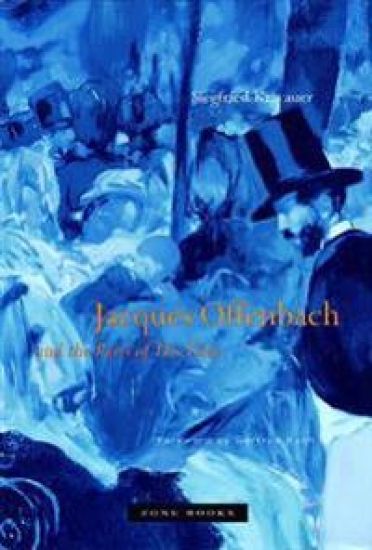
Jacques Offenbach and the Paris of His Time

Jacques Offenbach and the Paris of His Time

Siegfried Kracauer

Zone Books
2016
pokkari
A biography of composer Jacques Offenbach that is also a social and cultural history of Second Empire Paris.Siegfried Kracauer's biography of the composer Jacques Offenbach is a remarkable work of social and cultural history. First published in German in 1937 and in English translation in 1938, the book uses the life and work of Offenbach as a focal point for a broad and penetrating portrayal of Second Empire Paris. Offenbach's immensely popular operettas have long been seen as part of the larger historical amnesia and escapism that pervaded Paris in the aftermath of 1848. But Kracauer insists that Offenbach's productions must be understood as more than glittering distractions. The fantasy realms of such operettas as La Belle Helene were as one with the unreality of Napoleon III's imperial masquerade, but they also made a mockery of the pomp and pretense surrounding the apparatuses of power. At the same time, Offenbach's dreamworlds were embedded with a layer of utopian content that can be seen as an indictment of the fraudulence and corruption of the times. This edition includes Kracauer's preface to the original German edition as well as a critical foreword by Gertrud Koch.
Theory of Film

Theory of Film

Siegfried Kracauer

Chosho Publishing
2023
nidottu
This significant study is certain to be the standard work on the subject for many years to come. It demonstrates once and for all that motion pictures differ radically from the traditional arts, and that good plays or novels rarely make good films. Dr. Kracauer is concerned with film as a photographic medium uniquely equipped to capture and reveal the everyday world as it exists before our eyes. "If film is an art," he writes, "it is an art with a difference. It fulfills itself in rendering 'the ripple of leaves, ' . . . street crowds, involuntary gestures, and other fleeting impressions."Dr. Kracauer covers every aspect of black-and-white film. He discusses its background in still photography, the problems inherent in historical and fantasy films, the novel as a cinematic form, experimental films, documentaries, the role of the actor, the uses of dialogue and sound, the contribution of music, and the part played by the spectator.The final chapter focuses on the wider implications of the medium. There Dr. Kracauer sets the cinema "in the perspective of something more general-an approach to the world, a mode of human existence," and thus shows how it reflects the condition of modern man, the moral temper of our society. Theory of Film is an intellectual experience which reaches far beyond film into the realm of general aesthetics and philosophy.
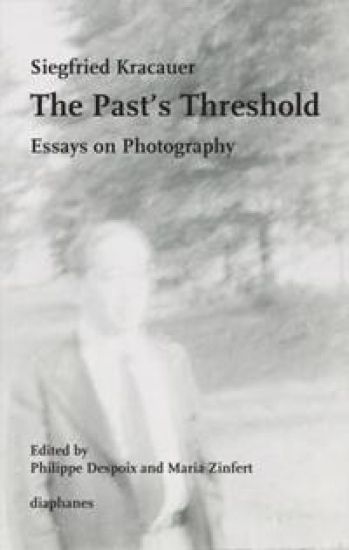
The Past's Threshold – Essays on Photography

The Past's Threshold – Essays on Photography

Siegfried Kracauer

Diaphanes AG
2014
nidottu
Siegfried Kracauer was one of the foremost representatives of the Frankfurt School of critical theory, and his influence is felt in the work of many of the period's preeminent thinkers, including Theodor W. Adorno, who once claimed he owed more to Kracauer than any other intellectual. The Past's Threshold brings together for the first time Kracauer's essays on photography that he wrote between 1927 and 1933 as a journalist for the Frankfurter Zeitung, as well as an essay that appeared in the Magazine of Art after the eminent emigre's exile to America. The essays show Kracauer as a pioneering theorist of photography in addition to his more widely known work on film. A foreword by Philippe Despoix offers insights into Kracauer's theories and their historical context. Kracauer. Photographic Archive collects previously unpublished photography by Siegfried and Elisabeth, "Lili," Kracauer. While neither Kracauer nor his wife trained in photography, their portraits, city views, and landscapes evince impressive skill, while simultaneously shedding light on the Kracauers' close working relationship, from their marriage in Germany to their postwar years in the United States.
Von Caligari zu Hitler

Von Caligari zu Hitler

Siegfried Kracauer

SUHRKAMP VERLAG
2009
pokkari
Bekannt geworden ist vor allem die titelgebende Analyse des berühmten expressionistischen Stummfilms Das Cabinett des Dr. Caligari (1919). Diese Untersuchung steht beispielhaft für das gesamte Buch. Kracauer weist anhand der Figuren und des filmischen Szenarios im Deutschland nach dem Ersten Weltkrieg ein >>Überwiegen autoritärer Neigungen