Kirjojen hintavertailu. Mukana 11 601 783 kirjaa ja 12 kauppaa.

Kirjahaku

Etsi kirjoja tekijän nimen, kirjan nimen tai ISBN:n perusteella.

40 kirjaa tekijältä Sigrid Rausing

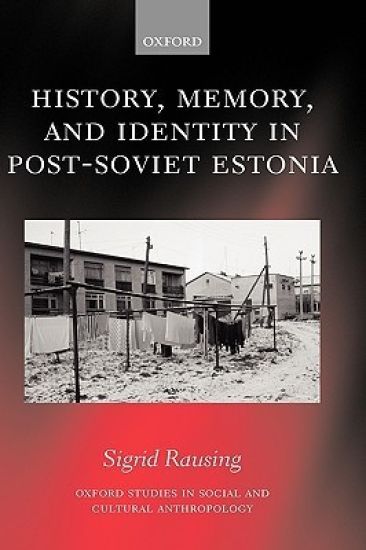
History, Memory, and Identity in Post-Soviet Estonia

History, Memory, and Identity in Post-Soviet Estonia

Sigrid Rausing

Oxford University Press
2004
sidottu
Sigrid Rausing describes the changing world of the Estonian Swedes, and the way in which this minority identity was constructed in the various ideologies that have dominated the region since the early twentieth century. In particular she is concerned with the latest of these changes: the post-Soviet attempt to 'restore' Swedish cultural identity. Rausing touches on a wide range of issues, debates, and insights: the relationship between ideology and form, nationalist and Soviet notions of ethnicity and traditional culture and historically-framed notions of an imagined normality. The ethnographic location for these discussions is a particular former collective farm, now subject to economic decline, the Estonian nation-building ideological project, and new relationships of dependency with Sweden. One of the author's central arguments is that these changes reflect a conscious attempt to 'reform habitus' so as to match that of the local image of the West, but that the location of ethnic culture and many of the operative concepts still reflect the tropes of the Soviet era.
Mayhem: A Memoir

Mayhem: A Memoir

Sigrid Rausing

Penguin
2017
nidottu
A searingly powerful memoir about the impact of addiction on a family In the summer of 2012 a woman named Eva was found dead in the London townhouse she shared with her husband, Hans K. Rausing. The couple had struggled with addiction for years, often under the glare of tabloid headlines. Now, writing with singular clarity and restraint, Hans's sister, the editor and publisher Sigrid Rausing, tries to make sense of what happened. Mayhem is an eloquent and timely attempt to understand the conundrum of addiction, and a memoir that is as poignant and riveting as it is devastating.
Mayhem

Mayhem

Sigrid Rausing

Penguin Books Ltd.
2018
pokkari
For years Sigrid Rausing watched helplessly as her brother Hans and his wife Eva succumbed to drug addiction. It afflicted a terrible toll on their family, culminating in Eva's tragic early death. As this death led to inquest and media circus, the world looked on in horror, but few understood the suffering endured by the Rausing family.In Mayhem, Sigrid explores the collateral damage addiction wreaks on loved ones. Telling her family's story, she examines painful and rarely discussed questions. What is it like to live with addiction in the family? How can you help without hurting the one you love? And what does it mean to survive another's addiction?
Everything is Wonderful

Everything is Wonderful

Sigrid Rausing

Grove Press / Atlantic Monthly Press
2016
pokkari
From 1993 to 1994, Sigrid Rausing completed her anthropological fieldwork on the penninsula of Noarootsi, a former Soviet border protection zone in Estonia. Abandoned watchtowers dotted the coastline, and the huge fields of the Lenin collective farm were laying fallow, waiting for claims from former owners who had fled war and Soviet and Nazi occupation. Rausing's research focused on the loss of historical memory during the Soviet occupation, and the slow revival of an independent Estonian culture, including the recognition of the minority Swedes in Estonia. She lived and worked amongst the villagers, witnessing their transition from repression to independence, and from Soviet neglect to post-Soviet austerity.
Mayhem

Mayhem

Sigrid Rausing

VINTAGE
2018
nidottu
In the summer of 2012 a woman named Eva was found dead in the London townhouse she shared with her husband, Hans K. Rausing. The couple had struggled with drug addiction for years, often under the glare of tabloid headlines. Now, writing with singular clarity and restraint, Hans' sister, the editor and publisher Sigrid Rausing, tries to make sense of what happened. In Mayhem, she asks the difficult questions those close to the world of addiction must face. "Who can help the addict, consumed by a shaming hunger, a need beyond control? There is no medicine: the drugs are the medicine. And who can help their families, so implicated in the self-destruction of the addict? Who can help when the very notion of 'help' becomes synonymous with an exercise of power; a familial police state; an end to freedom, in the addict's mind?" An eloquent and timely attempt to understand the conundrum of addiction--and a memoir as devastating as it is riveting.
Granta 126

Granta 126

Sigrid Rausing

Granta Magazine
2014
nidottu
We are what we remember, and even when we invent, we write what we remember. Every line is a fragment of something else; that is the great collective project that we call culture. In this issue of Granta, writers remember, or invent, scenes from their own lives and the lives of others. Ann Beattie Fiona Benson Andrew Brown Bernard Cooper Lydia Davis David Gates Arcelis Girmay Laura Kasischke Olivia Laing Colin McAdam Lorrie Moore Norman Rush Johnny Steinberg Nathan Thornburgh Marta Werner Edmund White Joy Williams Introducing: Katherine Faw Morris Photography: Brigitte Grignet Yuri Kozyrev Collages: Janet Malcolm
Granta 128

Granta 128

Sigrid Rausing

Granta Magazine
2014
nidottu
American Wild also features new writing by Martin Amis, Anne Carson, Diane Cook, Thomas McGuane, Jess Row, Mona Simpson and Callan Wink, poetry by Andrew Motion and Mary Ruefle and photography by Aaron Huey and Nicola Lo Calzo.
Granta 129

Granta 129

Sigrid Rausing

Granta Magazine
2014
nidottu
Granta 129 brings you twenty-two meditations on fate in all its many forms. From Joseph Roth's reflection on Sarajevo in the wake of the First World War to Cynthia Ozick's exploration of the limits of belief, this issue stretches our understanding of fate, both in fact and in fiction. Striking the keys of the same typewriter that once sat under J.G. Ballard's fingers, Will Self reimagines the legendary writer's last days. Mark Gevisser investigates transgender identities in America. Louise Erdrich presents a world where bodies can be traded in for a digital afterlife. In an extract from her forthcoming novel, Miranda July describes the awkward dynamics between an uptight office worker, her love interest and a disruptive twenty-year-old. Fatima Bhutto depicts the mounting of tensions between Christian and Muslim families in a remote valley in Pakistan and Granta's Best of Young British Novelist Helen Oyeyemi charts a course through an age of papyrus letters and mysterious maps in Barcelona's enigmatic Casa Mila. Fate features debut fiction by Sam Coll and S.J. Naude, as well as new writing by Kent Haruf, Sasa Stanisic, Andrea Stuart, Anjan Sundaram, Isabella Tree and Tim Winton and poetry by Mark Doty, Adam Fitzgerald, Barbara Ras and Mary Ruefle. It includes photography of Nazi monoliths along the coastline of northwest Europe by Ianthe Ruthven and a collection of Mexican miracle paintings with an introduction by Francisco Goldman.
Granta 131

Granta 131

Sigrid Rausing

Granta Magazine
2015
nidottu
This issue of Granta is about the difference between the world as we see it and the world as it actually is, beyond our faulty memories and tired understanding. It's also about the borderlands of politics and reason, and of reality and transcendence, in contested territories. Ludmila Ulitskaya's diary of cancer treatment in Russia and Israel Raja Shehadeh on emptying his mother's house in Ramallah Janine di Giovanni remembers Iraq before and after the American invasion Charles Glass on the jihadist occupation of an Armenian village in Syria Fiction by Jesse Ball, Kevin Canty, Jon Fosse, Sebastia Jovani, China Mieville, Ottessa Moshfegh and Tracy O'Neill Poetry by John Ashbery, Peter Gizzi, Kathryn Maris and Sandra Simonds Photography by Noemie Goudal and Ian Teh Plus: The second act of Anne Carson's TV show, 'Krapp Hour'
Granta 132

Granta 132

Sigrid Rausing

Granta Magazine
2015
nidottu
In this issue, Oliver Bullough travels to Ukraine and Crimea in the wake of revolution; Kerry Howley writes about cage fighting and giving birth in Texas; Molly Brodak remembers her father, a compulsive gambler and failed bank robber; and Bella Pollen describes being visited - repeatedly - by an incubus. Here are fifteen takes on the human drive to possess - a person, a home, a territory - and the many ways we become possessed - by ideas, by desires, by spirits. Also featuring fiction by Marc Bojanowski, Patrick deWitt, Greg Jackson, Daisy Jacobs, Alan Rossi, Hanan al-Shaykh and Deb Olin Unferth; along with poetry by Rae Armantrout, Angelica Freitas and Jillian Weise; and Photography by Max Pinckers, with an introduction by Sonia Faleiro.
Granta 133

Granta 133

Sigrid Rausing

Granta Magazine
2015
nidottu
The world, as we know it, is changing . . . In the autumn issue of "Granta," acclaimed nature writer Barry Lopez meditates on language and seeing; poet Kathleen Jamie travels to the Alaskan wilderness; science writer Fred Pearce describes the effort to keep Sellafield safe; Adam Nicolson investigates murder in rural Romania; Robert MacFarlane introduces unpublished extracts from the notebooks of Roger Deakin; and new Australian writer Rebecca Giggs witnesses the monumental death of a stranded whale. Fiction by Ben Marcus, Ann Beattie, Deb Olin Unferth and David Szalay. Poetry by Noelle Kocot, Maureen McLane, Ange Mlinko and Andrew Motion. Photography by Helge Skodvin introduced by Audrey Niffenegger. "Every way one turned the tundra was laid out like a green sea, sedgy and subtle and glinting with secret melt pools and waterways." - Kathleen Jamie
Granta 134

Granta 134

Sigrid Rausing

Granta Magazine
2016
nidottu
From Nobel laureates to debut novelists, international translations to investigative journalism, each themed issue of GrantaGranta's "Best of Young" issues, released decade by decade, introduce the most important voices of each generation - in Britain, America, Brazil and Spain - and have been defining the contours of the literary landscape since 1983. Granta does not have a political or literary manifesto, but it does have a belief in the power and urgency of the story and its supreme ability to describe, illuminate and make real. As the Observer wrote of Granta "In its blend of memoirs and photojournalism, and in its championing of contemporary realist fiction, Granta has its face pressed firmly against the window, determined to witness the world." Contributors have included Martin Amis, Margaret Atwood, Julian Barnes, Saul Bellow, Fatima Bhutto, Roberto Bolano, A.S. Byatt, Anne Carson, Raymond Carver, Angela Carter, Bruce Chatwin, Robert Coover, Edwidge Danticat, Lydia Davis, Don DeLillo, Richard Ford, Mavis Gallant, A.M. Homes, Gabriel Garcia Marquez, Martha Gellhorn, Nadine Gordimer, Kazuo Ishiguro, Stephen King, Milan Kundera, Doris Lessing, Hilary Mantel, Ian McEwan, Lorrie Moore, Alice Munro, Haruki Murakami, Alice Oswald, Adrienne Rich, Salman Rushdie, Karen Russell, W.G. Sebald, Zadie Smith, George Steiner, Edmund White, Joy Williams and Jeanette Winterson.
Granta 135

Granta 135

Sigrid Rausing

Granta Magazine
2016
nidottu
"Granta 135" is a snapshot of contemporary Ireland, which shows where one of the world's most distinguished and independent literary traditions is today. Here international stars rub shoulders with a new generation of talent from a country which keeps producing exceptional writers. This issue features Kevin Barry on Cork, "as intimate and homicidal as a little Marseille"; Lucy Caldwell imagining forbidden first love in Belfast; an exclusive extract of Colm Toibin's next novel, about growing up in the shadow of a famous father; fiction from Emma Donaghue about Victorian Ireland's miraculous fasting girls; and Sara Baume describing the wild allure and threat of the rural landscape. Also featuring fiction from Colin Barrett, John Connell, Mary O'Donoghue, Roddy Doyle, Siobhan Mannion, Belinda McKeon, Sally Rooney, Donal Ryan, and William Wall; poetry from Tara Bergin, Leontia Flynn and Stephen Sexton; photography by Doug DuBois, Stephen Dock and Birte Kaufmann; with original portraits of the authors in their environment by acclaimed street photographer Eamonn Doyle."
Granta 136

Granta 136

Sigrid Rausing

Granta Magazine
2016
nidottu
What happens after you fall in love? The essays and fiction in this issue of Granta look at the risk and reward of loving someone. 'Whatever Happened to Interracial Love' by the late African-American filmmaker Kathleen Collins, captures the atmosphere of the Civil Rights movement in New York and the dangerous risks taken by its activists. In an iconic essay 'Africa's Future Has No Place for Stupid Black Men' young Nigerian writer Pwaangulongii Daoud delivers a passionate elegy for his friend C-Boy, a gay activist in homophobic Nigeria. And Claire Hajaj describes a perilous journey from Raqqa to Allepo to Beirut, for a refugee from Islamic State. Suzanne Brogger describes the pain of being stalked; Emma Cline depicts a taut sibling relationship; Steven Dunn on a violent childhood; and Gwendoline Riley on first love. Also in this issue: FICTION Patrick Flanery, Victor Lodato; POETRY Vahni Capildeo, Melissa Lee-Houghton, Sylvia Legris and Hoa Nguyen; PHOTOGRAPHY Jacob Aue Sobol with an introduction by Joanna Kavenna"
Granta 137

Granta 137

Sigrid Rausing

Granta Magazine
2016
nidottu
When does a movement become a cult? In this issue we focus on faith, on the appeal of surrendering oneself to a higher power, of becoming a follower. What's the difference between conviction, groupthink and madness?Inside: Miriam Toews, Matilda Gustavsson, Ken Follett and Lauren Hough on growing up in sectsEmmanuel Carrere and Darcy PadillaNew fiction from John Connell, Luke Kennard, Adam Thorpe and Padma ViswanathanThe diary of Ivan Chistyakov, a Gulag prison guardAatish Taseer meets the Brahmins of Varanasi
Granta 138

Granta 138

Sigrid Rausing

Granta Magazine
2017
nidottu
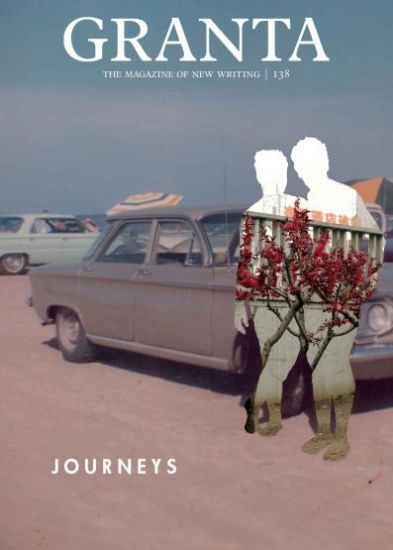
What are the ethics of writing about a place you may visit only briefly and view with the eyes of an outsider? With Granta's long tradition of travel writing in mind, we ask some of the world's best writers: is travel writing dead in 2016?Plus: Will Atkins investigates a killing across the US-Mexico borderXan Rice goes back to school in South AfricaEdna O'Brien: 'Chekhov's Ladies'David Flusfeder visits record factories in Detroit and CaliforniaAll the way up London's Holloway Road with Tim AdamsLaura Vapynar: 'Vladimir in Love'
Granta 139

Granta 139

Sigrid Rausing

Granta Magazine
2017
nidottu
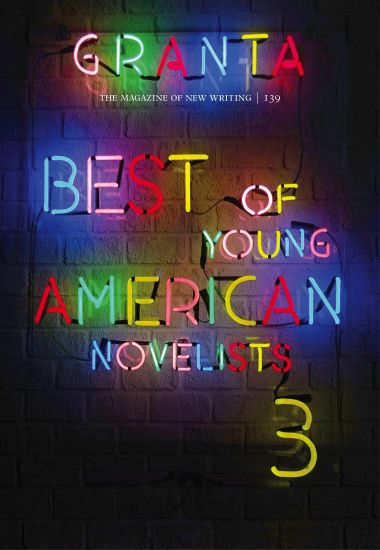
The third volume of Granta's renowned and prescient, Best of Young American NovelistsEvery ten years, Granta devotes an issue to new American fiction by writers under the age of forty, showcasing the young novelists deemed to be the best of their generation - writers of remarkable achievement and promise. In 1997 and 2007 we picked out such luminaries as Edwidge Danticat, Jeffrey Eugenides, Jonathan Safran Foer, Jonathan Franzen, Nicole Krauss, Lorrie Moore, Yiyun Li, Karen Russell and Gary Shteyngart. In this special issue, we bring you Granta's Best of Young American Novelists of 2017: twenty-one outstanding writers, each able to capture the preoccupations of modern America.Jesse Ball, Halle Butler, Emma Cline, Joshua Cohen, Mark Doten, Jen George, Rachel B. Glaser, Lauren Groff, Yaa Gyasi, Garth Risk Hallberg, Greg Jackson, Sana Krasikov, Catherine Lacey, Ben Lerner, Karan Mahajan, Anthony Marra, Dinaw Mengestu, Ottessa Moshfegh, Chinelo Okparanta, Esme Weijun Wang, Claire Vaye WatkinsThese are the novelists you will soon be reading, chosen by panel of judges who are themselves acclaimed writers: Patrick deWitt, A.M. Homes, Kelly Link, Ben Marcus and Sigrid Rausing.
Granta 140

Granta 140

Sigrid Rausing

Granta Magazine
2017
nidottu
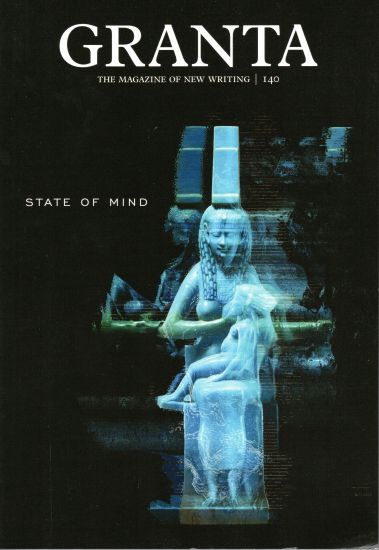
This issue of Granta explores the conscious self in an age when we are finally taking mental health seriously.We know how the brain works, but do we understand the mind? In an age when we are finally taking mental health as seriously as physical health, this issue of Granta explores the conscious self: how it perceives, judges and lives in the world.With new fiction, reportage, poetry, photography, and art addressing this topical issue.
Granta 142

Granta 142

Sigrid Rausing

Granta Magazine
2018
nidottu
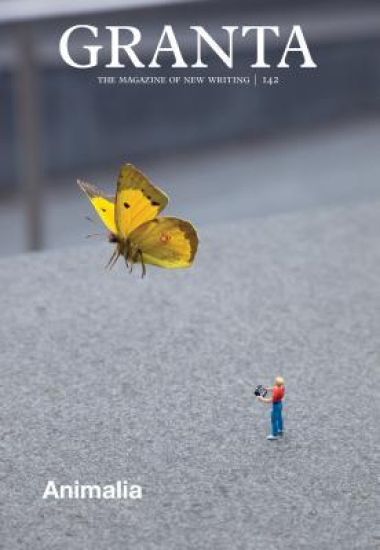
animal (noun): 'Any such living organism other than a human being' human being (noun): 'A man, woman, or child of the species Homo sapiens, distinguished from other animals by superior mental development, power of articulate speech, and upright stance' LOLcat (noun): 'A photograph of a cat accompanied by a humorous caption written typically in a misspelled and grammatically incorrect version of English' Fiction: Steven Dunn, Cormac James, Ben Lasman, Christina Wood Martinez, Yoko Tawada, Joy Williams, Nell Zink Non-Fiction: Nadeem Aslam, John Connell, Diane Cook, Cal Flyn, Adam Foulds, Rebecca Giggs, Arnon Grunberg, Aman Sethi Plus: Ben Crane, Daniyal Mueenuddin, Adam Nicolson, Dbc Pierre, Christine Schutt, Esther Woolfson, Evie Wyld Poetry: Emily Critchley, Dorothea Lasky, Ko Ko Thett Photography: Britta Jaschinski, Elliot Ross, introduced by Alexander Macleod, Helge Skodvin, introduced by Ned Beauman
Granta 143

Granta 143

Sigrid Rausing

Granta Magazine
2018
nidottu
What happens on the ground once the news cycle moves on? This issue of Granta looks at what comes next. Donald Trump is the president of the United States. Britain is leaving the European Union. Palmyra's monuments have been destroyed by ISIS. The Antarctic shelf is breaking up. The warnings, the debates, the arguments and the elections have all given way to reality. What happens on the ground once the news cycle moves on? How do we understand what we've done, and why? Granta 143 looks at what comes next. Don McCullin and Charles Glass return to a ruined Palmyra; Gavin Francis and Esa Aldegheri cross four Syrian borders on a motorbike; Jason Cowley on Harlow, a former 'Mark One New Town' where he grew up; Ben Rawlence on climate change relocation programs. Plus excellent new fiction, poetry and photography.