Kirjojen hintavertailu. Mukana 11 244 527 kirjaa ja 12 kauppaa.

Kirjahaku

Etsi kirjoja tekijän nimen, kirjan nimen tai ISBN:n perusteella.

6 kirjaa tekijältä Simo Knuuttila

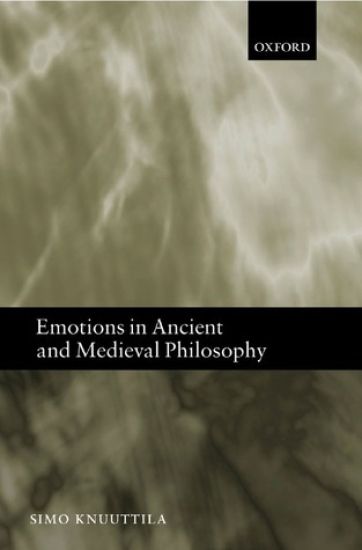
Emotions in Ancient and Medieval Philosophy

Emotions in Ancient and Medieval Philosophy

Simo Knuuttila

Clarendon Press
2006
nidottu
Emotions are the focus of intense debate both in contemporary philosophy and psychology and increasingly also in the history of ideas. Simo Knuuttila presents a comprehensive survey of philosophical theories of emotion from Plato to Renaissance times, combining rigorous philosophical analysis with careful historical reconstruction. The first part of the book covers the conceptions of Plato and Aristotle and later ancient views from Stoicism to Neoplatonism and, in addition, their reception and transformation by early Christian thinkers from Clement and Origen to Augustine and Cassian. Knuuttila then proceeds to a discussion of ancient themes in medieval thought, and of new medieval conceptions, codified in the so-called faculty psychology from Avicenna to Aquinas, in thirteenth century taxonomies, and in the voluntarist approach of Duns Scotus, William Ockham, and their followers. Philosophers, classicists, historians of philosophy, historians of psychology, and anyone interested in emotion will find much to stimulate them in this fascinating book.
Emotions in Ancient and Medieval Philosophy

Emotions in Ancient and Medieval Philosophy

Simo Knuuttila

Clarendon Press
2004
sidottu
Emotions are the focus of intense debate both in contemporary philosophy and psychology and increasingly also in the history of ideas. Simo Knuuttila presents a comprehensive survey of philosophical theories of emotion from Plato to Renaissance times, combining rigorous philosophical analysis with careful historical reconstruction. The first part of the book covers the conceptions of Plato and Aristotle and later ancient views from Stoicism to Neoplatonism and, in addition, their reception and transformation by early Christian thinkers from Clement and Origen to Augustine and Cassian. Knuuttila then proceeds to a discussion of ancient themes in medieval thought, and of new medieval conceptions, codified in the so-called faculty psychology from Avicenna to Aquinas, in thirteenth century taxonomies, and in the voluntarist approach of Duns Scotus, William Ockham, and their followers. Philosophers, classicists, historians of philosophy, historians of psychology, and anyone interested in emotion will find much to stimulate them in this fascinating book.
Modalities in Medieval Philosophy

Modalities in Medieval Philosophy

Simo Knuuttila

Routledge
2019
sidottu
Originally published in 1993, Modalities in Medieval Philosophy looks at the idea of modality as multiplicity of reference with respect to alternative domains. The book examines how this emerged in early medieval discussions and addresses how it was originally influenced by the theological conception of God acting by choice. After a discussion of ancient modal paradigms, the author traces the interplay of old and new modal views in medieval logic and semantics, philosophy and theology. A detailed account is given of late medieval discussions of the new modal logic, epistemic logic, and the logic norms. These theories show striking similarities to some basic tenets of contemporary approaches to modal matters. This work will be of considerable interest to historians of philosophy and ideas and philosophers of logic and metaphysics.
Modalities in Medieval Philosophy

Modalities in Medieval Philosophy

Simo Knuuttila

Routledge
2020
nidottu
Originally published in 1993, Modalities in Medieval Philosophy looks at the idea of modality as multiplicity of reference with respect to alternative domains. The book examines how this emerged in early medieval discussions and addresses how it was originally influenced by the theological conception of God acting by choice. After a discussion of ancient modal paradigms, the author traces the interplay of old and new modal views in medieval logic and semantics, philosophy and theology. A detailed account is given of late medieval discussions of the new modal logic, epistemic logic, and the logic norms. These theories show striking similarities to some basic tenets of contemporary approaches to modal matters. This work will be of considerable interest to historians of philosophy and ideas and philosophers of logic and metaphysics.
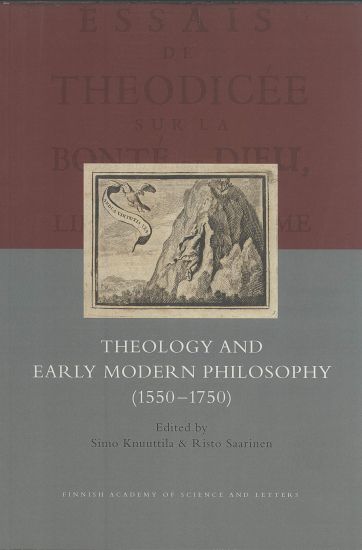
Theology and Early Modern Philosophy (1550-1750)

Theology and Early Modern Philosophy (1550-1750)

Simo Knuuttila

SUOMALAINEN TIEDEAKATEMIA
2010
nidottu
Theology and Early Modern Philosophy (1550-1750)Finnish Academy of Science and LettersAnnales Academiae Scientiarum Fennicae. Humaniora 360In this volume Christian theology is regarded as a connecting link between medieval and early modern philosophy. While some sophisticated authors promoted views based on skepticism or a radical division between faith and philosophy, mainstream Catholic thinkers regarded faith and reason as compatible and complementary, and the Lutheran and Reformed traditions also distanced themselves from radical fideism. The volume explores new issues relevant for the relationship between philosophy and theology.