Kirjojen hintavertailu. Mukana 11 342 296 kirjaa ja 12 kauppaa.

Kirjahaku

Etsi kirjoja tekijän nimen, kirjan nimen tai ISBN:n perusteella.

9 kirjaa tekijältä Simon Baron-Cohen

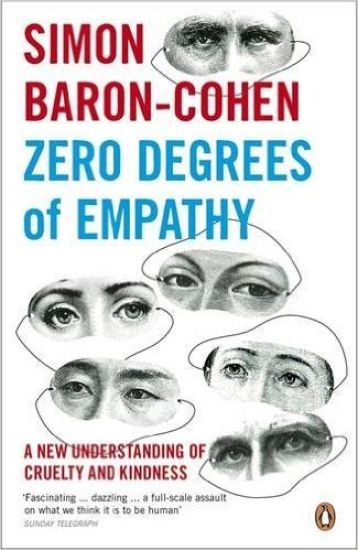
Zero Degrees of Empathy

Zero Degrees of Empathy

Simon Baron-Cohen

Penguin Books Ltd
2012
pokkari
In Zero Degrees of Empathy: A New Theory of Human Cruelty and Kindness Simon Baron-Cohen takes fascinating and challenging new look at what exactly makes our behaviour uniquely human. How can we ever explain human cruelty? We have always struggled to understand why some people behave in the most evil way imaginable, while others are completely self-sacrificing. Is it possible that - rather than thinking in terms of 'good' and 'evil' - all of us instead lie somewhere on the empathy spectrum, and our position on that spectrum can be affected by both genes and our environments? Why do some people treat others as objects? Why is empathy our most precious resource? And does a lack of it always mean a negative outcome? From the Nazi concentration camps of World War Two to the playgrounds of today, Simon Baron-Cohen examines empathy, cruelty and understanding in a groundbreaking study of what it means to be human. 'Fascinating ... dazzling ... a full-scale assault on what we think it is to be human' Sunday Telegraph 'Highly readable ... this is a valuable book' Charlotte Moore, Spectator 'Important ... humane and immensely sympathetic' Richard Holloway, Literary Review Simon Baron-Cohen is Professor at Cambridge University in the fields of psychology and psychiatry. He is also the Director of the Autism Research Centre there. He has carried out research into social neuroscience over a 20 year career. His popular science book entitled The Essential Difference has been translated in over a dozen languages, and has been widely reviewed.
The Pattern Seekers

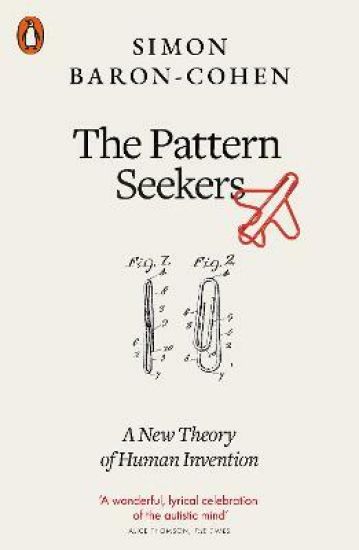
The Pattern Seekers

Simon Baron-Cohen

Penguin Books Ltd
2022
pokkari
'Celebrates human cognitive diversity, and is rich with empathy and psychological insight' Steven Pinker 'Bold, intriguing, profound' Jay Elwes, Spectator Why can humans alone invent? In this book, psychologist and world renowned autism expert Simon Baron-Cohen puts forward a bold new theory: because we can identify patterns, specifically if-and-then patterns. Baron-Cohen argues that the genes for this unique ability overlap with the genes for autism and have driven human progress for 70,000 years. From the first musical instruments to the agricultural, industrial, and digital revolutions, Pattern Seekers links one of our greatest human strengths with a condition that is so often misunderstood and challenges us to think differently about those who think differently.
The Essential Difference

The Essential Difference

Simon Baron-Cohen

Penguin Books Ltd
2012
pokkari
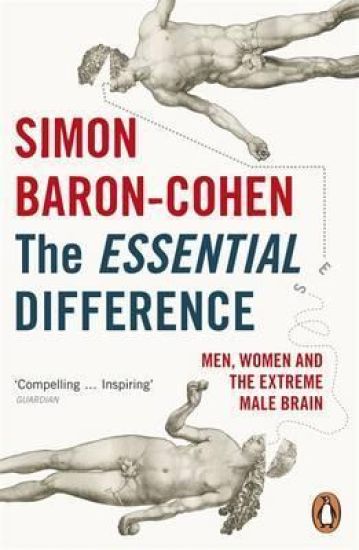
Simon Baron-Cohen's The Essential Difference: Men, Women and the Extreme Male Brain is an unflinching look at the scientific evidence behind the innate sex differences of the mind. Men and women have always seemed to think in entirely different ways, from conversation and communication to games and gadgets. But are these differences created by society, or do our minds come ready-wired one way or another, with female brains tending towards interaction and male towards organisation? And could this mean that autism - rather than being a mental anomaly - is in fact simply an extreme male brain? Why are female brains better at empathasing? How are male brains designed to analyse systems? And what really makes men and women different? Simon Baron-Cohen explores list-making, lying and two decades of research in a ground-breaking examination of how our brains can be male or female but always completely fascinating. 'Compelling ... Inspiring' Guardian 'This is no Mars/Venus whimsy, but the conclusion from twenty years of experiment' Evening Standard 'A devastating contribution to the gender debate' Mail on Sunday 'A fascinating, thought-provoking book' Observer Simon Baron-Cohen is Professor at Cambridge University in the fields of psychology and psychiatry. He is also the Director of Cambridge's internationally renowned Autism Research Centre. He has carried out research into social neuroscience over a career spanning twenty years. He is the author of Mindblindness and Zero Degrees of Empathy.
The Essential Difference

The Essential Difference

Simon Baron-Cohen

Basic Books
2004
pokkari
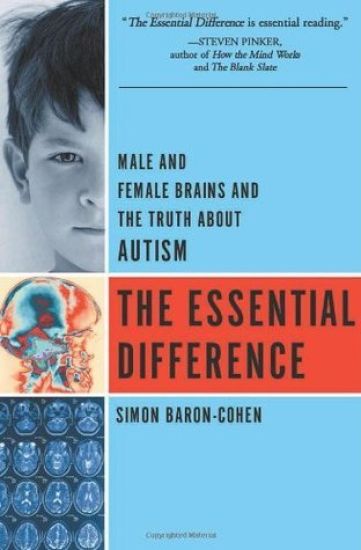
We all know the opposite sex can be a baffling, even infuriating, species. Why do most men use the phone to exchange information rather than have a chat? Why do women love talking about relationships and feelings with their girlfriends while men seem drawn to computer games, new gadgets, or the latest sports scores? Does it really all just come down to our upbringing? In The Essential Difference , leading psychologist Simon Baron-Cohen confirms what most of us had suspected all along: that male and female brains are different. This ground-breaking and controversial study reveals the scientific evidence (present even in one-day-old babies) that proves that female-type brains are better at empathizing and communicating, while male brains are stronger at understanding and building systems-not just computers and machinery, but abstract systems such as politics and music. Most revolutionary of all, The Essential Difference also puts forward the compelling new theory that autism (and its close relative, Asperger's Syndrome) is actually an example of the extreme male brain. His theory can explain why those who live with this condition are brilliant at analyzing the most complex systems yet cannot relate to the emotional lives of those with whom they live. Understanding our essential difference, Baron-Cohen concludes, may help us not only make sense of our partners' foibles, but also solve one of the most mysterious scientific riddles of our time.
The Science of Evil: On Empathy and the Origins of Cruelty
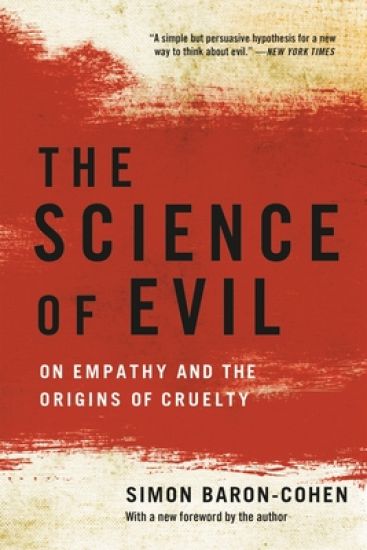
An award-winning psychologist draws on years of research to unveil "a simple but persuasive hypothesis for a new way to think about evil" (New York Times). How can we explain both cruelty and kindness? To award-winning psychologist Simon Baron-Cohen, the explanation for cruelty is low levels of empathy, and the explanation for kindness is high levels of empathy. In The Science of Evil, Baron-Cohen draws on decades of research to develop a new, brain-based theory of human cruelty and kindness. He explores the social and biological factors that can influence our empathy levels, explains the key distinction between cognitive and affective forms of empathy, and shows how low empathy can lead to dehumanizing behavior. Updated with a new introduction by the author, The Science of Evil will continue to challenge our understanding of human cruelty.
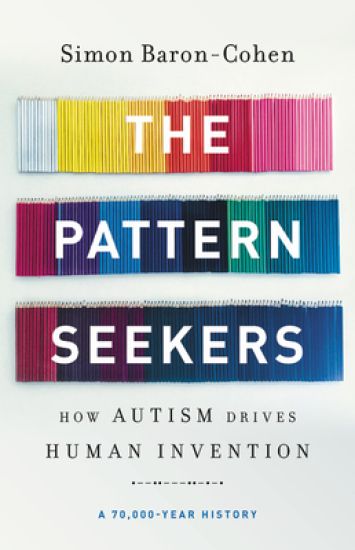
The Pattern Seekers: How Autism Drives Human Invention
A groundbreaking argument about the link between autism and ingenuity.Why can humans alone invent? In The Pattern Seekers, Cambridge University psychologist Simon Baron-Cohen makes a case that autism is as crucial to our creative and cultural history as the mastery of fire. Indeed, Baron-Cohen argues that autistic people have played a key role in human progress for seventy thousand years, from the first tools to the digital revolution.How? Because the same genes that cause autism enable the pattern seeking that is essential to our species's inventiveness. However, these abilities exact a great cost on autistic people, including social and often medical challenges, so Baron-Cohen calls on us to support and celebrate autistic people in both their disabilities and their triumphs. Ultimately, The Pattern Seekers isn't just a new theory of human civilization, but a call to consider anew how society treats those who think differently.
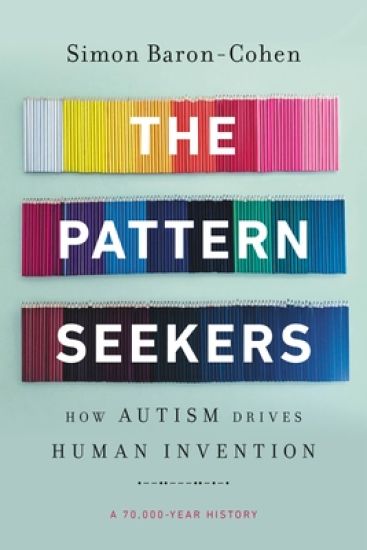
The Pattern Seekers: How Autism Drives Human Invention
*A New York Times Editors' Choice Pick* An "ambitious work" (Washington Post) tracing the links between autism and ingenuity Is the ability to invent things unique to humans? In The Pattern Seekers, Cambridge University psychologist Simon Baron-Cohen argues that it is, and proposes that autistic people have played a key role in human progress for seventy to one hundred thousand years, from the first complex tools like the bow and arrow and the first musical instrument to the digital revolution. He presents the science that the same genes that contribute to autism enable a special kind of pattern seeking that is essential to our species' inventiveness. However, these abilities come at a cost for autistic people, including social and neurological challenges. Baron-Cohen calls on us to support and celebrate autistic people in both their disabilities and their talents. Ultimately, The Pattern Seekers isn't just a new theory of human evolution, but a call to reconsider how society treats those who think differently.