Kirjojen hintavertailu. Mukana 11 699 587 kirjaa ja 12 kauppaa.

Kirjahaku

Etsi kirjoja tekijän nimen, kirjan nimen tai ISBN:n perusteella.

26 kirjaa tekijältä Simon Blackburn

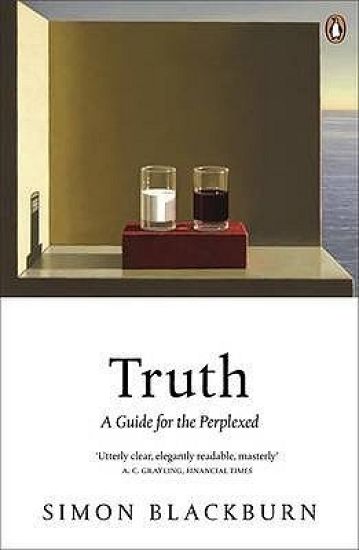
Truth: A Guide for the Perplexed

Truth: A Guide for the Perplexed

Simon Blackburn

Penguin Books Ltd
2006
pokkari
This important book is about truth, and the enemies of truth, and the wars that are fought between them. As Simon Blackburn says in his introduction, "the ground is complicated, strewn with abandoned fortresses and trenches, fought over by shifting alliances". Truth is an essential sure-footed guide through the territory, from classical to modern times. It looks at relativism and absolutism, toleration and belief, objectivity and knowledge, science and pseudo-science, and the moral and political implications, as well as the nuances, of all these.
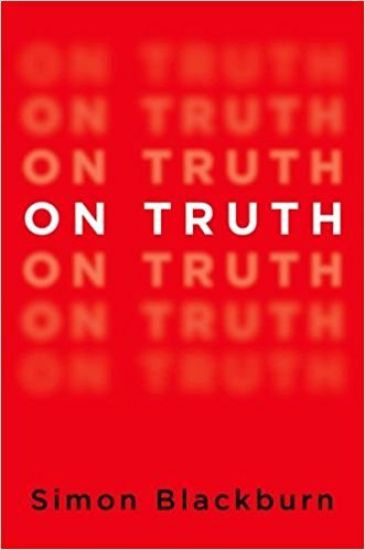
On Truth

On Truth

Simon Blackburn

Oxford University Press
2018
nidottu
Truth is not just a recent topic of contention. Arguments about it have gone on for centuries. Why is the truth important? Who decides what the truth is? Is there such a thing as objective, eternal truth, or is truth simply a matter of perspective, of linguistic or cultural vantage point? In this concise book Simon Blackburn provides an accessible explanation of what truth is and how we might think about it. The first half of the book details several main approaches to how we should think about, and decide, what is true. These are philosophical theories of truth such as the correspondence theory, the coherence theory, deflationism, and others. He then examines how those approaches relate to truth in several contentious domains: art, ethics, reasoning, religion, and the interpretation of texts. Blackburn's overall message is that truth is often best thought of not as a product or an end point that is 'finally' achieved, but--as the American pragmatist thinkers thought of it--as an ongoing process of inquiry. The result is an accessible and tour through some of the deepest and thorniest questions philosophy has ever tackled
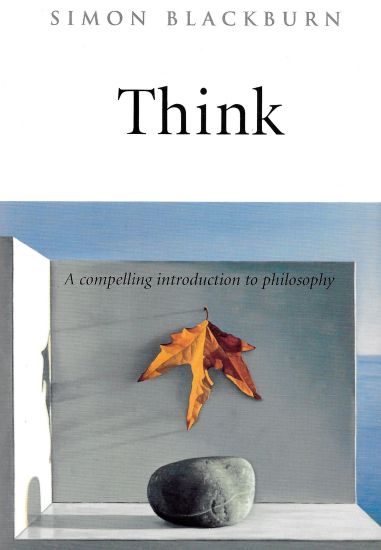
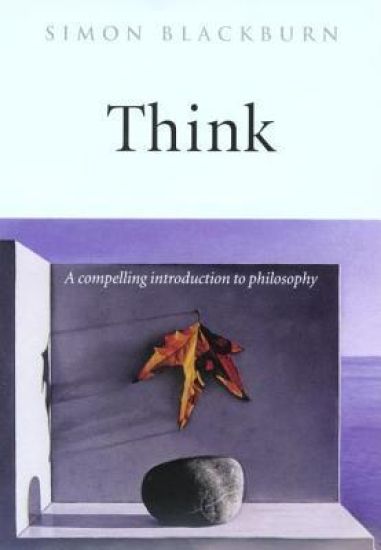
Think

Think

Simon Blackburn

Oxford University Press Inc
1999
sidottu
What am I? What is consciousness? What is the difference between past and future? Does the world presuppose a creator? Do we always act out of self-interest? This is a book about the big questions in life: knowledge, consciousness, fate, God, truth, goodness, justice. It is for anyone who believes there are big questions out there, but does not know how to approach them. Written by the author of the bestselling Oxford Dictionary of Philosophy, Think sets out to explain what they are and why they are important. Simon Blackburn begins by putting forward a convincing case for the study of philosophy and goes on to give the reader a sense of how the great historical figures such as Plato, Hume, Kant, and Descartes have approached its central themes. Each chapter explains a major issue, and gives the reader a self-contained guide through the problems that philosophers have studied. The large range of topics covered range from scepticism, the self, mind and body, and freedom to ethics and the arguments surrounding the existence of God. Written in a lively and approachable manner, this book is ideal for all those who want to learn how the basic techniques of thinking shape our existence.
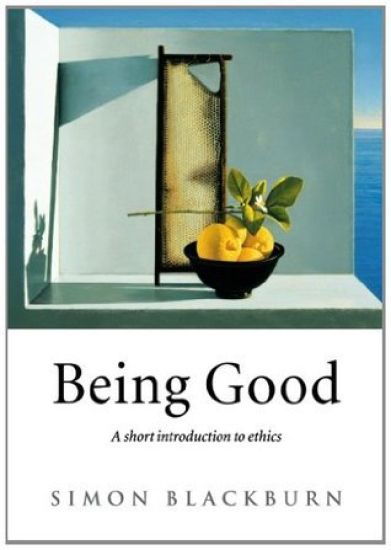
Being Good

Being Good

Simon Blackburn

Oxford University Press
2002
nidottu
It is not only in our dark hours that scepticism, relativism, hypocrisy, and nihilism dog ethics. Whether it is a matter of giving to charity, or sticking to duty, or insisting on our rights, we can be confused, or be paralysed by the fear that our principles are groundless. Many are afraid that in a Godless world science has unmasked us as creatures fated by our genes to be selfish and tribalistic, or competitive and aggressive. Simon Blackburn, author of the best-selling Think, structures this short introduction around these and other threats to ethics. Confronting seven different objections to our self-image as moral, well-behaved creatures, he charts a course through the philosophical quicksands that often engulf us. Then, turning to problems of life and death, he shows how we should think about the meaning of life, and how we should mistrust the sound-bite sized absolutes that often dominate moral debates. Finally he offers a critical tour of the ways the philosophical tradition has tried to provide foundations for ethics, from Plato and Aristotle through to contemporary debates.
Think

Think

Simon Blackburn

Oxford University Press
2001
nidottu
This is a book about the big questions in life: knowledge, consciousness, fate, God, truth, goodness, justice. It is for anyone who believes there are big questions out there, but does not know how to approach them. Think sets out to explain what they are and why they are important. Simon Blackburn begins by putting forward a convincing case for the study of philosophy and goes on to give the reader a sense of how the great historical figures such as Descartes, Hume, Kant, and Wittgenstein have approached its central themes. Each chapter explains a major issue, and gives the reader a self-contained guide through the problems that philosophers have studied. The large scope of topics covered range from scepticism, the self, mond and body, and freedom to ethics and the arguments surrounding the existence of God. Lively and approachable, this book is ideal for all those who want to learn how the basic techniques of thinking shape our existence.
Essays in Quasi-Realism

Essays in Quasi-Realism

Simon Blackburn

Oxford University Press Inc
1993
sidottu
In these essays, Simon Blackburn explores one of the most profound and fertile of philosophical problems: the way in which our judgements relate to the world. This debate has centred on realism, or the view that what we say is validated by the way things stand in the world, and a variety of oppositions to it. Prominent among the latter are expressive and projective theories, but also a relaxed pluralism that discourages the view that there are substantial issues at stake. The figure of the `quasi-realist' dramatizes the difficulty of conducting these debates. Typically philosophers thinking of themselves as realists will believe that they alone can give a proper or literal account of some of our attachments–to truth, to facts, to the independent world, to knowledge, and to certainty. The quasi-realist challenge, developed by Blackburn in this volume, is that we can have those attachments without any metaphysic that deserves calling realism, so that the metaphysical picture that goes with our practices is quite idle. The cases treated here include the theories of value and of knowledge, modality, probability, causation, intentionality and rule-following, and explanation. A substantial new introduction has been added, drawing together some of the central themes.
Essays in Quasi-Realism

Essays in Quasi-Realism

Simon Blackburn

Oxford University Press Inc
1993
nidottu
This volume collects together some influential essays in which Simon Blackburn explores one of the most profound and fertile of philosophical problems: the way in which our judgements relate to the world. This debate has centered on realism, or the view that what we say is validated by the way things stand in the world, and a variety of oppositions to it. Prominent among the latter are expressive and projective theories, but also a relaxed pluralism that discourages the view that there are substantial issues at stake. The figure of the `quasi-realist' dramatizes the difficulty of conducting these debates. Typically philosophers thinking of themselves as realists will believe that they alone can give a proper or literal account of some of our attachments - to truth, to facts, to the independent world, to knowledge, and to certainty. The quasi-realist challenge, developed by Blackburn in this volume, is that we can have those attachments without any metaphysic that deserves calling realism, so that the metaphysical picture that goes with our practices is quite idle. The cases treated here include the theory of value, of knowledge, modality, probability, causation, intentionality and rule-following, and explanation. A substantial new introduction has been added, drawing together some of the central themes. The essays articulate a fresh alternative to a primitive realist/anti-realist opposition, and their cumulative effect is to yield a new appreciation of the delicacy of the debate in these central areas.
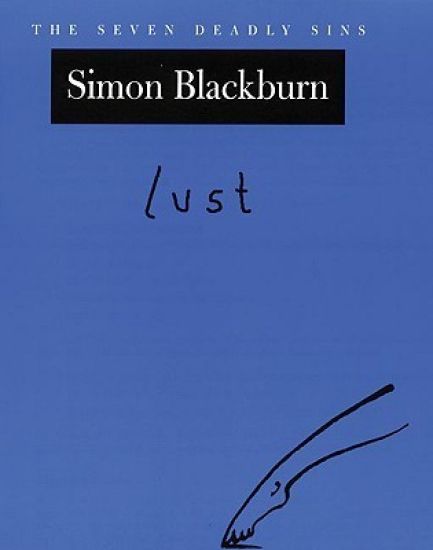
Lust

Lust

Simon Blackburn

Oxford University Press Inc
2004
sidottu
Blackburn, author of such popular philosophy books as "Think" and "Being Good," here offers a sharp-edged probe into the heart of lust, blending together insight from some of the world's greatest thinkers on sex, human nature, and common cultural foibles. Lust, says Simon Blackburn, is furtive, headlong, always sizing up opportunities. It is a trail of clothing in the hallway, the trashy cousin of love. But be that as it may, the aim of this delightful book is to rescue lust "from the denunciations of old men of the deserts, to deliver it from the pallid and envious confessor and the stocks and pillories of the Puritans, to drag it from the category of sin to that of virtue." Blackburn, author of such popular philosophy books as Think and Being Good, here offers a sharp-edged probe into the heart of lust, blending together insight from some of the world's greatest thinkers on sex, human nature, and our common cultural foibles. Blackburn takes a wide ranging, historical approach, discussing lust as viewed by Aristophanes and Plato, lust in the light of the Stoic mistrust of emotion, and the Christian fear of the flesh that catapulted lust to the level of deadly sin. He describes how philosophical pessimists like Schopenhauer and Sartre contributed to our thinking about lust and explores the false starts in understanding lust represented by Freud, Kinsey, and modern "evolutionary psychology." But most important, Blackburn reminds us that lust is also life-affirming, invigorating, fun. He points to the work of David Hume (Blackburn's favorite philosopher) who saw lust not only as a sensual delight but also "a joy of the mind." Written by one of the most eminent living philosophers, attractively illustrated and colourfully packaged, Lust is a book that anyone would lust over.
Truth

Truth

Simon Blackburn

Oxford University Press Inc
2007
nidottu
The author of the highly popular book Think, which Time magazine hailed as "the one book every smart person should read to understand, and even enjoy, the key questions of philosophy," Simon Blackburn is that rara avis--an eminent thinker who is able to explain philosophy to the general reader. Now Blackburn offers a tour de force exploration of what he calls "the most exciting and engaging issue in the whole of philosophy"--the age-old war over truth. The front lines of this war are well defined. On one side are those who believe in plain, unvarnished facts, rock-solid truths that can be found through reason and objectivity--that science leads to truth, for instance. Their opponents mock this idea. They see the dark forces of language, culture, power, gender, class, ideology and desire--all subverting our perceptions of the world, and clouding our judgement with false notions of absolute truth. Beginning with an early skirmish in the war--when Socrates confronted the sophists in ancient Athens--Blackburn offers a penetrating look at the longstanding battle these two groups have waged, examining the philosophical battles fought by Plato, Protagoras, William James, David Hume, Hans-Georg Gadamer, Jacques Derrida, Michel Foucault, Richard Rorty, and many others, with a particularly fascinating look at Nietzsche. Among the questions Blackburn considers are: is science mere opinion, can historians understand another historical period, and indeed can one culture ever truly understand another. Blackburn concludes that both sides have merit, and that neither has exclusive ownership of truth. What is important is that, whichever side we embrace, we should know where we stand and what is to be said for our opponents.
Ruling Passions

Ruling Passions

Simon Blackburn

Clarendon Press
1998
sidottu
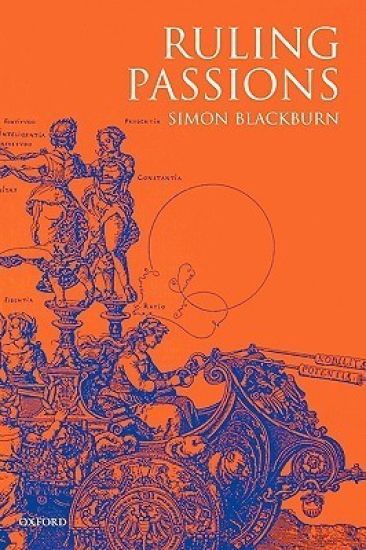
Simon Blackburn puts forward a compelling original philosophy of human motivation and morality. He maintains that we cannot get clear about ethics until we get clear about human nature. So these are the sorts of questions he addresses: Why do we behave as we do? Can we improve? Is our ethics at war with our passions, or is it an upshot of those passions? Blackburn seeks the answers in an exploration of guilt, shame, disgust, and other moral emotions; he draws also on game theory and cognitive science in his account of the structures of human motivation. Many philosophers have wanted a naturalistic ethics--a theory that integrates our understanding of human morality with the rest of our understanding of the world we live in. What is special about Blackburn's naturalistic ethics is that it does not debunk the ethical by reducing it to the non-ethical. At the same time he banishes the spectres of scepticism and relativism that have haunted recent moral philosophy. Ruling Passions sets ethics in the context of human nature: it offers a solution to the puzzle of how ethics can maintain its authority even though it is rooted in the very emotions and motivations that it exists to control.
The Oxford Dictionary of Philosophy

The Oxford Dictionary of Philosophy

Simon Blackburn

Oxford University Press
2016
nidottu
This bestselling dictionary is written by one of the leading philosophers of our time, and it is widely recognized as the best dictionary of its kind. Comprehensive and authoritative, it covers every aspect of philosophy from Aristotle to Zen. With clear and concise definitions, it provides lively and accessible coverage of not only Western philosophical traditions, but also themes from Chinese, Indian, Islamic, and Jewish philosophy. Entries include over 400 biographies of famous and influential philosophers, in-depth analysis of philosophical terms and concepts, and a chronology of philosophical events stretching from 10,000 BC to the present day. New entries on philosophy of economics, social theory, neuroscience, philosophy of the mind, and moral conceptions bring the third edition of this dictionary fully up to date. Fully cross-referenced and containing over 3,300 alphabetical entries, it is the ideal introduction to philosophy for anyone with an interest in the subject, and it is an indispensable work of reference for students and teachers.
Ethics

Ethics

Simon Blackburn

Oxford University Press
2021
nidottu
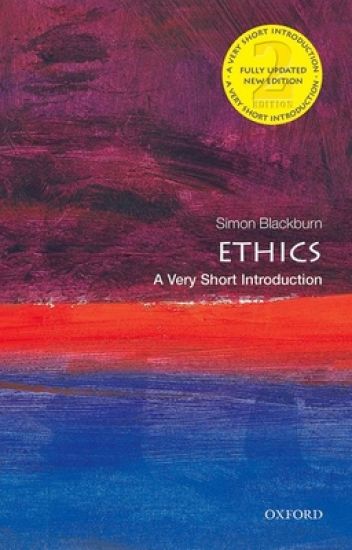
Very Short Introductions: Brilliant, Sharp, Inspiring Our self-image as moral, well-behaved creatures is dogged by scepticism, relativism, hypocrisy, and nihilism, and by the fear that in a Godless world science has unmasked us as creatures fated by our genes to be selfish and tribalistic, or competitive and aggressive. Here, Simon Blackburn tackles the major moral questions surrounding birth, death, happiness, desire, and freedom, showing us how we should think about the meaning of life, and why we should mistrust the soundbite-sized absolutes that often dominate moral debates. This second edition of the Very Short Introduction on Ethics has revised and updated aspects of the original to reflect changing times and mores. It highlights the importance of an understanding of approaches to ethics and its foundations, confronted as we are with a fluid and uncertain world of eroding trust, swirling conspiracy theories, and a dismaying loss of respect in public discourse. ABOUT THE SERIES: The Very Short Introductions series from Oxford University Press contains hundreds of titles in almost every subject area. These pocket-sized books are the perfect way to get ahead in a new subject quickly. Our expert authors combine facts, analysis, perspective, new ideas, and enthusiasm to make interesting and challenging topics highly readable.
Ruling Passions

Ruling Passions

Simon Blackburn

Clarendon Press
2000
nidottu
Simon Blackburn puts forward a compelling original philosophy of human motivation and morality. He maintains that we cannot get clear about ethics until we get clear about human nature. So these are the sorts of questions he addresses: Why do we behave as we do? Can we improve? Is our ethics at war with our passions, or is it an upshot of those passions? Blackburn seeks the answers in an exploration of guilt, shame, disgust, and other moral emotions; he draws also on game theory and cognitive science in his account of the structures of human motivation. Many philosophers have wanted a naturalistic ethics a theory that integrates our understanding of human morality with the rest of our understanding of the world we live in. What is special about Blackburn's naturalistic ethics is that it does not debunk the ethical by reducing it to the non-ethical. At the same time he banishes the spectres of scepticism and relativism that have haunted recent moral philosophy. Ruling Passions sets ethics in the context of human nature: it offers a solution to the puzzle of how ethics can maintain its authority even though it is rooted in the very emotions and motivations that it exists to control.
Practical Tortoise Raising

Practical Tortoise Raising

Simon Blackburn

Oxford University Press
2010
sidottu
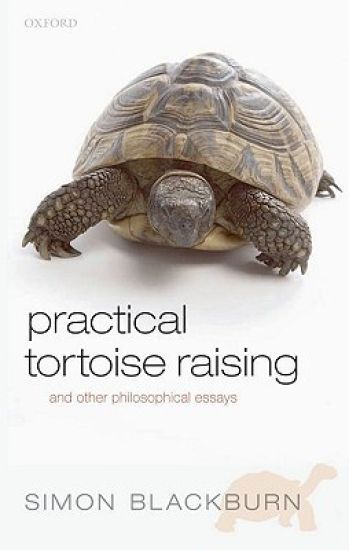
Simon Blackburn presents a selection of his philosophical essays from 1995 to 2010. He offers engaging and illuminating discussions of various problems which arise when such familiar notions as representation, truth, reason, and assertion are applied in the sphere of practical thought. It is puzzling how our thinking gets to grip with such things as values and norms. Blackburn explores how we can try to understand what we say in terms of what we are doing when we say it. He investigates how propositions interact with linguistic expressions whose primary function is identified in terms of actions performed in expressing commitments with them, when those commitments are thought of in practical rather than descriptive terms. He broadens his investigation from semantic questions to wider issues of pluralism, pragmatism, philosophy of mind, and the nature of practical reasoning.
Practical Tortoise Raising

Practical Tortoise Raising

Simon Blackburn

Oxford University Press
2012
nidottu
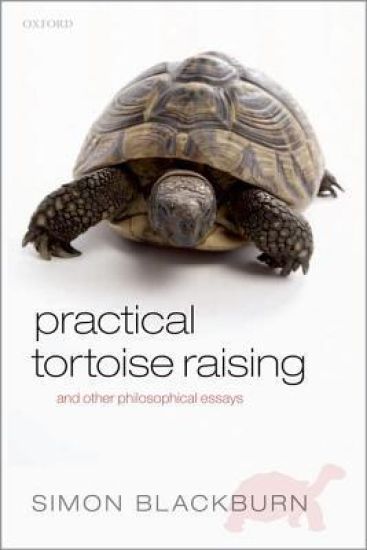
Simon Blackburn presents a selection of his philosophical essays from 1995 to 2010. He offers engaging and illuminating discussions of various problems which arise when such familiar notions as representation, truth, reason, and assertion are applied in the sphere of practical thought. It is puzzling how our thinking gets to grip with such things as values and norms. Blackburn explores how we can try to understand what we say in terms of what we are doing when we say it. He investigates how propositions interact with linguistic expressions whose primary function is identified in terms of actions performed in expressing commitments with them, when those commitments are thought of in practical rather than descriptive terms. He broadens his investigation from semantic questions to wider issues of pluralism, pragmatism, philosophy of mind, and the nature of practical reasoning.
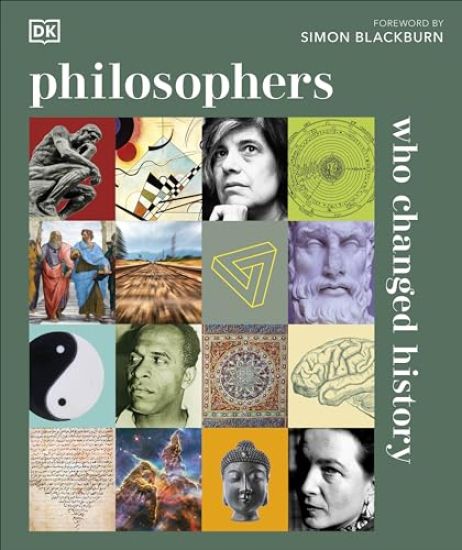
Philosophers Who Changed History

Philosophers Who Changed History

Simon Blackburn

DORLING KINDERSLEY LTD
2024
sidottu
This visual celebration of the world's most celebrated thinkers tells the fascinating stories of their lives and pioneering ideas.Philosophers Who Changed History places well-known philosophers in their historical and cultural context, showing you how they came to influence philosophy as we know it today.This illustrated guide is ideal for those interested in philosophy, politics, history, and literature or who would like to broaden their general understanding of philosophy and the lives of philosophers.Inside this book on philosophers, you’ll find: -An overview of the lives and works of around 80 of the world's most influential philosophers - from the Classical era to the present-Eight pages of brand-new content with 12 new entries, including Frederick Douglass and Luce Irigaray-Lavishly illustrated portraits of each philosopher, alongside photographs of their homes, studies and personal artefactsIn this philosophy guide, each philosopher is introduced with a realistic portrait and biographical entries which trace the friendships, loves, and rivalries that inspired and influenced them. Entries explore the key ideas and working methods of each individual and set their ideas in context, conveying a powerful sense of the place and the period of history in which they lived. Philosophers Who Changed History provides revealing insights into what drove each individual to develop new ways of understanding the world.
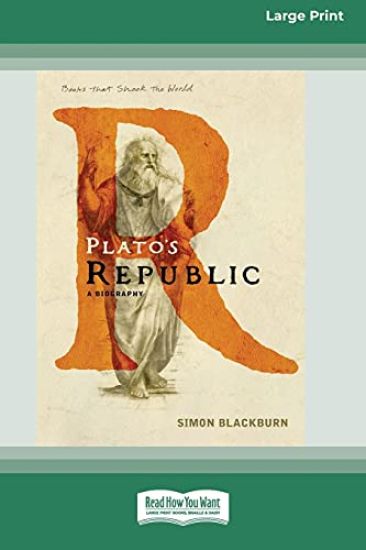
Plato's Republic

Plato's Republic

Simon Blackburn

Readhowyouwant
2014
pokkari
Plato is perhaps the most significant philosopher who has ever lived and the ''''Republic'''', composed in Athens in about 375BC, is widely regarded as his most famous dialogue. Its discussion of the perfect city - and the perfect mind - laid the foundations for Western culture and, for over two thousand years, has been the cornerstone of Western philosophy. In this book, Simon Blackburn explains the judicial, moral and political ideas in the ''''Republic'''' and examines its influence on the modern world. He shows why, from St Augustine to twentieth - century philosophers such as Whitehead and Bergson, Western thought is still conditioned by this most important of books.
Reason and Prediction

Reason and Prediction

Simon Blackburn

Cambridge University Press
2009
pokkari
An original study of the philosophical problems associated with inductive reasoning. Like most of the main questions in epistemology, the classical problem of induction arises from doubts about a mode of inference used to justify some of our most familiar and pervasive beliefs. The experience of each individual is limited and fragmentary, yet the scope of our beliefs is much wider; and it is the relation between belief and experience, in particular the belief that the future will in some respects resemble the past and the unobserved the observed, which forms the subject of this book. Dr Blackburn's first aim is to state the problem of induction properly, to show that there does exist a genuine problem immune to the solutions in vogue at present, yet no tin principle insoluble. He gives an extended and original account of the concept of a reason and goes on to discuss prediction. In the end Dr Blackburn produces a rationale for belief in certain short-term predictions based on his reinterpretation of the classical principle of indifference. He claims that a justification for induction can be found along the lines he has suggested and must indeed be found there if anywhere.
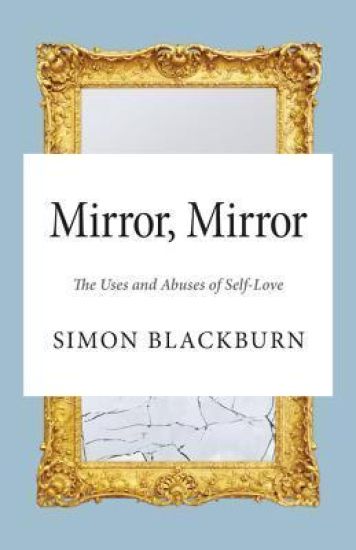
Mirror, Mirror

Mirror, Mirror

Simon Blackburn

Princeton University Press
2014
sidottu
Everyone deplores narcissism, especially in others. The vain are by turns annoying or absurd, offending us whether they are blissfully oblivious or proudly aware of their behavior. But are narcissism and vanity really as bad as they seem? Can we avoid them even if we try? In Mirror, Mirror, Simon Blackburn, the author of such best-selling philosophy books as Think, Being Good, and Lust, says that narcissism, vanity, pride, and self-esteem are more complex than they first appear and have innumerable good and bad forms. Drawing on philosophy, psychology, literature, history, and popular culture, Blackburn offers an enlightening and entertaining exploration of self-love, from the myth of Narcissus and the Christian story of the Fall to today's self-esteem industry. A sparkling mixture of learning, humor, and style, Mirror, Mirror examines what great thinkers have said about self-love--from Aristotle, Cicero, and Erasmus to Rousseau, Adam Smith, Kant, and Iris Murdoch. It considers today's "me"-related obsessions, such as the "selfie," plastic surgery, and cosmetic enhancements, and reflects on connected phenomena such as the fatal commodification of social life and the tragic overconfidence of George W. Bush and Tony Blair. Ultimately, Mirror, Mirror shows why self-regard is a necessary and healthy part of life. But it also suggests that we have lost the ability to distinguish--let alone strike a balance--between good and bad forms of self-concern.