Kirjojen hintavertailu. Mukana 11 419 902 kirjaa ja 12 kauppaa.

Kirjahaku

Etsi kirjoja tekijän nimen, kirjan nimen tai ISBN:n perusteella.

35 kirjaa tekijältä Simon Critchley

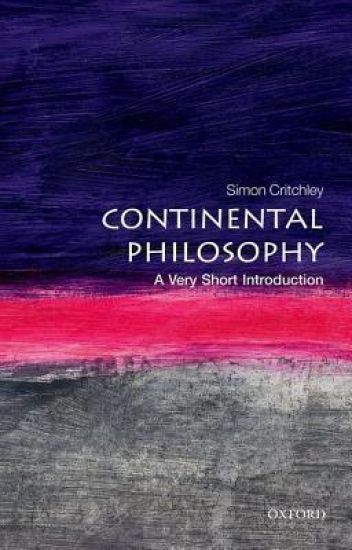
Continental Philosophy

Continental Philosophy

Simon Critchley

Oxford University Press
2001
nidottu
Simon Critchley's Very Short Introduction shows that Continental philosophy encompasses a distinct set of philosophical traditions and practices, with a compelling range of problems all too often ignored by the analytic tradition. He discusses the ideas and approaches of philosophers such as Kant, Hegel, Nietzsche, Husserl, Heidegger, Sartre, Habermas, Foucault, and Derrida, and introduces key concepts such as existentialism, nihilism, and phenomenology by explaining their place in the Continental tradition. ABOUT THE SERIES: The Very Short Introductions series from Oxford University Press contains hundreds of titles in almost every subject area. These pocket-sized books are the perfect way to get ahead in a new subject quickly. Our expert authors combine facts, analysis, perspective, new ideas, and enthusiasm to make interesting and challenging topics highly readable.
The Problem with Levinas

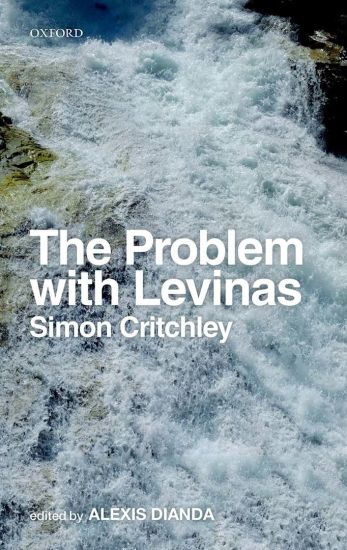
The Problem with Levinas

Simon Critchley

Oxford University Press
2015
sidottu
Levinas's idea of ethics as a relation of responsibility to the other person has become a highly influential and recognizable position across a wide range of academic and non-academic fields. Simon Critchley's aim in this book is to provide a less familiar, more troubling, and (hopefully) truer account of Levinas's work. A new dramatic method for reading Levinas is proposed, where the fundamental problem of his work is seen as the attempt to escape from the tragedy of Heidegger's philosophy and the way in which that philosophy shaped political events in the last century. Extensive and careful attention is paid to Levinas' fascinating but often overlooked work from the 1930s, where the proximity to Heidegger becomes clearer. Levinas's problem is very simple: how to escape from the tragic fatality of being as described by Heidegger. Levinas's later work is a series of attempts to answer that problem through claims about ethical selfhood and a series of phenomenological experiences, especially erotic relations and the relation to the child. These claims are analyzed in the book through close textual readings. Critchley reveals the problem with Levinas's answer to his own philosophical question and suggests a number of criticisms, particular concerning the question of gender. In the final, speculative part of the book, another answer to Levinas's problem is explored through a reading of the Song of Songs and the lens of mystical love.
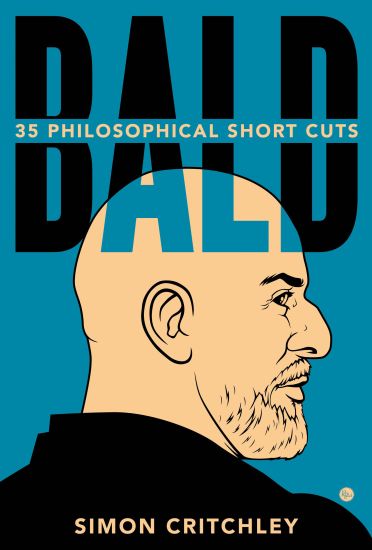
Bald

Bald

Simon Critchley

Yale University Press
2021
sidottu
"A genial exercise in public philosophy" (Kirkus, starred review) from one of the world's best-known popular philosophers"Simon Critchley is an international treasure—that rare and real philosopher who embraces Rousseau’s ‘feeling of existence,’ David Bowie’s vision of love, and Philip K. Dick’s genius with genuine wrestling and a soulful smile!’’—Cornel West, Harvard University The moderator of the New York Times’ Stone column and the author of numerous books on everything from Greek tragedy to David Bowie, Simon Critchley has been a strong voice in popular philosophy for more than a decade. This volume brings together thirty-five essays, originally published in the Times, on a wide range of topics, from the dimensions of Plato’s academy and the mysteries of Eleusis to Philip K. Dick, Mormonism, money, and the joy and pain of Liverpool Football Club fans. In an engaging and jargon-free style, Critchley writes with honesty about the state of world as he offers philosophically informed and insightful considerations of happiness, violence, and faith. Stripped of inaccessible academic armatures, these short pieces bring philosophy out of the ivory tower and demonstrate an exciting new way to think in public.
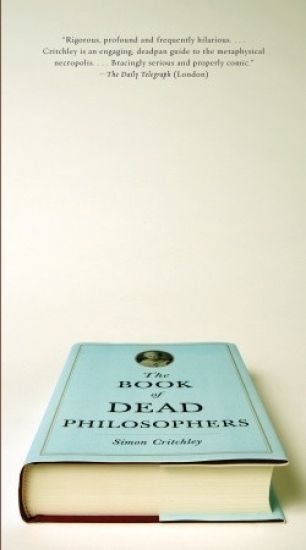
The Book of Dead Philosophers

The Book of Dead Philosophers

Simon Critchley

VINTAGE
2009
nidottu
In this collection of brief lives (and deaths) of nearly two hundred of the world's greatest thinkers, noted philosopher Simon Critchley creates a register of mortality that is tragic, amusing, absurd, and exemplary. From the self-mocking haikus of Zen masters on their deathbeds to the last words of Christian saints and modern-day sages, this irresistible book contains much to inspire both amusement and reflection.Informed by Critchley's acute insight, scholarly intelligence, and sprightly wit, each entry tells its own tale, but collected together they add up to a profound and moving investigation of meaning and the possibility of happiness for us all.
On Humour

On Humour

Simon Critchley

Routledge
2002
sidottu
Does humour make us human, or do the cats and dogs laugh along with us? On Humour is a fascinating, beautifully written and funny book on what humour can tell us about being human. Simon Critchley skilfully probes some of the most perennial but least understood aspects of humour, such as our tendency to laugh at animals and our bodies, why we mock death with comedy and why we think it's funny when people act like machines. He also looks at the darker side of humour, as rife in sexism and racism and argues that it is important for reminding us of people we would rather not be.
On Humour

On Humour

Simon Critchley

Routledge
2002
nidottu
Does humour make us human, or do the cats and dogs laugh along with us? On Humour is a fascinating, beautifully written and funny book on what humour can tell us about being human. Simon Critchley skilfully probes some of the most perennial but least understood aspects of humour, such as our tendency to laugh at animals and our bodies, why we mock death with comedy and why we think it's funny when people act like machines. He also looks at the darker side of humour, as rife in sexism and racism and argues that it is important for reminding us of people we would rather not be.
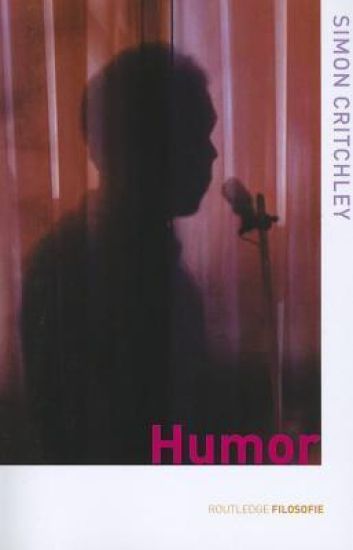
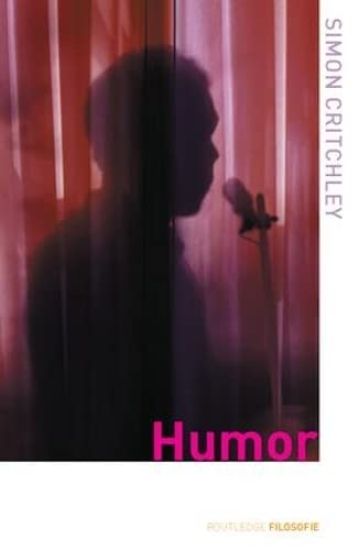
Humor

Humor

Simon Critchley

Routledge
2002
nidottu
Humor is een fascinerend, prachtig geschreven en komisch boek over wat homor ons kan vertellen over onze menselijke natuur. Van de oudheid tot aan de moderne tijd en puttend uit het werk van een breed scala aan auteurs, in het bijzonder Swift, Sterne, Shaftesbury, Bergson, Beckett en Freud, keert Humor het komische binnenstebuiten en onthult ons een smakelijk inzicht in wat we grappig vinden. Humor beantwoordt vragen zoals: "Waarom lijden komieken aan depressies", "Waarom lachen we zo vaak om dieren" en "Wat gebeurt er in racistische en seksistische humor". Humor zal niet alleen de lezers uit een reeks van disciplines zoals filosofie, theologie, literatuurwetenschap, psycholanalyse, geschiedenis en antropologie aanspreken, maar ook zeer tot de verbeelding spreken van een ieder met een gevoel voor humor - ieder van ons dus, hopelijk.
Very Little ... Almost Nothing

Very Little ... Almost Nothing

Simon Critchley

Routledge
2004
sidottu
Very Little ... Almost Nothing puts the question of the meaning of life back at the centre of intellectual debate. Its central concern is how we can find a meaning to human finitude without recourse to anything that transcends that finitude. A profound but secular meditation on the theme of death, Critchley traces the idea of nihilism through Blanchot, Levinas, Jena Romanticism and Cavell, culminating in a reading of Beckett, in many ways the hero of the book. In this second edition, Simon Critchley has added a revealing and extended new preface, and a new chapter on Wallace Stevens which reflects on the idea of poetry as philosophy.
Very Little ... Almost Nothing

Very Little ... Almost Nothing

Simon Critchley

Routledge
2004
nidottu
Very Little ... Almost Nothing puts the question of the meaning of life back at the centre of intellectual debate. Its central concern is how we can find a meaning to human finitude without recourse to anything that transcends that finitude. A profound but secular meditation on the theme of death, Critchley traces the idea of nihilism through Blanchot, Levinas, Jena Romanticism and Cavell, culminating in a reading of Beckett, in many ways the hero of the book. In this second edition, Simon Critchley has added a revealing and extended new preface, and a new chapter on Wallace Stevens which reflects on the idea of poetry as philosophy.
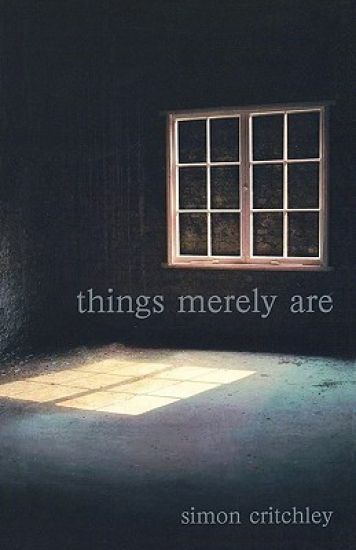
Things Merely Are

Things Merely Are

Simon Critchley

Routledge
2005
sidottu
This book is an invitation to read poetry. Simon Critchley argues that poetry enlarges life with a range of observation, power of expression and attention to language that eclipses any other medium. In a rich engagement with the poetry of Wallace Stevens, Critchley reveals that poetry also contains deep and important philosophical insight. Above all, he agues for a 'poetic epistemology' that enables us to think afresh the philosophical problem of the relation between mind and world, and ultimately to cast the problem away. Drawing astutely on Kant, the German and English Romantics and Heidegger, Critchley argues that through its descriptions of particular things and their stubborn plainness - whether water, guitars, trees, or cats - poetry evokes the 'mereness' of things. It is this experience, he shows, that provokes the mood of calm and releases the imaginative insight we need to press back against the pressure of reality. Critchley also argues that this calm defines the cinematic eye of Terrence Malick, whose work is discussed at the end of the book.
Things Merely Are

Things Merely Are

Simon Critchley

Routledge
2005
nidottu
This book is an invitation to read poetry. Simon Critchley argues that poetry enlarges life with a range of observation, power of expression and attention to language that eclipses any other medium. In a rich engagement with the poetry of Wallace Stevens, Critchley reveals that poetry also contains deep and important philosophical insight. Above all, he agues for a 'poetic epistemology' that enables us to think afresh the philosophical problem of the relation between mind and world, and ultimately to cast the problem away. Drawing astutely on Kant, the German and English Romantics and Heidegger, Critchley argues that through its descriptions of particular things and their stubborn plainness - whether water, guitars, trees, or cats - poetry evokes the 'mereness' of things. It is this experience, he shows, that provokes the mood of calm and releases the imaginative insight we need to press back against the pressure of reality. Critchley also argues that this calm defines the cinematic eye of Terrence Malick, whose work is discussed at the end of the book.
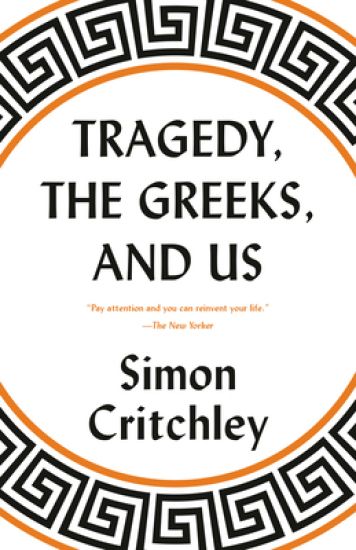
Tragedy, the Greeks, and Us

Tragedy, the Greeks, and Us

Simon Critchley

VINTAGE
2020
nidottu
From the moderator of The New York Times philosophy blog "The Stone," a book that argues that if we want to understand ourselves we have to go back to theater, to the stage of our lives "Engaging and congenial . . .makes the cogent, compelling argument that we ignore Greek Tragedy at our own peril." --New York Journal of Books Tragedy presents a world of conflict and troubling emotion, a world where private and public lives collide and collapse. A world where morality is ambiguous and the powerful humiliate and destroy the powerless. A world where justice always seems to be on both sides of a conflict and sugarcoated words serve as cover for clandestine operations of violence. A world rather like our own. The ancient Greeks hold a mirror up to us in which we see all the desolation and delusion of our lives but also the terrifying beauty and intensity of existence. This is not a time for consolation prizes and the fatuous banalities of the self-help industry and pop philosophy. Tragedy allows us to glimpse, in its harsh and unforgiving glare, the burning core of our aliveness. If we give ourselves the chance to look at tragedy, we might see further and more clearly.
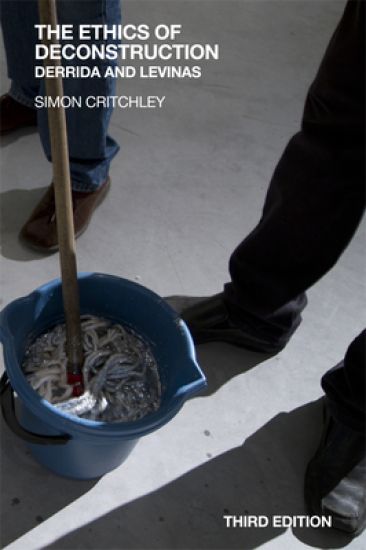
The Ethics of Deconstruction

The Ethics of Deconstruction

Simon Critchley

Edinburgh University Press
2014
sidottu
Simon Critchley's first book, 'The Ethics of Deconstruction', was originally published to great acclaim in 1992. It was the first book to argue for the ethical turn in Derrida's work and to show as powerfully as possible how deconstruction has persuasive ethical consequences that are vital to our thinking through of questions of politics and democracy. This new edition contains three new appendixes and a new preface where Critchley reflects upon the origins, motivation and reception of 'The Ethics of Deconstruction'.
The Ethics of Deconstruction

The Ethics of Deconstruction

Simon Critchley

Edinburgh University Press
2014
nidottu
This is an expanded edition of the first book to argue for the ethical turn in Derrida's work. Simon Critchley's first book, The Ethics of Deconstruction, was originally published to great acclaim in 1992. It was the first book to argue for the ethical turn in Derrida's work and to show as powerfully as possible how deconstruction has persuasive ethical consequences that are vital to our thinking through of questions of politics and democracy. This new edition contains three new appendices and a new preface where Critchley reflects upon the origins, motivation and reception of The Ethics of Deconstruction.
Humor

Humor

Simon Critchley

Routledge
2017
sidottu
Humor is een fascinerend, prachtig geschreven en komisch boek over wat homor ons kan vertellen over onze menselijke natuur. Van de oudheid tot aan de moderne tijd en puttend uit het werk van een breed scala aan auteurs, in het bijzonder Swift, Sterne, Shaftesbury, Bergson, Beckett en Freud, keert Humor het komische binnenstebuiten en onthult ons een smakelijk inzicht in wat we grappig vinden. Humor beantwoordt vragen zoals: "Waarom lijden komieken aan depressies", "Waarom lachen we zo vaak om dieren" en "Wat gebeurt er in racistische en seksistische humor". Humor zal niet alleen de lezers uit een reeks van disciplines zoals filosofie, theologie, literatuurwetenschap, psycholanalyse, geschiedenis en antropologie aanspreken, maar ook zeer tot de verbeelding spreken van een ieder met een gevoel voor humor - ieder van ons dus, hopelijk.
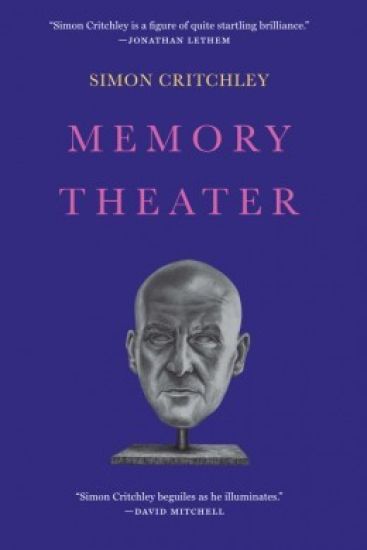
Memory Theater

Memory Theater

Simon Critchley

Other Press (NY)
2015
sidottu
From this renowned philosopher comes a debut work of fiction, at once a brilliant pr cis of the history of philosophy, a semiautobiographical meditation on the absurd relationship between knowledge and memory, and a very funny storyA French philosopher dies during a savage summer heat wave. Boxes carrying his unpublished papers mysteriously appear in Simon Critchley's office. Rooting through them, Critchley discovers a brilliant text on the ancient art of memory and a cache of astrological charts predicting the deaths of various philosophers. Among them is a chart for Critchley himself, laying out in great detail the course of his life and eventual demise. While waiting for his friend's prediction to come through, Critchley receives the missing, final box, which contains a maquette of Giulio Camillo's sixteenth-century Venetian memory theater, a space supposed to contain the sum of all knowledge. With nothing left to hope for, Critchley devotes himself to one final project before his death--the building of a structure to house his collective memories and document the remnants of his entire life.
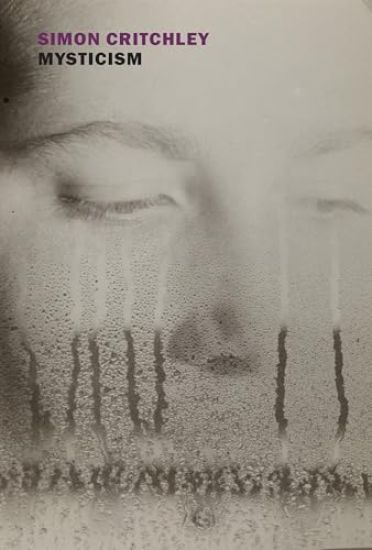
Mysticism

Mysticism

Simon Critchley

New York Review of Books
2024
nidottu
A probing, inspiring exploration of mysticism not as religious practice but as a mode of experience and way of life by one of the most provocative philosophical thinkers of our time. Why mysticism? It has been called "experience in its most intense form," and in his new book the philosopher Simon Critchley poses a simple question to the reader: Wouldn't you like to taste this intensity? Wouldn't you like to be lifted up and out of yourself into a sheer feeling of aliveness, both your life and those of the creatures that surround you? If so, it might be well worthwhile trying to learn what is meant by mysticism and how it can shift, elevate, and deepen the sense of our lives. Mysticism is not primarily a theoretical issue. It's not a question of religious belief but of felt experience and daily practice. A rough and ready definition of mysticism is that it is a way of systematically freeing yourself of your standard habits, your usual fancies and imaginings so as to see what is there and stand with what is there ecstatically. Mysticism is the practical possibility of the achievement of a fluid openness between thought and existence. This is a book about trying to get outside oneself, to lose oneself, while knowing that the self is not something that can ever be fully lost. It is also a book about Julian of Norwich, Anne Carson, Annie Dillard, T.S. Eliot, and Nick Cave. It shows how listening to music can be secular worship. It is a book full of learning, puzzlement, pleasure, and wonder. It opens the door to mysticism not as something unworldly and unimaginable, but as a way of life.
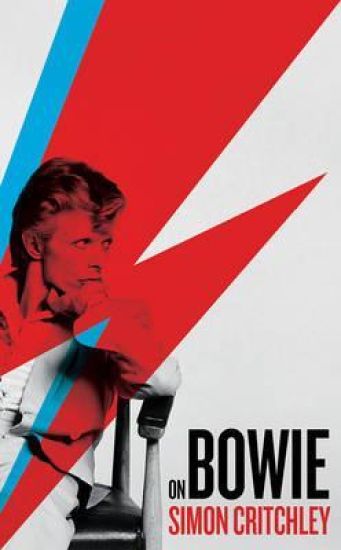
On Bowie

On Bowie

Simon Critchley

Serpent's Tail
2016
pokkari
What made Bowie special? What made him the cultural icon he is today? And what made millions of people around the world tune into his peculiar wavelength and find exactly what they'd been looking for all along? These are the questions asked by Simon Critchley in this keen-eyed, moving and textured tribute to Bowie. Each of the two dozen deceptively short chapters looks at Bowie from a new angle, slowly unfolding the enigma that was his artistic life into a celebration of what made him unique. From the author's earliest childhood exposure to the bizarre musical and sexual contours of Ziggy Stardust right through to the supernova glow of Blackstar, and covering everything in between, Critchley traces the development of Bowie's music and lyrics to tell the story of how he tapped into zeitgeist - and into our hearts. Growing up in working-class suburban England, the young Critchley was instantly drawn to this creature from another planet, 'so sexual, so knowing, so strange'. Now a celebrated philosopher who Jonathan Lethem has called 'a figure of quite startling brilliance', Critchley draws on a plethora of cultural and philosophical touchpoints, as well as his own intensely personal response to the music, to paint an essential portrait of Bowie as songwriter, poet, performer and icon.
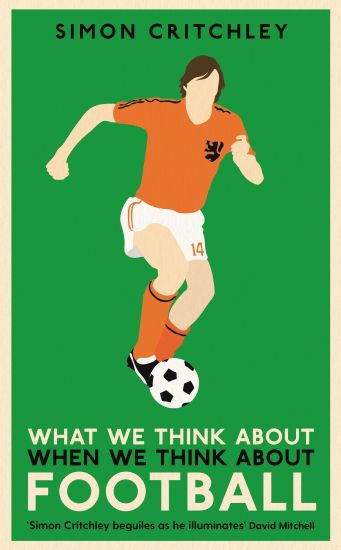
What We Think About When We Think About Football

What We Think About When We Think About Football

Simon Critchley

Profile Books Ltd
2018
pokkari
What do we think about when we think about football? Football is about so many things: memory, history, place, social class, gender (especially masculinity, but increasingly femininity too), family identity, tribal identity, national identity, the nature of groups. It is essentially collaborative, even socialist, yet it exists in a sump of greed, corruption, capitalism and autocracy. Philosopher Simon Critchley attempts to make sense of it all, and to establish a system of aesthetics - even poetics - to show what is beautiful in the beautiful game. He explores, too, how the experience of watching football opens a particular dimension in time; how its magic wards off oblivion; how its dramas play out national identity and non-identity; how we spectators, watching football with tragic pensiveness, participate in the play. And of course, as a football fan, he writes about his heroes and villains: about Zidane and Cruyff, Clough and Revie, Shankly and Klopp.
Infinitely Demanding

Infinitely Demanding

Simon Critchley

Verso Books
2013
nidottu
The clearest, boldest and most systematic statement of Simon Critchley's influential views on philosophy, ethics, and politics, Infinitely Demanding identifies a massive political disappointment at the heart of liberal democracy. Arguing that what is called for is an ethics of commitment that can inform a radical politics, Critchley considers the possibility of political subjectivity and action after Marx and Marxism, taking in the work of Kant, Levinas, Badiou and Lacan. Infinitely Demanding culminates in an argument for anarchism as an ethical practice and a remotivating means of political organization.