Kirjojen hintavertailu. Mukana 11 244 527 kirjaa ja 12 kauppaa.

Kirjahaku

Etsi kirjoja tekijän nimen, kirjan nimen tai ISBN:n perusteella.

6 kirjaa tekijältä Simon Dentith

Bakhtinian Thought

Bakhtinian Thought

Simon Dentith

Routledge
1994
nidottu
First published in 1994. Mikhail Bakhtin, and the writers associated with him, have come to be recognised as writers of trail-blazing importance. Working in the extraordinarily difficult conditions of Stalinist Russia, they nevertheless produced a body of writing in literary theory, linguistics, the history of the novel, philosophy, and what Bakhtin called ‘philosophical anthropology’, which continues to inspire and challenge people working in a number of different areas. Above all, Bakhtin insists on locating all utterances, whether spoken or literary, between the participants in a dialogue and thus involves them in considerations of power and authority. This introduction and reader serves a double function. In the first place, Simon Dentith provides a lucid and approachable introduction of the work of Bakhtin and his circle, taking the reader helpfully through the many areas of their thought, and indicating the points of controversy, difficulty and excitement. This introductory section culminates in a discussion of the particular emphases lent by Bakhtin to current debates in literary theory. The other feature of the book is the anthology of writing by Bakhtin, Voloshinov and Medvedev, drawn from all the major areas of their work. This provides an especially helpful reader for a body of work otherwise published in disparate and relatively inaccessible forms. Special emphasis has been given to the still unsurpassed linguistic thought of Voloshinov, and the practical analyses of the novel found in Bakhtin’s writing on Dostoevsky and Dickens. This book will be especially interesting to readers new to the work of Bakhtin and his circle. The combination of an introduction and an anthology will allow such readers a context for their reading of Bakhtin, an indication of his importance for contemporary debates in literature, language and social history, and the opportunity to engage directly with the writings of this important and indeed, for the student of literary theory, essential writer.
Epic and Empire in Nineteenth-Century Britain

Epic and Empire in Nineteenth-Century Britain

Simon Dentith

Cambridge University Press
2009
pokkari
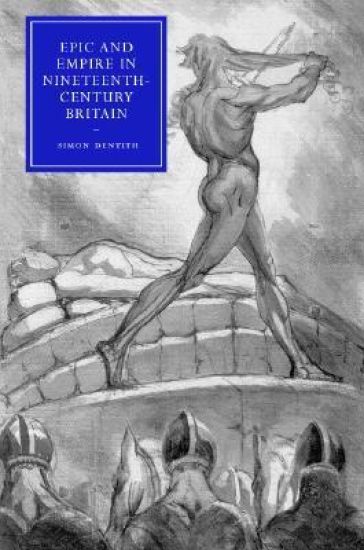
In the nineteenth century, epic poetry in the Homeric style was widely seen as an ancient and anachronistic genre, yet Victorian authors worked to recreate it for the modern world. Simon Dentith explores the relationship between epic and the evolution of Britain's national identity in the nineteenth century up to the apparent demise of all notions of heroic warfare in the catastrophe of the First World War. Paradoxically, writers found equivalents of the societies which produced Homeric or Northern epics not in Europe, but on the margins of empire and among its subject peoples. Dentith considers the implications of the status of epic for a range of nineteenth-century writers, including Walter Scott, Matthew Arnold, Elizabeth Barrett Browning, William Morris and Rudyard Kipling. He also considers the relationship between epic poetry and the novel and discusses late nineteenth-century adventure novels, concluding with a brief survey of epic in the twentieth century.
Epic and Empire in Nineteenth-Century Britain

Epic and Empire in Nineteenth-Century Britain

Simon Dentith

Cambridge University Press
2006
sidottu
In the nineteenth century, epic poetry in the Homeric style was widely seen as an ancient and anachronistic genre, yet Victorian authors worked to recreate it for the modern world. Simon Dentith explores the relationship between epic and the evolution of Britain's national identity in the nineteenth century up to the apparent demise of all notions of heroic warfare in the catastrophe of the First World War. Paradoxically, writers found equivalents of the societies which produced Homeric or Northern epics not in Europe, but on the margins of empire and among its subject peoples. Dentith considers the implications of the status of epic for a range of nineteenth-century writers, including Walter Scott, Matthew Arnold, Elizabeth Barrett Browning, William Morris and Rudyard Kipling. He also considers the relationship between epic poetry and the novel and discusses late nineteenth-century adventure novels, concluding with a brief survey of epic in the twentieth century.
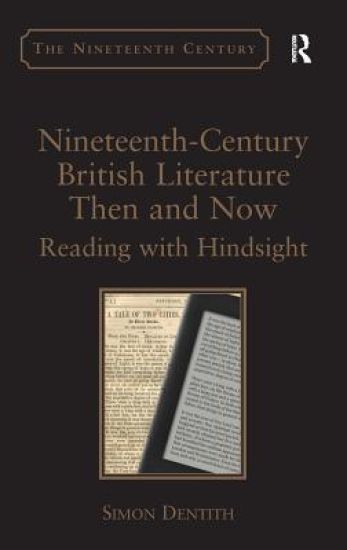
Nineteenth-Century British Literature Then and Now
Envisioning today’s readers as poised between an impossible attempt to read texts as their original readers experienced them and an awareness of our own temporal moment, Simon Dentith complicates traditional prejudices against hindsight to approach issues of interpretation and historicity in nineteenth-century literature. Suggesting that the characteristic aesthetic attitude encouraged by the backward look is one of irony rather than remorse or regret, he examines works by Charles Dickens, George Eliot, Anthony Trollope, William Morris and John Ruskin in terms of their participation in significant histories that extend to this day. Liberalism, class, gender, political representation and notions of progress, utopianism and ecological concern as currently understood can be traced back to the nineteenth century. Just as today’s critics strive to respect the authenticity of nineteenth-century writers and readers who responded to these ideas within their historical world, so, too, do those nineteenth-century imaginings persist to challenge the assumptions of the present. It is therefore possible, Dentith argues, to conceive of the act of reading historical literature with an awareness of the historical context and of the difference between the past and the present while allowing that friction or difference to be part of how we think about a text and how it communicates. His book summons us to consider how words travel to the reality of the reader’s own time and how engagement with nineteenth-century writers’ anticipation of the judgements of future generations reveal hindsight’s capacity to transform our understanding of the past in the light of subsequent knowledge.
Nineteenth-Century British Literature Then and Now
Envisioning today’s readers as poised between an impossible attempt to read texts as their original readers experienced them and an awareness of our own temporal moment, Simon Dentith complicates traditional prejudices against hindsight to approach issues of interpretation and historicity in nineteenth-century literature. Suggesting that the characteristic aesthetic attitude encouraged by the backward look is one of irony rather than remorse or regret, he examines works by Charles Dickens, George Eliot, Anthony Trollope, William Morris and John Ruskin in terms of their participation in significant histories that extend to this day. Liberalism, class, gender, political representation and notions of progress, utopianism and ecological concern as currently understood can be traced back to the nineteenth century. Just as today’s critics strive to respect the authenticity of nineteenth-century writers and readers who responded to these ideas within their historical world, so, too, do those nineteenth-century imaginings persist to challenge the assumptions of the present. It is therefore possible, Dentith argues, to conceive of the act of reading historical literature with an awareness of the historical context and of the difference between the past and the present while allowing that friction or difference to be part of how we think about a text and how it communicates. His book summons us to consider how words travel to the reality of the reader’s own time and how engagement with nineteenth-century writers’ anticipation of the judgements of future generations reveal hindsight’s capacity to transform our understanding of the past in the light of subsequent knowledge.