Kirjojen hintavertailu. Mukana 12 016 292 kirjaa ja 12 kauppaa.

Kirjahaku

Etsi kirjoja tekijän nimen, kirjan nimen tai ISBN:n perusteella.

18 kirjaa tekijältä Simon Dunstan

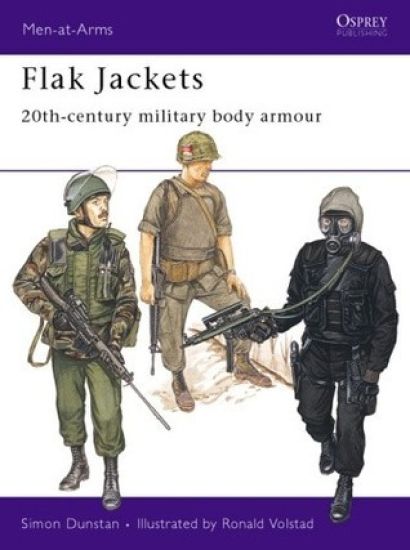
Flak Jackets

Flak Jackets

Simon Dunstan

Osprey Publishing
1984
nidottu
Beginning in World War I, with the introduction of the steel helmet this book charts the development of protective equipment for soldiers and security forces. Initially body armour was seen as a military luxury that could be ill-afforded. However, the success of ‘flak suits’ as worn by some bomber crews during World War II convinced the armed forces of the need to develop protection for the ground soldier against small arms fire. The scientific development of the modern flak jacket is traced as are the field trials conducted in Korea and later Vietnam. Extensive illustrations and photographs accompnay the text.
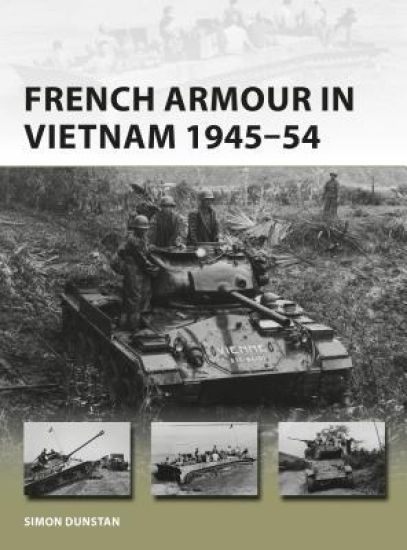
French Armour in Vietnam 1945–54

French Armour in Vietnam 1945–54

Simon Dunstan

Osprey Publishing
2019
nidottu
French experience with armour in Indo-China dated back to 1919, when it sent FT-17s to the colony, followed by a variety of armoured cars. After World War II, French troops were equipped with a motley collection of American and cast-off British equipment until the outbreak of war in Korea saw an increase in military aid. This included large numbers of the M24 Chaffee light tank, along with amphibious vehicles such as the M29C Weasel and LVT4 Buffalo, to conduct operations in coastal and inland areas that the Viet Minh had previously thought immune to attack. France’s armour was a key part of the battle against the Viet Minh right up until the last stand at Dien Bien Phu.
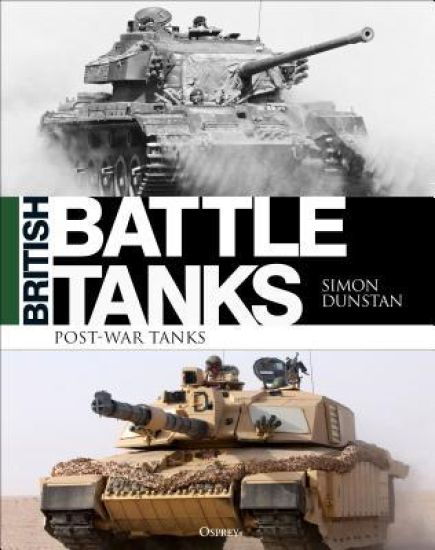
British Battle Tanks

British Battle Tanks

Simon Dunstan

Osprey Publishing
2020
sidottu
This lavishly illustrated volume details the design, development and operational history of British tanks from the end of World War II through to the present day.This book, the last in a four-part series on British Battle Tanks covering the whole history of British armoured warfare, concentrates on those vehicles that have served following the end of World War II up to the present day. Starting with the Centurion, the title explores those types that equipped the armoured divisions lined up on the German plains to resist any potential Soviet offensive, as well as in Korea and Suez, including the Chieftain and Conqueror, and modern tanks such as the Challenger 2 which are still in service today. Covering the many variants of these and other tanks in British service as well as their deployments around the world, including in Afghanistan and Iraq, this illustrated volume is a comprehensive guide to the development of British tanks since the Second World War.
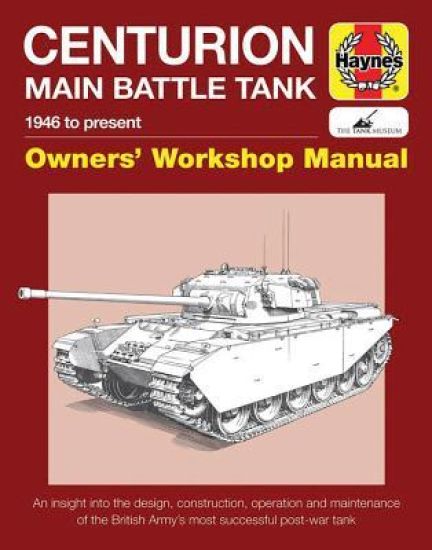
Centurion Main Battle Tank Manual

Centurion Main Battle Tank Manual

Simon Dunstan

J H Haynes Co Ltd
2017
sidottu
An insight into the design, construction, operation and maintenance of the British Army's most successfull post-war tank, The Centurion is significant in the history of British armoured fighting vehicles as well as being one of the most important post-war Western tanks. Introduced into British Army service in December 1946, versions of Centurion were still serving with British forces in the Iraq War of 2003, some 58 years later. Centurions have also seen combat in the Korean and Vietnam Wars, in the Middle East wars, and in the Indo-Pakistan War (1965) where it fought against US-supplied M47 and M48 Patton tanks. The Haynes Centurion Tank Manual is published in association with the Tank Museum and has been written with full access to the museum's Centurion collection., Author: Simon Dunstan is an author, filmmaker and photographer who has written more than 50 books on military history to his credit. He is the author of The Centurion (1980) and Centurion vs T-55 (2009). He lives in London.
Scorpion CVR(T)

Scorpion CVR(T)

Simon Dunstan

J H Haynes Co Ltd
2021
sidottu
Scorpion FV101 Combat Vehicle Reconnaissance (Tracked) in British service 1972-2020, The CVRT (Combat Vehicle Reconnaissance Tracked) family of reconnaissance vehicles has been highly successful since its introduction by the British Army in 1972 and it has seen extensive combat from the Falklands War to Afghanistan. Its variants include the lead vehicle, Scorpion, armed with a 76mm gun and the 30mm-armed Scimitar that were both employed in the reconnaissance role with Spartan as an armoured personnel carrier., The combat history of CVRT is one of the most powerful aspects of the Haynes CVRT Scorpion Manual and includes accounts of its first operational deployment during the Turkish invasion of Cyprus in 1974; the Falklands War in 1982; the Gulf War in 1991; Somalia in 1993 and the Fourth Anglo-Afghan War, including the testimony of the most highly decorated soldier in the British Army, Mick Flynn, who fought in CVRT from the Falklands to Afghanistan, as well as the recollections of Prince Harry during his service with the Blues and Royals in Afghanistan., Supported by more than 250 photographs and illustrations, Simon Dunstan tells the story of CVRT's development, its anatomy, combat record and how it is operated and maintained by the armies of 16 nations worldwide. The full range of Scorpion variants including Scimitar, Spartan, Striker, Sultan, Samaritan and Stormer are covered, as well several other specialised versions and export models to over a dozen nations., Author: Simon Dunstan tells the story of CVRT's development, its anatomy, combat record with the British Army from the Falklands to Afghanistan, and how it is operated and maintained by the armies of 16 nations worldwide.
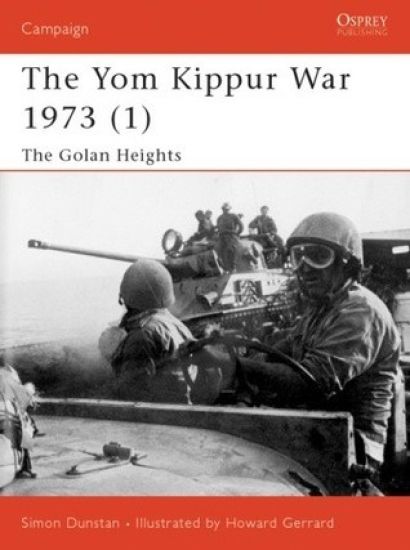
The Yom Kippur War 1973 (1)

The Yom Kippur War 1973 (1)

Simon Dunstan

Osprey Publishing
2003
nidottu
The October War or "Yom Kippur" War of 1973 was precipitated by the Arab states of the Middle East, primarily Egypt and Syria, in an attempt to force Israel to the negotiating table. Protected by the territories she had conquered in the 1967 "Six Day War", Israel had little incentive to negotiate. The carefully coordinated attacks launched by Egypt and Syria in the Sinai and on the Golan Heights respectively achieved complete tactical surprise. This work details the Syrian assault on the strategically vital Golan Heights.
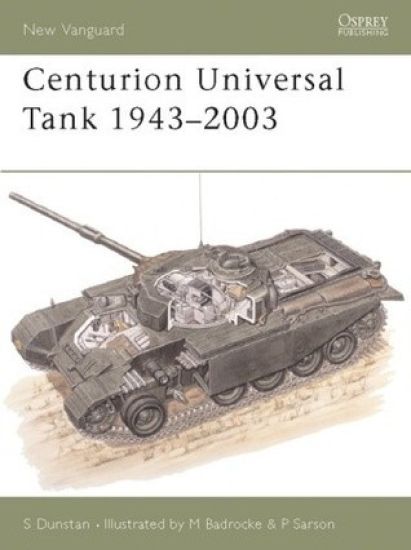
Centurion Universal Tank 1943–2003

Centurion Universal Tank 1943–2003

Simon Dunstan

Osprey Publishing
2003
nidottu
From 1943 the British began the design of a tank that was similar to the German Panther tank. In 1945 the design emerged as the Centurion. It was last used in action by the British Army in 1991 during the Gulf War, having been first blooded by the British during the Korean War in 1950 and subsequently during the Suez Campaign of 1956. This work details all the variants of the Centurion used in conflicts as well as covering the specialist variants last used by the British in the Gulf War.
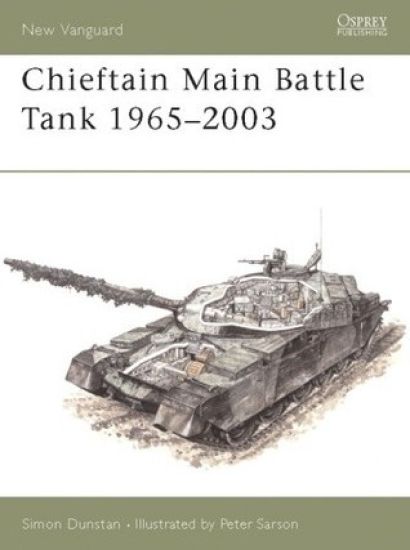
Chieftain Main Battle Tank 1965–2003

Chieftain Main Battle Tank 1965–2003

Simon Dunstan

Osprey Publishing
2003
nidottu
The concept of the Main Battle Tank emerged from the Centurion Universal tank that was developed at the end of World War II. Development of its successor began as early as 1951. The Chieftain incorporated significant innovations including a reclining driver position and two-piece ammunition for greater survivability. The tank entered service in 1967 and was the heaviest armed, armoured MBT within the NATO alliance. The Chieftain saw combat during the Iran/Iraq War, with the Kuwaitis during the 1990 Iraqi invasion and with the British Army during the Gulf War of 1990/91 as special-purpose variants. This book explores the design, development and operation of one of the most influential vehicles used in modern warfare.
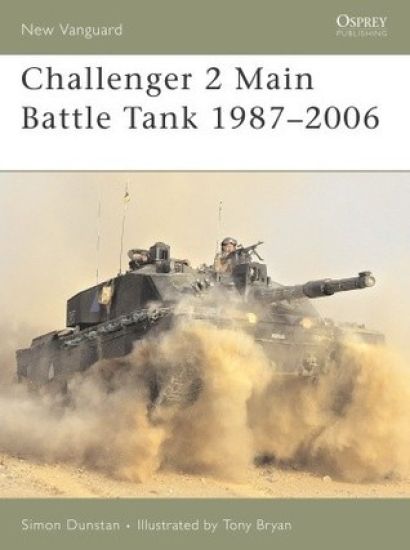
Challenger 2 Main Battle Tank 1987–2006

Challenger 2 Main Battle Tank 1987–2006

Simon Dunstan

Osprey Publishing
2006
nidottu
The Challenger 2 Main Battle Tank is the current MBT of the British Army and represents the culmination of 80 years of tank design. Its development began in 1986. In 1987, the design was presented to the Ministry of Defence in response to a requirement to replace the Chieftain MBT that had been partially superseded by the Challenger 1 MBT. Production began in 1993, and the tank finally entered service in 2002. This tank recently appeared in Iraq, where it proved indispensable during the battle of Basra. This book covers the evolution of the Challenger 2, from its origins to its involement in the Middle East and Iraq.
Fort Eben Emael

Fort Eben Emael

Simon Dunstan

Osprey Publishing
2005
nidottu
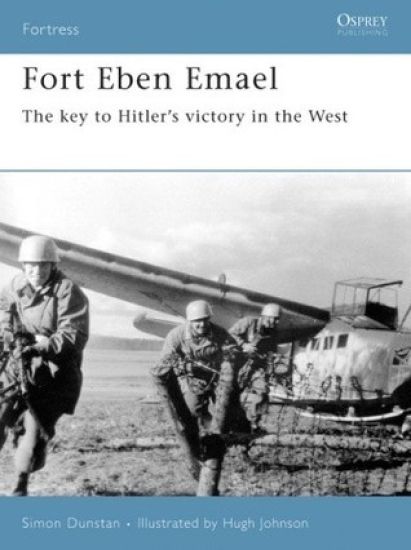
The defences of Belgium that had proved easy prey to the German siege artillery of World War I were augmented in the post-war years by a massive fortress, constructed between 1932 and 1935, along the western bank of the Albert Canal - Fort Eben Emael. The fortress was considered to be the strongest in the world on completion yet its conquest took less than 48 hours to complete after a glorious coup de main by German glider-borne assault troops. This title considers the design, development and construction of this formidable bastion as well as covering the assault and the failure of the fort to offer any meaningful obstacle to the German invaders.
Israeli Fortifications of the October War 1973

Israeli Fortifications of the October War 1973

Simon Dunstan

Osprey Publishing
2008
nidottu
The Bar Lev Line along the Suez Canal was born out of the overwhelming victory of the Israel Defence Forces (IDF) in the Six Day War of 1967. Devastated by their defeat, the Egyptian army bombarded Israeli positions, causing many casualties. Accordingly, the IDF Chief of Staff, General Haim Bar-Lev, ordered the construction of a series of fortified positions named the Bar Lev Line. Each position was surrounded by barbed wire and minefields and virtually immune to strikes by artillery shells and even 500kg bombs. On 6 October 1973, Yom Kippur, the positions were manned by just 436 reservists when the Egyptian Second and Third Armies launched a massive offensive along the Suez Canal. The positions were quickly cut off from the supporting elements, and the Israeli defenders paid a high price with a casualty rate of almost 50 per cent. Despite these losses, it was not the Bar Lev Line that failed but Israel's military and political establishment, which realised Arab intentions too late.
The Six Day War 1967

The Six Day War 1967

Simon Dunstan

Osprey Publishing
2009
nidottu
In May 1967, Egypt expelled the United Nations peacekeeping forces stationed in the Sinai desert and deployed its army along its border with Israel, its moves coordinated with those of Jordan and Syria. By June, Israel realized that the international community would not act, and so it launched a pre-emptive strike against the combined Arab forces. The ensuing Six Day War was a crushing defeat for the Arab world, one that tripled the area controlled by Israel and which sowed the seeds for the Yom Kippur War of 1973 and the continuing strife in the region. Written by the author of "Osprey's Yom Kippur War", this volume covers the background to the war and the campaign against the Egyptians in the Sinai Peninsula, including the initial devastating air assault that showed the world how vital air supremacy was in modern combat.
The Six Day War 1967

The Six Day War 1967

Simon Dunstan

Osprey Publishing
2009
nidottu
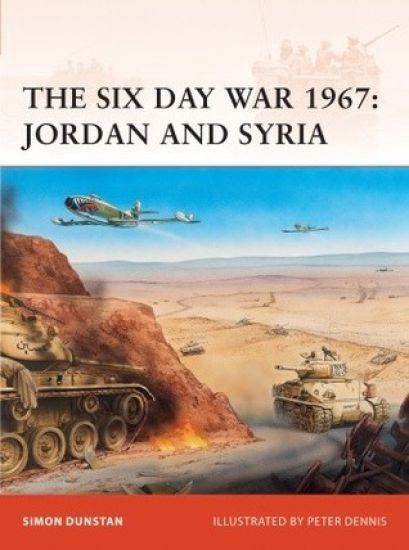
Following the lightening destruction of the Egyptian forces at the outbreak of the Six Day War, Israel turned to the forces of Jordan and Syria, with whom Egypt had signed a mutual-defence pact, and which had now entered the war. Jordan's army moved against West Jerusalem and central Israel, while Syria began shelling Israeli towns from the seemingly impregnable Golan Heights. The IDF's invasion of the Golan was as daring and successful as its more famous Egyptian victory, but its success in Jordan - taking the West Bank - sowed the seeds of its future troubles. Comprehensively illustrated with artwork, maps and battlefield views, this new history brings one of the most important of 20th century campaigns to life.
Centurion vs T-55

Centurion vs T-55

Simon Dunstan

Osprey Publishing
2009
nidottu
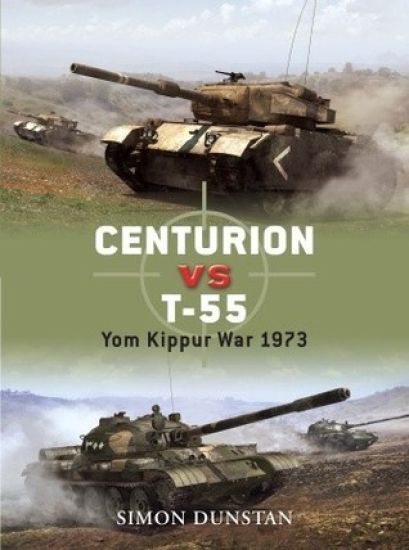
Conceived at the height of World War II, the British Centurion and the Soviet T-55 were initially expected to counter the formidable Panther and Tiger tanks of Germany. But as the Cold War unfolded, these machines prepared instead for the coming struggle between NATO and the Warsaw Pact. Though they never fought in Europe, these two tanks became the mainstay of the Cold War's proxy forces around the world. From Korea to the Middle East and on to Angola, these two armored combatants clashed repeatedly, reaching their crescendo on the Golan Heights during the Yom Kippur War where 177 Centurions of the IDF took on a vastly superior Arab force. This book compares the design, development and deployment of these classic tanks, and analyses their battlefield performance. Presented with highly detailed digital artwork, this is a tightly focused study of two of the Cold War's first main battle tanks.
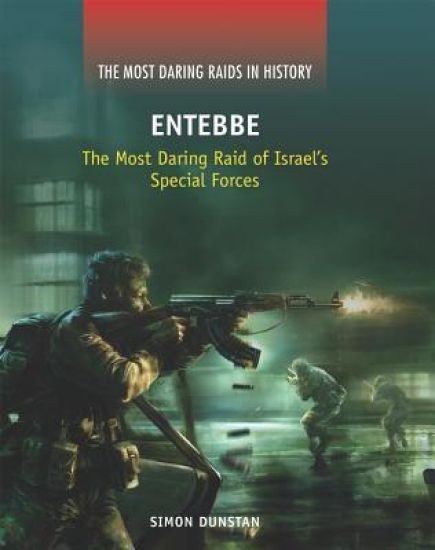
Israel’s Lightning Strike

Israel’s Lightning Strike

Simon Dunstan

Osprey Publishing
2009
nidottu
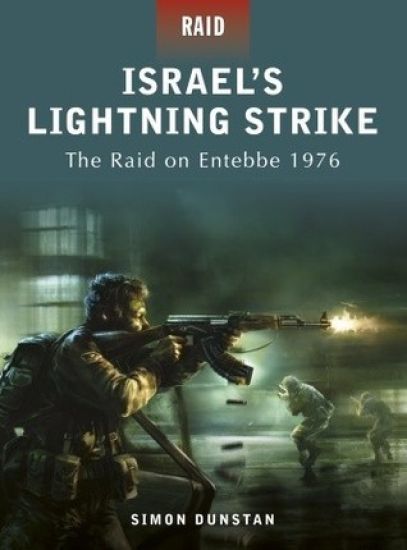
The Israeli Special Forces' operation at Entebbe goes down in history as one of the most audacious counter-terrorist assaults ever conducted. On 27 June 1976, four terrorists - two of the Popular Front for the Liberation of Palestine and two of the German Baader-Meinhof terrorist group - highjacked a passenger jet and forced a landing in Entebbe, Uganda. Here they were met by reinforcements, and - although releasing a few hostages - transferred all the Jewish and Israeli prisoners to the terminal building. As Idi Amin's assistance to the terrorists became increasingly clear, the Israeli government began preparations for a military assault. The element of surprise was crucial; never before had such a large-scale raid at such a long distance been successfully undertaken. This is the incredible story of how the Israeli Special Forces defied radar for over 2,000 miles, masqueraded as a tyrant in a Mercedes and captured uniforms, and defeated an army in brutal combat, in a triumph of sheer audacity and nerve. This is a compelling book chronicling an incredible moment in history.
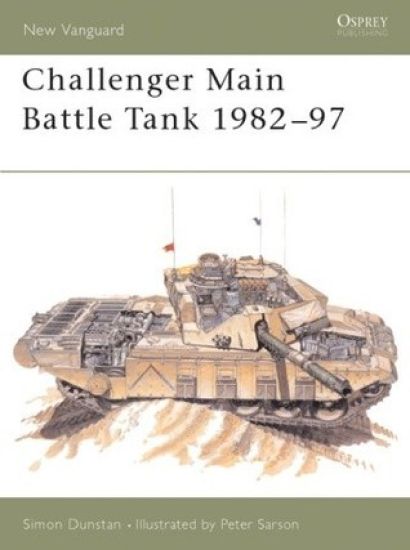
Challenger Main Battle Tank 1982–97

Challenger Main Battle Tank 1982–97

Simon Dunstan

Osprey Publishing
1998
nidottu
The successor to the Chieftain from the 1960's, work began in 1976 on development of a new MBT specifically for the Iranian army, who needed a more capable tank than the Chieftain to suit their climatic and geographical conditions. However, once the revolution occurred in 1979 the British army was reluctantly forced to accept this new design themselves. Once in service there were technical problems resulting in various modifications. However, the Challenger would go on to great success in the Gulf War, playing crucial roles in both Desert Storm and Desert Sabre operations. In this book, Simon Dunstan examines this tank in detail, evaluating its performance both on the test range and in the field of battle.
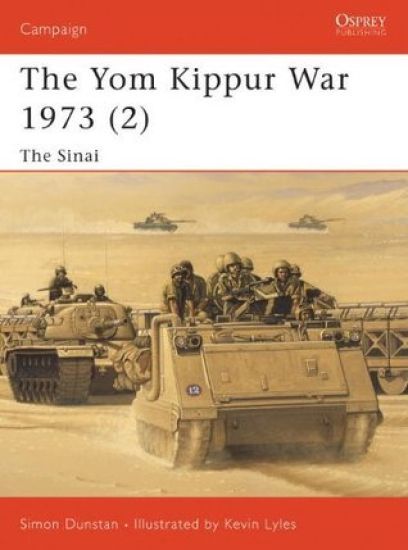
The Yom Kippur War 1973 (2)

The Yom Kippur War 1973 (2)

Simon Dunstan

Osprey Publishing
2003
nidottu
Israel's victory in the 1967 'Six Day War' sowed the seeds of the 1973 Yom Kippur War. At 1400hrs on 6 October 1973 the Egyptian army launched an assault crossing of the Suez Canal. The carefully co-ordinated attack achieved complete tactical surprise. The sand embankments of the Israeli Bar-Lev Line were breached and an Israeli counterattack thrown back with heavy losses. In the second of his two-volume analysis of the Yom Kippur War, Simon Dunstan details the fighting in the Sinai, culminating in Operation Gazelle, the Israeli counterattack across the Suez Canal. Although defeated militarily Egypt did ultimately succeed in forcing the Israelis back to the negotiating table.