Kirjojen hintavertailu. Mukana 11 699 587 kirjaa ja 12 kauppaa.

Kirjahaku

Etsi kirjoja tekijän nimen, kirjan nimen tai ISBN:n perusteella.

9 kirjaa tekijältä Simon During

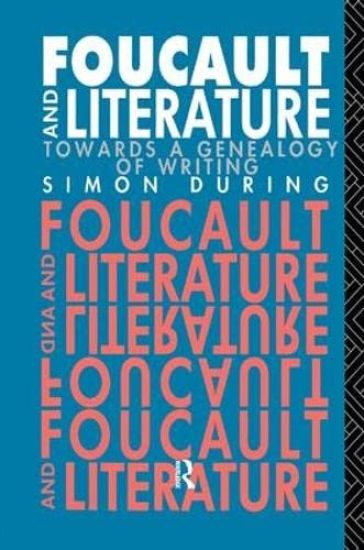
Foucault and Literature

Foucault and Literature

Simon During

Routledge
2015
nidottu
The writings of the French historian, literary critic and philosopher Michel Foucault have been of immense importance to developments in literary studies since the late 1970s. He, more than anyone, stands behind the new historicism' and cultural materialism' that currently dominate international literary studies. Simon During provides a detailed introduction to the whole body of Foucault's work, with a particular emphasis on his literary theory. His study takes in Foucault's early studies of transgressive' writing from Sade and Artaud to the French new novellists' of the 1960s, and his later concern with the genealogy of the author/intellectual, writing and theorizing within specific, historical mechanisms of social control and production. Foucault and Literature offers a critique both of Foucault and of the literary studies that have been influenced by him, and goes on to develop new methods of post-Foucauldian literary/cultural analysis.
Exit Capitalism

Exit Capitalism

Simon During

Routledge
2009
sidottu
Exit Capitalism explores a new path for cultural studies and re-examines key moments of British cultural and literary history. Simon During argues that the long and liberating journey towards democratic state capitalism has led to an unhappy dead-end from which there is no imaginable exit.
Exit Capitalism

Exit Capitalism

Simon During

Routledge
2009
nidottu
Exit Capitalism explores a new path for cultural studies and re-examines key moments of British cultural and literary history. Simon During argues that the long and liberating journey towards democratic state capitalism has led to an unhappy dead-end from which there is no imaginable exit.
Cultural Studies: A Critical Introduction
Cultural Studies: A Critical Introduction is a wide-ranging and stimulating introduction to the history and theory of Cultural Studies from Leavisism, through the era of the Centre for Contemporary Cultural Studies, to the global nature of contemporary Cultural Studies. Cultural Studies: A Critical Introduction begins with an introduction to the field and its theoretical history and then presents a series of short essays on key areas of Cultural Studies, designed to provoke discussion and raise questions. Each thematic section examines and explains a key topic within Cultural Studies.Sections include:* the discipline* time* space* media and the public sphere* identity* sexuality and gender* value
Cultural Studies: A Critical Introduction
Cultural Studies: A Critical Introduction is a wide-ranging and stimulating introduction to the history and theory of Cultural Studies from Leavisism, through the era of the Centre for Contemporary Cultural Studies, to the global nature of contemporary Cultural Studies. Cultural Studies: A Critical Introduction begins with an introduction to the field and its theoretical history and then presents a series of short essays on key areas of Cultural Studies, designed to provoke discussion and raise questions. Each thematic section examines and explains a key topic within Cultural Studies.Sections include:* the discipline* time* space* media and the public sphere* identity* sexuality and gender* value
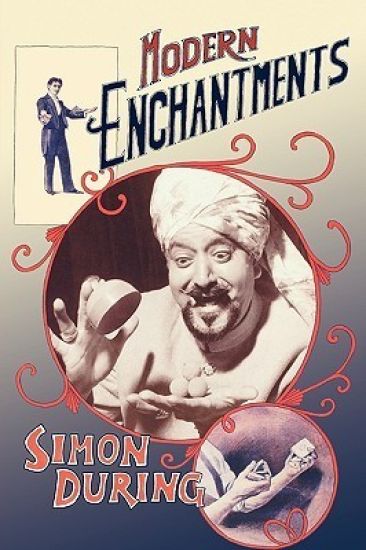
Modern Enchantments

Modern Enchantments

Simon During

Harvard University Press
2004
nidottu
Magic, During suggests, has helped shape modern culture. Devoted to this deceptively simple proposition, During's superlative work, written over the course of a decade, gets at the aesthetic questions at the very heart of the study of culture. How can the most ordinary arts--and by "magic," During means not the supernatural, but the special effects and conjurings of magic shows--affect people?
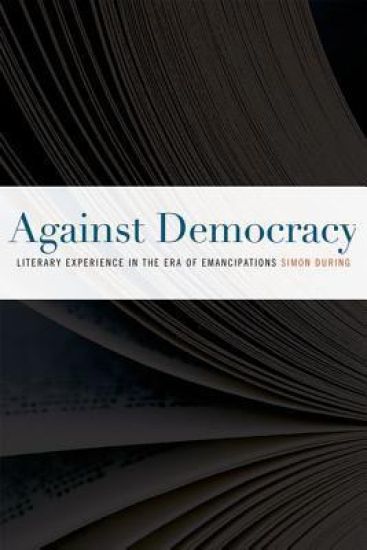
Against Democracy

Against Democracy

Simon During

Fordham University Press
2012
sidottu
This book argues that we can no longer envision a political system that might practically displace democracy or, more accurately, global democratic state capitalism. Democracy has become fundamental: It extends deeper and deeper into everyday life; it grounds and limits our political thought and values. That is the sense in which we do indeed live at history's end. But this end is not a happy one, because the system that we now have does not satisfy tests that we can legitimately put to it. In this situation, it is important to come to new terms with the fact that literature, at least until about 1945, was predominantly hostile to political democracy. Literature's deep-seated conservative, counterdemocratic tendencies, along with its capacity to make important distinctions among political, cultural, and experiential democracies and its capacity to uncover hidden, nonpolitical democracies in everyday life, is now a resource not just for cultural conservatives but for all those who take a critical attitude toward the current political, cultural, and economic structures. Literature, and certain novelists in particular, helps us not so much to imagine social possibilities beyond democracy as to understand how life might be lived both in and outside democratic state capitalism. Drawing on political theory, intellectual history, and the techniques of close reading, Against Democracy offers new accounts of the ethos of refusing democracy, of literary criticism's contribution to that ethos, and of the history of conservatism, as well as innovative interpretations of a range of writers, including Tocqueville, Disraeli, George Eliot, E. M. Forster, and Saul Bellow.
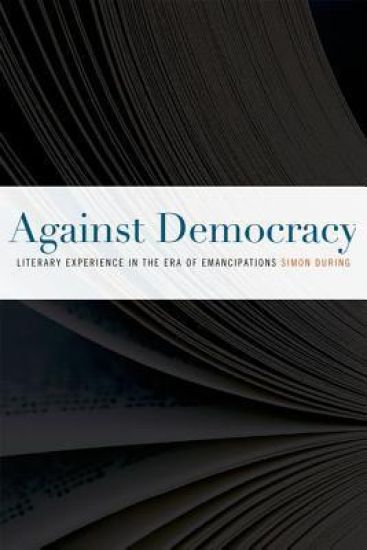
Against Democracy

Against Democracy

Simon During

Fordham University Press
2012
pokkari
This book argues that we can no longer envision a political system that might practically displace democracy or, more accurately, global democratic state capitalism. Democracy has become fundamental: It extends deeper and deeper into everyday life; it grounds and limits our political thought and values. That is the sense in which we do indeed live at history's end. But this end is not a happy one, because the system that we now have does not satisfy tests that we can legitimately put to it. In this situation, it is important to come to new terms with the fact that literature, at least until about 1945, was predominantly hostile to political democracy. Literature's deep-seated conservative, counterdemocratic tendencies, along with its capacity to make important distinctions among political, cultural, and experiential democracies and its capacity to uncover hidden, nonpolitical democracies in everyday life, is now a resource not just for cultural conservatives but for all those who take a critical attitude toward the current political, cultural, and economic structures. Literature, and certain novelists in particular, helps us not so much to imagine social possibilities beyond democracy as to understand how life might be lived both in and outside democratic state capitalism. Drawing on political theory, intellectual history, and the techniques of close reading, Against Democracy offers new accounts of the ethos of refusing democracy, of literary criticism's contribution to that ethos, and of the history of conservatism, as well as innovative interpretations of a range of writers, including Tocqueville, Disraeli, George Eliot, E. M. Forster, and Saul Bellow.
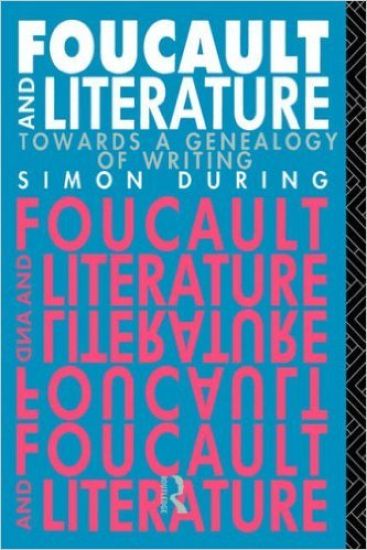
Foucault and Literature

Foucault and Literature

Simon During

Routledge
2017
sidottu
The writings of the French historian, literary critic and philosopher Michel Foucault have been of immense importance to developments in literary studies since the late 1970s. He, more than anyone, stands behind the new historicism' and cultural materialism' that currently dominate international literary studies. Simon During provides a detailed introduction to the whole body of Foucault's work, with a particular emphasis on his literary theory. His study takes in Foucault's early studies of transgressive' writing from Sade and Artaud to the French new novellists' of the 1960s, and his later concern with the genealogy of the author/intellectual, writing and theorizing within specific, historical mechanisms of social control and production. Foucault and Literature offers a critique both of Foucault and of the literary studies that have been influenced by him, and goes on to develop new methods of post-Foucauldian literary/cultural analysis.