Kirjojen hintavertailu. Mukana 11 342 296 kirjaa ja 12 kauppaa.

Kirjahaku

Etsi kirjoja tekijän nimen, kirjan nimen tai ISBN:n perusteella.

8 kirjaa tekijältä Simon Gikandi

Maps of Englishness

Maps of Englishness

Simon Gikandi

Columbia University Press
1997
sidottu
Gikandi explores the politics of identity to analyze how the colonial experience inspired narrative forms that changed the nature of the English identity by surveying the British imperial tradition since the nineteenth century. He provides detailed readings of the works of Trollope, Carlyle, and others; through the narratives of imperial women travelers such as Mary Kingsley and Mary Seacole; and through Africanist texts by Joseph Conrad, Graham Greene and postcolonialists such as Salman Rushdie and Joan Riley.
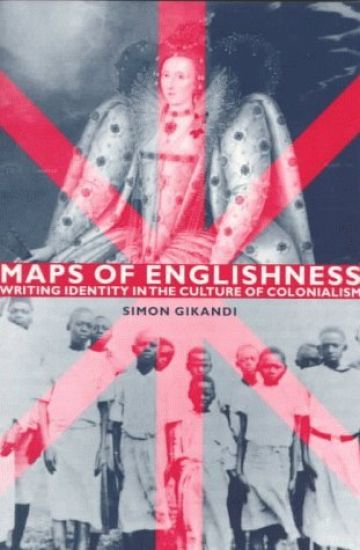
Maps of Englishness

Maps of Englishness

Simon Gikandi

Columbia University Press
1997
pokkari
Gikandi explores the politics of identity to analyze how the colonial experience inspired narrative forms that changed the nature of the English identity by surveying the British imperial tradition since the nineteenth century. He provides detailed readings of the works of Trollope, Carlyle, and others; through the narratives of imperial women travelers such as Mary Kingsley and Mary Seacole; and through Africanist texts by Joseph Conrad, Graham Greene and postcolonialists such as Salman Rushdie and Joan Riley.
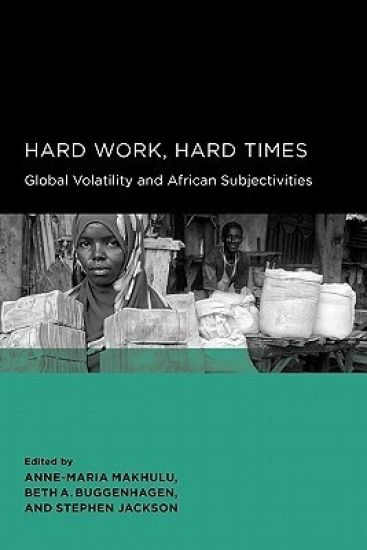
Hard Work, Hard Times

Hard Work, Hard Times

Simon Gikandi

University of California Press
2010
pokkari
The description of Africa as a continent in perpetual crisis, ubiquitous in the popular media and in policy and development circles, is at once obvious and obfuscating. This collection by leading ethnographers moves beyond the rhetoric of African crisis to theorize people's everyday practices under volatile conditions not of their own making. From Ghanaian hiplife music to the U.S. 'diversity lottery' in Togo, from politicos in Cote d'Ivoire to squatters in South Africa, the essays in "Hard Work, Hard Times" uncover the imaginative ways in which African subjects make and remake themselves and their worlds, and thus make do, get by, get over, and sometimes thrive. The contributors include: Beth A. Buggenhagen, Stephen Jackson, Anne-Maria Makhulu, Mike McGovern, Charles Piot , Dorothea E. Schulz, and Jesse Weaver Shipley.
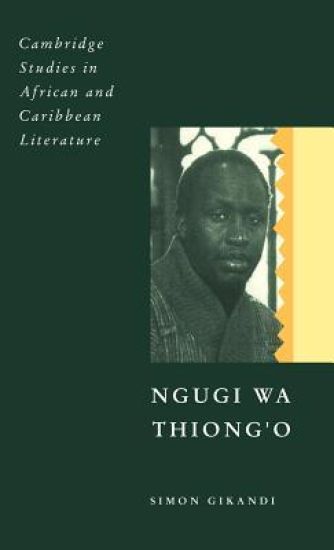
Ngugi wa Thiong'o

Ngugi wa Thiong'o

Simon Gikandi

Cambridge University Press
2000
sidottu
Kenyan dramatist and novelist, Ngugi wa Thiong’o, is regarded as one of the most influential African writers today, not only for his creative work but also for his criticism of wider cultural issues - issues such as nation and narration, power and performance, language and identity, empire and postcoloniality. Simon Gikandi’s study offers a comprehensive analysis of all Ngugi’s published work and explores the development of the major novels and plays against a background of colonialism and decolonisation in Kenya. Gikandi places the works in a context that examines the way they engage with the changing history of Africa. Tracing Ngugi’s career from the 1960s through to his role in shaping a radical culture in East Africa in the 1970s and his imprisonment and exile in the 1980s, this book provides fresh insight into the author’s life and the historic events that produced his work.
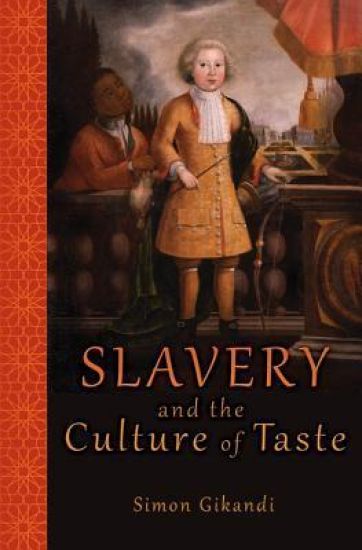
Slavery and the Culture of Taste

Slavery and the Culture of Taste

Simon Gikandi

Princeton University Press
2014
pokkari
It would be easy to assume that, in the eighteenth century, slavery and the culture of taste - the world of politeness, manners, and aesthetics - existed as separate and unequal domains, unrelated in the spheres of social life. But to the contrary, Slavery and the Culture of Taste demonstrates that these two areas of modernity were surprisingly entwined. Ranging across Britain, the antebellum South, and the West Indies, and examining vast archives, including portraits, period paintings, personal narratives, and diaries, Simon Gikandi illustrates how the violence and ugliness of enslavement actually shaped theories of taste, notions of beauty, and practices of high culture, and how slavery's impurity informed and haunted the rarified customs of the time. Gikandi focuses on the ways that the enslavement of Africans and the profits derived from this exploitation enabled the moment of taste in European - mainly British - life, leading to a transformation of bourgeois ideas regarding freedom and selfhood. He explores how these connections played out in the immense fortunes made in the West Indies sugar colonies, supporting the lavish lives of English barons and altering the ideals that defined middle-class subjects. Discussing how the ownership of slaves turned the American planter class into a new aristocracy, Gikandi engages with the slaves' own response to the strange interplay of modern notions of freedom and the realities of bondage, and he emphasizes the aesthetic and cultural processes developed by slaves to create spaces of freedom outside the regimen of enforced labor and truncated leisure. Through a close look at the eighteenth century's many remarkable documents and artworks, Slavery and the Culture of Taste sets forth the tensions and contradictions entangling a brutal practice and the distinctions of civility.
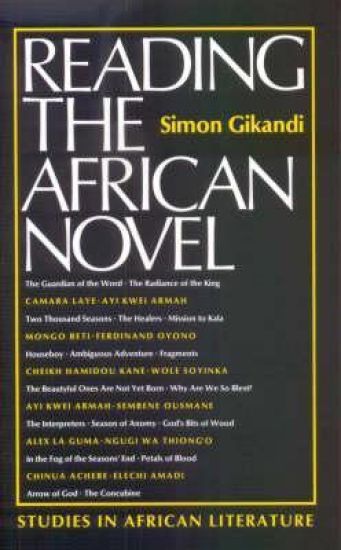
Reading the African Novel

Reading the African Novel

Simon Gikandi

James Currey
1987
pokkari
Simon Gikandi has written an insightful book for students of literature by examining the work of some major African writers. A most sensitive, perceptive, intelligent and mature piece of literary criticism such as one rarely finds. I don't think I have read anything, for example, as good on Beti as Gikandi's section on Mission to Kala; in this chapter he displays very well indeed the successful accomplishment of his aim to examine the relationship between form and content, and provides us, through his approach, with (I dare say it) the most illuminating examination of Beti's novel so far had... The approach is one that as Gikandi says, most critics avoid, preferring to concentrate on themes; but in a good writer the form is not only the vehicle but also often, part of the content; Gikandi does usall a service by facing the difficulties of the task and pulling it off so well. How well, and clearly, he discusses irony!... The presentation is clear, accessible and impressive in its authority of tone. This latter is to someextent strengthened by his knowledge of, and effective use of references to, contemporary critical theorists.' - Clive Wake, Emeritus Professor of Modern French and African Literature, University of Kent at Canterbury North America: Heinemann; Kenya: EAEP
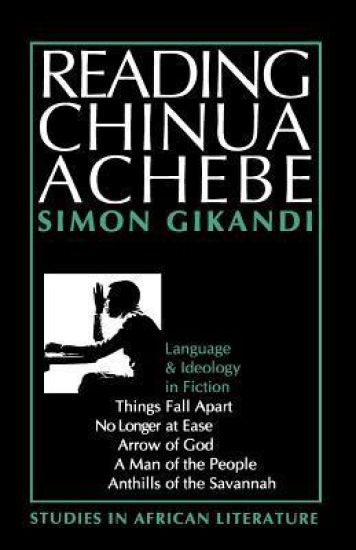
Reading Chinua Achebe

Reading Chinua Achebe

Simon Gikandi

James Currey
1991
pokkari
Analysis of the writings of Chinua Achebe aimed at students of literature. Simon Gikandi has set out to reveal '...the very nature of [Achebe's] creativity, its prodigious complexity and richness...its paradoxes and ambiguities. This is scholarship of real stature and supersedes all other studies of Achebe's writing. It comes at a good time. Achebe's literary reputation is equal to that of any living author and a substantial critical canon has been established. - G.D. Killam, Professor of English, University of Guelph Kenya: EAEP
Writing in Limbo

Writing in Limbo

Simon Gikandi

Cornell University Press
2018
pokkari
In Simon Gikandi's view, Caribbean literature and postcolonial literature more generally negotiate an uneasy relationship with the concepts of modernism and modernity—a relationship in which the Caribbean writer, unable to escape a history encoded by Europe, accepts the challenge of rewriting it. Drawing on contemporary deconstructionist theory, Gikandi looks at how such Caribbean writers as George Lamming, Samuel Selvon, Alejo Carpentier, C. L. R. James, Paule Marshall, Merle Hodge, Zee Edgell, and Michelle Cliff have attempted to confront European modernism.