Kirjojen hintavertailu. Mukana 11 717 486 kirjaa ja 12 kauppaa.

Kirjahaku

Etsi kirjoja tekijän nimen, kirjan nimen tai ISBN:n perusteella.

4 kirjaa tekijältä Simon O'Meara

Space and Muslim Urban Life

Space and Muslim Urban Life

Simon O'Meara

Routledge
2007
sidottu
This book develops academic understanding of Muslim urban space by pursuing the structural logic of the premodern Arab-Muslim city, or medina. With particular reference to The Book of Walls, an historical discourse of Islamic law whose primary subject is the wall, the book determines the meaning of a wall and then uses it to analyze the space of Fez. One of a growing number of studies to address space as a category of critical analysis, the book makes the following contributions to scholarship. Methodologically, it breaks with the tradition of viewing Islamic architecture as a well-defined object observed by a specialist at an aesthetically directed distance; rather, it inhabits the logic of this architecture by rethinking it discursively from within the culture that produced it. Hermeneutically, it sheds new light on one of North Africa's oldest medinas, and thereby illuminates a type of environment still common to much of the Arab-Muslim world. Empirically, it brings to the attention of mainstream scholarship a legal discourse and aesthetic that contributed to the form and longevity of this type of environment; and it exposes a preoccupation with walls and other limits in premodern urban Arab-Muslim culture, and a mythical paradigm informing the foundation narratives of a number of historic medinas.Presenting a fresh perspective for the understanding of Muslim urban society and thought, this innovative study will be of interest to students and researchers of Islamic studies, architecture and sociology.
Space and Muslim Urban Life

Space and Muslim Urban Life

Simon O'Meara

Routledge
2010
nidottu
This book develops academic understanding of Muslim urban space by pursuing the structural logic of the premodern Arab-Muslim city, or medina. With particular reference to The Book of Walls, an historical discourse of Islamic law whose primary subject is the wall, the book determines the meaning of a wall and then uses it to analyze the space of Fez. One of a growing number of studies to address space as a category of critical analysis, the book makes the following contributions to scholarship. Methodologically, it breaks with the tradition of viewing Islamic architecture as a well-defined object observed by a specialist at an aesthetically directed distance; rather, it inhabits the logic of this architecture by rethinking it discursively from within the culture that produced it. Hermeneutically, it sheds new light on one of North Africa's oldest medinas, and thereby illuminates a type of environment still common to much of the Arab-Muslim world. Empirically, it brings to the attention of mainstream scholarship a legal discourse and aesthetic that contributed to the form and longevity of this type of environment; and it exposes a preoccupation with walls and other limits in premodern urban Arab-Muslim culture, and a mythical paradigm informing the foundation narratives of a number of historic medinas.Presenting a fresh perspective for the understanding of Muslim urban society and thought, this innovative study will be of interest to students and researchers of Islamic studies, architecture and sociology.
The Kaaba Orientations

The Kaaba Orientations

Simon O'Meara

Edinburgh University Press
2020
sidottu
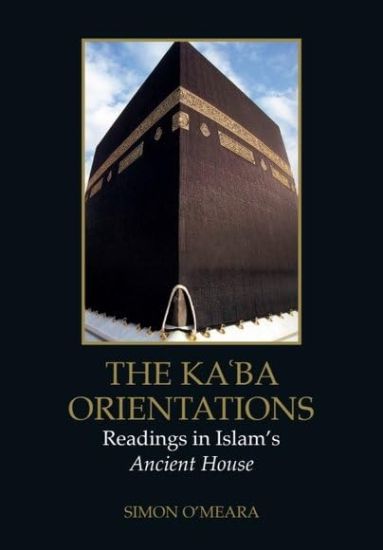
What is the Ka'ba and why it is pivotal to the Islamic world? Why do pilgrims go about it, not in it? Is it empty? And why is a hollow building covered in black silk? The most sacred site of Islam, the Ka'ba (the granite cuboid structure at the centre of the Great Mosque of Mecca) is here investigated by examining six of its predominantly spatial effects: as the qibla (the direction faced in prayer); as the axis and matrix mundi of the Islamic world; as an architectural principle in the bedrock of this world; as a circumambulated goal of pilgrimage and site of spiritual union for mystics and Sufis; and as a dwelling that is imagined to shelter temporarily an animating force; but which otherwise, as a house, holds a void.
The Kaba Orientations

The Kaba Orientations

Simon O'Meara

EDINBURGH UNIVERSITY PRESS
2025
nidottu
The most sacred site of Islam, the Kaba (the granite cuboid structure at the centre of the Great Mosque of Mecca) is here investigated by examining six of its predominantly spatial effects: as the qibla (the direction faced in prayer); as the axis and matrix mundi of the Islamic world; as an architectural principle in the bedrock of this world; as a circumambulated goal of pilgrimage and site of spiritual union for mystics and Sufis; and as a dwelling that is imagined to shelter temporarily an animating force; but which otherwise, as a house, holds a void.