Kirjojen hintavertailu. Mukana 12 020 067 kirjaa ja 12 kauppaa.

Kirjahaku

Etsi kirjoja tekijän nimen, kirjan nimen tai ISBN:n perusteella.

4 kirjaa tekijältä Simon O'Sullivan

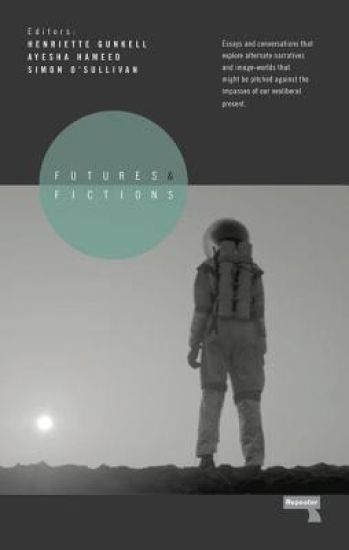
Futures and Fictions

Futures and Fictions

Simon O'Sullivan

Repeater Books
2017
pokkari
In what ways could we imagine a world different from the one in which we currently live? This is the question addressed by the essays and conversations in Futures and Fictions, which explore possibilities for a different "political imaginary". With discussions around decolonization, new Afro- and other futurisms, post-capitalism, science fiction, and new kinds of social movements - and the intersections of these with contemporary art practice and visual culture - Futures and Fictions creates a space for alternate narratives and image-worlds that might be pitched against our neoliberal present. With contributions from Mark Fisher, Ursula Le Guin, Kodwo Eshun and Oreet Ashery.
From Magic and Myth-Work to Care and Repair

From Magic and Myth-Work to Care and Repair

Simon O'Sullivan

GOLDSMITHS, UNIVERSITY OF LONDON
2024
nidottu
The practices of magic and contemporary myth-making in relation to landscape, performance, and writing. From Magic and Myth-Work to Care and Repair is a two-part book, broadly concerned with the "fiction of the self" and with practices and explorations beyond that fiction. Each part approaches this thematic from a different angle. The first part "On Magic and Myth-Work" deals with practices of magic (although not always named as such) and with a contemporary myth-making in relation to landscape, performance and writing. The second part "On Care and Repair" gathers together essays that are on the one hand more personal, but that also look to various technologies (or devices) of self-care alongside ideas of collaboration and the collective. Crucial in this exploration is also our relation to one another and to the larger non-human world. All the essays were prompted by teaching students--undergraduates and postgraduates--during the initial Covid years, specifically on two courses at Goldsmiths: Occulture and Art Writing to Theory Fiction. The important themes in both these courses were all constellated around magic, myth-work, care, and repair, especially as these intersected with questions of agency and self-narration. On those courses--and throughout the book--these themes are connected to larger issues of historical trauma, neoliberalism, and ecological crisis. The essays reference many other texts and fellow travelers, but also draw on the author's own experiences within various art and theory worlds, as well as with performance art, magical practices, gaming and Buddhism.
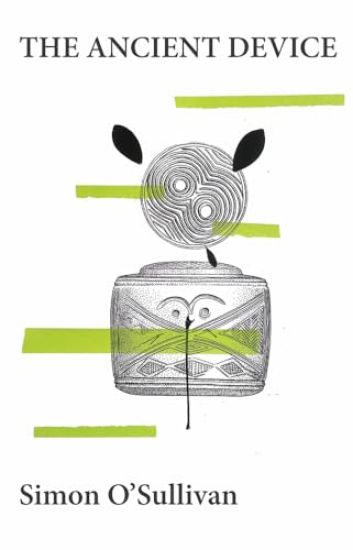
The Ancient Device

The Ancient Device

Simon O'Sullivan

TRIARCHY PRESS
2024
nidottu
'The Ancient Device' is the story of four somehow familiar, rather dishevelled, sometimes sympathetic characters: Hare, Fox-Owl, Ribbonhead and King John.We meet this dysfunctional and longing band of players on their journey to a site in the English landscape where they are to give a performance of sorts.Yet exactly who they are, where they are and what they are up to, becomes increasingly uncertain as the book draws us into the mist, exploring and experimenting with notions of narrative and plot, psychology and self, performance and place…Like the characters themselves, readers are unlikely to come out as they went in. The Ancient Device is both a novel and an exploration of what the author calls the ‘fiction of the self’. The title of the book refers to this fiction that we all necessarily inhabit, but also to performance as a kind of device (and, indeed, the book as a device too). At stake in this exploration is also the development of an idea of ‘myth-work’ and how narrative and the laying out of imaginary landscapes and figures can work as a form of repair.
On Theory-Fiction and Other Genres

On Theory-Fiction and Other Genres

Simon O'Sullivan

Springer International Publishing AG
2024
sidottu
This book looks at three different kinds of writing practice - theory-fiction, autofiction/autotheory and art writing - that are increasingly prevalent as genres (or ‘hybrid genres’) in the arts and critical humanities. The chapters in the book operate as a critical survey of these new forms of writing (many examples are listed) whilst at the same time they each work towards some provisional definitions. Some key precursors to these new genres are also identified. The book explores what these new kinds of writing do. What is particular to them or what do they add to those already existing styles and genres (and especially the academic essay and article)? Key here is that each form of writing works in a performative manner or as a device that enables a shift in perspective. A case is made for their urgency in relation to contemporary issues and concerns and for their importance in terms of being both from and for more marginalised communities. The book concludes with a discussion of machine writing and especially our collaboration with artificial intelligence language models.