Kirjojen hintavertailu. Mukana 11 244 527 kirjaa ja 12 kauppaa.

Kirjahaku

Etsi kirjoja tekijän nimen, kirjan nimen tai ISBN:n perusteella.

5 kirjaa tekijältä Simon Oliver

Philosophy, God and Motion

Philosophy, God and Motion

Simon Oliver

Routledge
2005
sidottu
In the post-Newtonian world motion is assumed to be a simple category which relates to the locomotion of bodies in space, and is usually associated only with physics. This book shows this to be a relatively recent understanding of motion and that prior to the scientific revolution motion was a broader and more mysterious category, applying to moral as well as physical movements.Simon Oliver presents fresh interpretations of key figures in the history of western thought including Plato, Aristotle, Aquinas and Newton, examining the thinkers’ handling of the concept of motion. Through close readings of seminal texts in ancient and medieval cosmology and early modern natural philosophy, the books moves from antique to modern times investigating how motion has been of great significance within theology, philosophy and science. Particularly important is the relation between motion and God, following Aristotle traditional doctrines of God have understood the divine as the ‘unmoved mover’ while post-Holocaust theologians have suggested that in order to be compassionate God must undergo the motion of suffering. The text argues that there may be an authentically theological, as well as a natural scientific understanding of motion.This volume will prove a major contribution to theology, the history of Christian thought and to the growing field of science and religion.
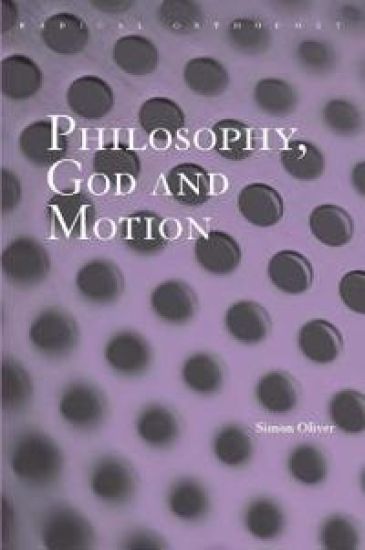
Philosophy, God and Motion

Philosophy, God and Motion

Simon Oliver

Routledge
2013
nidottu
In the post-Newtonian world motion is assumed to be a simple category which relates to the locomotion of bodies in space, and is usually associated only with physics. This book shows this to be a relatively recent understanding of motion and that prior to the scientific revolution motion was a broader and more mysterious category, applying to moral as well as physical movements.Simon Oliver presents fresh interpretations of key figures in the history of western thought including Plato, Aristotle, Aquinas and Newton, examining the thinkers’ handling of the concept of motion. Through close readings of seminal texts in ancient and medieval cosmology and early modern natural philosophy, the books moves from antique to modern times investigating how motion has been of great significance within theology, philosophy and science. Particularly important is the relation between motion and God, following Aristotle traditional doctrines of God have understood the divine as the ‘unmoved mover’ while post-Holocaust theologians have suggested that in order to be compassionate God must undergo the motion of suffering. The text argues that there may be an authentically theological, as well as a natural scientific understanding of motion.This volume will prove a major contribution to theology, the history of Christian thought and to the growing field of science and religion.
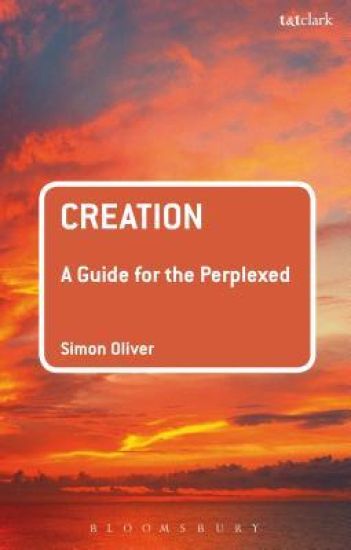
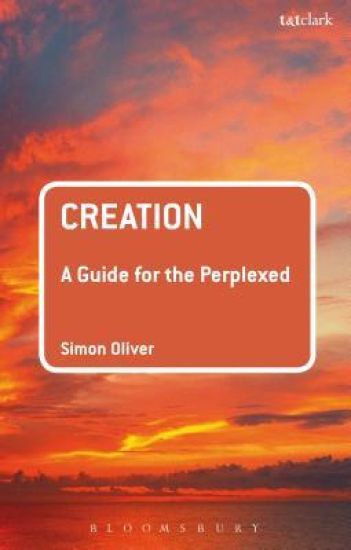
Creation: A Guide for the Perplexed

Creation: A Guide for the Perplexed

Simon Oliver

T. T.Clark Ltd
2017
nidottu
This addition to our popular Guides for the Perplexed series tackles a subject that is enjoying renewed debate: Christianity, along with Judaism and Islam, claims that the universe is not a brute fact. It is 'created'. But what do we mean by 'creation'? Do we mean that the universe is 'designed'? Is it the product of an evolutionary process? How are creatures related to God, and does God act within creation? Simon Oliver begins with the background to the Christian theology of creation in Greek philosophy and the Old Testament. This provides a route into understanding the claim that we are part of a created order that is also the theatre of God's providential action. He examines different understandings of creation, including creation out of nothing and the analogy of being, with close reference to the work of patristic and medieval theologians such as Augustine and Thomas Aquinas. This leads to an historical overview of the relationship between theological, philosophical and scientific approaches to creation in the modern period. Some of the ethical issues concerning humanity's place within, and treatment of, creation and our environment are also examined. A distinctive yet traditional theology of creation is proposed focused on the concepts of gift and participation as ways of understanding more fully the meaning and implications of the claim that the universe is created.
Creation: A Guide for the Perplexed

Creation: A Guide for the Perplexed

Simon Oliver

T. T.Clark Ltd
2017
sidottu
This addition to our popular Guides for the Perplexed series tackles a subject that is enjoying renewed debate: Christianity, along with Judaism and Islam, claims that the universe is not a brute fact. It is 'created'. But what do we mean by 'creation'? Do we mean that the universe is 'designed'? Is it the product of an evolutionary process? How are creatures related to God, and does God act within creation? Simon Oliver begins with the background to the Christian theology of creation in Greek philosophy and the Old Testament. This provides a route into understanding the claim that we are part of a created order that is also the theatre of God's providential action. He examines different understandings of creation, including creation out of nothing and the analogy of being, with close reference to the work of patristic and medieval theologians such as Augustine and Thomas Aquinas. This leads to an historical overview of the relationship between theological, philosophical and scientific approaches to creation in the modern period. Some of the ethical issues concerning humanity's place within, and treatment of, creation and our environment are also examined. A distinctive yet traditional theology of creation is proposed focused on the concepts of gift and participation as ways of understanding more fully the meaning and implications of the claim that the universe is created.