Kirjojen hintavertailu. Mukana 11 717 486 kirjaa ja 12 kauppaa.

Kirjahaku

Etsi kirjoja tekijän nimen, kirjan nimen tai ISBN:n perusteella.

6 kirjaa tekijältä Simon Reid-Henry

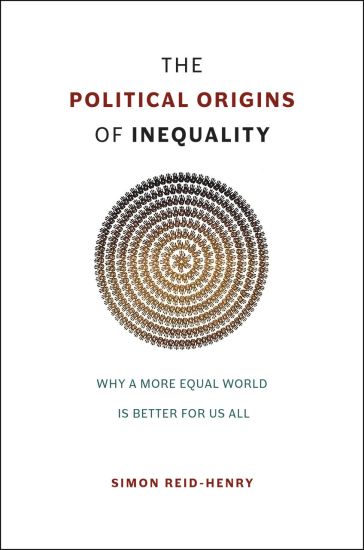
The Political Origins of Inequality

The Political Origins of Inequality

Simon Reid-Henry

University of Chicago Press
2015
sidottu
Inequality is the defining issue of our time. But it is not just a problem for the rich world. It is the global 1% that now owns fully half the world's wealth-the true measure of our age of inequality. In this historical tour de force, Simon Reid-Henry rewrites the usual story of globalization and development as a story of the management of inequality. Reaching back to the eighteenth century and around the globe, The Political Origins of Inequality foregrounds the political turning points and decisions behind the making of today's uneven societies. As it weaves together insights from the Victorian city to the Cold War, from US economic policy to Europe's present migration crisis, a true picture emerges of the structure of inequality itself. The problem of inequality, Reid-Henry argues, is a problem that manifests between places as well as over time. This is one reason why it cannot be resolved by the usual arguments of left versus right, bound as they are to the national scale alone. Most of all, however, it is why the level of inequality that confronts us today is indicative of a more general crisis in political thought. Modern political discourse has no place for public reason or the common good. Equality is yesterday's dream. Yet the fact that we now accept such a world-a world that values security over freedom, special treatment over universal opportunity, and efficiency over fairness-is ultimately because we have stopped even trying in recent decades to build the political architecture the world actually requires.Our politics has fallen out of step with the world, then, and at the every moment it is needed more than ever. Yet it is within our power to address this. Doing so involves identifying and then meeting our political responsibilities to others, not just offering them the selective charity of the rich. It means looking beyond issues of economics and outside our national borders. But above all it demands of us that we reinvent the language of equality for a modern, global world: and then institute this. The world is not falling apart. Different worlds, we all can see, are colliding together. It is our capacity to act in concert that is falling apart. It is this that needs restoring most of all.

Fidel and Che

Fidel and Che

Simon Reid-Henry

Sceptre
2009
pokkari
'As exciting and readable as a Cold War thriller' The Times'Brings back the danger and intense emotions of that revolutionary period...it reads like adventure fiction' IndependentThe story of the remarkable and revolutionary friendship between two of the most iconic figures in twentieth century history - Fidel Castro and Ernesto 'Che' Guevara.Not yet thirty, Fidel Castro and Ernesto Guevara met in 1955 while both in exile in Mexico City. Guevara, the Argentine doctor plagued by asthma, had reached the end of the travels he began by motorcycle several years before. Fidel Castro, peasant's son, scholar and rebel, had just fled Cuba, fearing for his life. Over the next twelve years, until Guevara's death in 1967, their journey together would take them from the safe houses of Mexico's political underground, to war in the Cuban mountains and ultimately into the heart of the Cold War. Drawing on extensive research, including declassified material and interviews with key figures in Havana, Moscow and Washington, Simon Reid-Henry uncovers, for the first time, the full story behind the central relationship of the Cuban revolution: their shared revolutionary ambitions, their conflicting personalities, the wilfulness that bound them together and the pressures that would tear them apart. Fidel and Che is the story of two men who shared a common dream; who became friends, comrades and brothers-in-arms; and who, finally, would make an epic choice between their friendship and their beliefs.
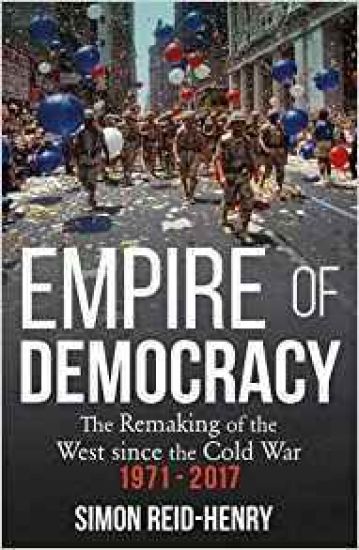
Empire of Democracy

Empire of Democracy

Simon Reid-Henry

John Murray Publishers Ltd
2019
sidottu
'Formidably ambitious... boldly attempts to paint a thematic portrait of the world's democracies and delivers an argument that leaders grounded these political structures on free-market economics... There is much to admire in Reid-Henry's book' Financial Times'An impressive work, and a wonderful primer for anyone wanting to know why we are where we are ... A tour de force of historical comprehension over almost half a century of remarkable turbulence. And as we travel further from the events it describes, many of its judgements are likely to prove sound' Simon Heffer, Spectator'Reid-Henry narrates this story with elegance and gusto' Washington Post'[Reid-Henry] conveys an important message: Individual political action must become accountable to society's interests' Kirkus'Reid-Henry's scholarship is impressive, gathering a wide range of historical anecdotes and referencing a diverse set of thinkers' Publishers Weekly'the most valuable political education and history lesson you receive in 2019' Irish IndependentThe first panoramic history of the Western world from the 1970s to the present day: Empire of Democracy is the story for those asking how we got to where we are.Half a century ago, at the height of the Cold War and amidst a world economic crisis, the Western democracies were forced to undergo a profound transformation. Against what some saw as a full-scale "crisis of democracy" - with race riots, anti-Vietnam marches and a wave of worker discontent sowing crisis from one nation to the next - a new political-economic order was devised and the postwar social contract was torn up and written anew.In this epic narrative of the events that have shaped our own times, Simon Reid-Henry shows how liberal democracy, and Western history with it, was profoundly re-imagined when the postwar Golden Age ended. As the institutions of liberal rule were reinvented, a new generation of politicians emerged: Thatcher, Reagan, Mitterrand, Kohl. The late twentieth-century heyday they oversaw carried the Western democracies triumphantly to victory in the Cold War and into the economic boom of the 1990s. But equally it led them into the fiasco of Iraq, to the high drama of the financial crisis in 2007/8, and ultimately to the anti-liberal surge of our own times.The present crisis of liberalism enjoins us to revisit these as yet unscripted decades. The era we have all been living through is closing out, democracy is turning on its axis once again. As this panoramic history poignantly reminds us, the choices we make going forward require us first to come to terms with where we have been.
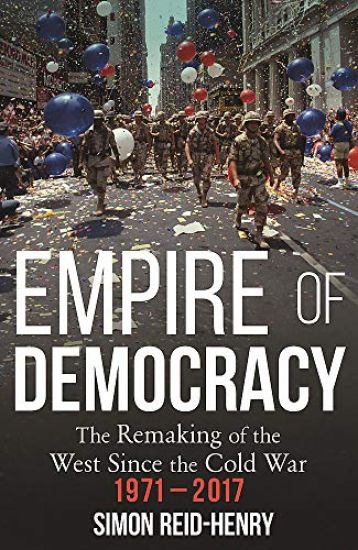
Empire of Democracy

Empire of Democracy

Simon Reid-Henry

John Murray Publishers Ltd
2020
pokkari
'A dense narrative and a wealth of examples' Literary Review'Reid-Henry narrates this story with elegance and gusto' Washington Post'[Reid-Henry] conveys an important message: Individual political action must become accountable to society's interests' Kirkus'Reid-Henry's scholarship is impressive, gathering a wide range of historical anecdotes and referencing a diverse set of thinkers' Publishers Weekly The first panoramic history of the Western world from the 1970s to the present day: Empire of Democracy is the story for those asking how we got to where we are.In this epic narrative of the events that have shaped our own times, Simon Reid-Henry shows how liberal democracy, and Western history with it, was profoundly re-imagined when the postwar Golden Age ended. As the institutions of liberal rule were reinvented, a new generation of politicians emerged: Thatcher, Reagan, Mitterrand, Kohl. The late twentieth-century heyday they oversaw carried the Western democracies triumphantly to victory in the C old War and into the economic boom of the 1990s. But equally it led them into the fiasco of Iraq, to the high drama of the financial crisis in 2007/8, and ultimately to the anti-liberal surge of our own times.The present crisis of liberalism enjoins us to revisit these as yet unscripted decades. The era we have all been living through is closing out, democracy is turning on its axis once again. As this panoramic history poignantly reminds us, the choices we make going forward require us first to come to terms with where we have been.
Empire of Democracy: The Remaking of the West Since the Cold War, 1971-2017
The first panoramic history of the Western world from the 1970s to the present day, Empire of Democracy is the story for those asking how we got to where we are.Half a century ago, at the height of the Cold War and amidst a world economic crisis, the Western democracies were forced to undergo a profound transformation. Against what some saw as a full-scale "crisis of democracy"-- with race riots, anti-Vietnam marches and a wave of worker discontent sowing crisis from one nation to the next-- a new political-economic order was devised and the postwar social contract was torn up and written anew. In this epic narrative of the events that have shaped our own times, Simon Reid-Henry shows how liberal democracy, and western history with it, was profoundly reimagined when the postwar Golden Age ended. As the institutions of liberal rule were reinvented, a new generation of politicians emerged: Thatcher, Reagan, Mitterrand, Kohl. The late twentieth century heyday they oversaw carried the Western democracies triumphantly to victory in the Cold War and into the economic boom of the 1990s. But equally it led them into the fiasco of Iraq, to the high drama of the financial crisis in 2007/8, and ultimately to the anti-liberal surge of our own times. The present crisis of liberalism enjoins us to revisit these as yet unscripted decades. The era we have all been living through is closing out, democracy is turning on its axis once again. As this panoramic history poignantly reminds us, the choices we make going forward require us first to come to terms with where we have been.
Arven etter Thatcher

Arven etter Thatcher

Simon Reid-Henry

Manifest
2012
nidottu
Margaret Thatcher forandret Storbritannia - kanskje verden. Men hva gjorde hun egentlig? Mer enn 30 år etter at hun gikk av som statsminister i Storbritannia er Thatcher fremdeles omstridt. Mange på høyresiden har henne som forbilde. For andre er Thatcher selve symbolet på fagforeningsknusing og velferdskutt. I denne pamfletten tar den britiske samfunnsforskeren Simon Reid-Henry for seg konsekvensene av Thatchers politikk: Hvor mye de økonomiske forskjellene vokste. Hvem som tjente godt på politikkens hennes. Og ikke minst hvordan noen av hennes hardeste motstandere kom til å bli hennes arvtakere.