Kirjojen hintavertailu. Mukana 11 244 527 kirjaa ja 12 kauppaa.

Kirjahaku

Etsi kirjoja tekijän nimen, kirjan nimen tai ISBN:n perusteella.

20 kirjaa tekijältä Simon Thompson

Trading Secrets

Trading Secrets

Simon Thompson

FT Publishing International
2008
nidottu
Have you ever wondered how the top City traders make big profits from share trading? Do you know why the best investors know exactly when the market is going to rise or fall? And do you wish you could do the same? By following 20 hard and fast rules,Trading Secrets shows you how you can make the same high returns as experienced investors and traders. Using historical, economic and technical trend analysis from the last fifty years, it identifies the ways for you to capitalise on such events as the clocks going back or moving forward, religious holidays, major sporting events and even the US presidential election. Written for both experienced investors and also those with little knowledge of the stock market, Simon Thompson’s practical investing guide offers trading strategies that you can use over the short-term or the long-term. For instance, do you know how daylight changes affect how the stock market performs and, more importantly, how to make big gains by trading on this knowledge? Or do you know which sector has massively outperformed the market in the first quarter of the year – posting a quarterly return of 12 per cent – in all bar four years in the past three decades? Trading Secrets uncovers all and more importantly explains why these trends occur, so that you can be confident your investments will pay off, even when the market is falling.
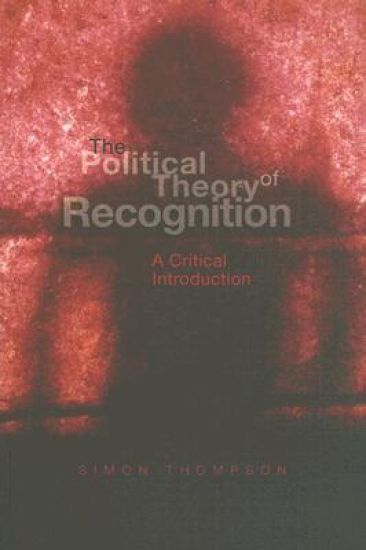
The Political Theory of Recognition

The Political Theory of Recognition

Simon Thompson

Polity Press
2006
sidottu
In recent years the political landscape has changed: established ideas about class, economy, nation and equality have been challenged by a new politics of identity, culture, ethnicity and difference. The political theory of recognition is a response to these challenges. In this, the first introductory book on the subject, Simon Thompson analyses the argument that a just society is one that shows all its members due recognition. Focusing on the work on Charles Taylor, Axel Honneth and Nancy Fraser, he discusses how political theorists have conceptualised recognition, the different accounts they have given and the criticisms made of the very idea of a politics of recognition. Through the political theory of recognition, Thompson argues, we gain a better understanding of identity and difference. Practically, the concept of recognition can serve as a basis for determining which individual rights should be protected, whether cultures ought to be valued, and whether a case can be made for group representation. This clear and accessible book provides an excellent guide through the ongoing and increasingly significant debate between multiculturalism and its critics.
The Political Theory of Recognition

The Political Theory of Recognition

Simon Thompson

Polity Press
2006
nidottu
In recent years the political landscape has changed: established ideas about class, economy, nation and equality have been challenged by a new politics of identity, culture, ethnicity and difference. The political theory of recognition is a response to these challenges. In this, the first introductory book on the subject, Simon Thompson analyses the argument that a just society is one that shows all its members due recognition. Focusing on the work on Charles Taylor, Axel Honneth and Nancy Fraser, he discusses how political theorists have conceptualised recognition, the different accounts they have given and the criticisms made of the very idea of a politics of recognition. Through the political theory of recognition, Thompson argues, we gain a better understanding of identity and difference. Practically, the concept of recognition can serve as a basis for determining which individual rights should be protected, whether cultures ought to be valued, and whether a case can be made for group representation. This clear and accessible book provides an excellent guide through the ongoing and increasingly significant debate between multiculturalism and its critics.
Emotion, Politics and Society

Emotion, Politics and Society

Simon Thompson

Palgrave Macmillan
2006
nidottu
This timely book critically addresses the intersection between power, politics and emotions. Challenging traditional dichotomies which counterpose rationalist to non-rationalist epistemologies, it offers a sustained argument for a more complete and integrated rationalism and helps us understand emotions in contemporary social and political life.
Green and Sustainable Finance

Green and Sustainable Finance

Simon Thompson

KOGAN PAGE LTD
2025
pokkari
The finance sector has a crucial role to play in delivering a sustainable future for the planet. To address the Triple Planetary Crisis of climate change, pollution and biodiversity loss, it is vital that the finance sector rapidly accelerates the mobilization of capital to support a successful and just transition to net zero. This requires enhancing both the capabilities of financial institutions and developing the knowledge and skills of finance professionals so that every financial decision takes account of climate change and sustainability. Green and Sustainable Finance is a comprehensive guide to the principles and practice required to manage sustainability risks, engage and support clients, and take advantage of the opportunities presented by the transition of sectors and firms to new, low carbon and nature positive models. This fully updated third edition incorporates a wider perspective with nature-based impacts, risks, dependencies and opportunities considered alongside climate change. It introduces the work of the new International Sustainability Standards Board (ISSB) and the Taskforce on Nature-related Financial Disclosures (TNFD) along with extensive coverage of wider regulatory and market developments. There is also additional content on adaptation finance, transition finance and transition planning. Endorsed by the Chartered Banker Institute as the core text for the global benchmark Certificate in Green and Sustainable Finance, this book is essential reading for finance professionals, university students and individuals working to embed sustainability in business, finance, policy and regulation.
Green and Sustainable Finance

Green and Sustainable Finance

Simon Thompson

KOGAN PAGE LTD
2025
sidottu
The finance sector has a crucial role to play in delivering a sustainable future for the planet. To address the Triple Planetary Crisis of climate change, pollution and biodiversity loss, it is vital that the finance sector rapidly accelerates the mobilization of capital to support a successful and just transition to net zero. This requires enhancing both the capabilities of financial institutions and developing the knowledge and skills of finance professionals so that every financial decision takes account of climate change and sustainability. Green and Sustainable Finance is a comprehensive guide to the principles and practice required to manage sustainability risks, engage and support clients, and take advantage of the opportunities presented by the transition of sectors and firms to new, low carbon and nature positive models. This fully updated third edition incorporates a wider perspective with nature-based impacts, risks, dependencies and opportunities considered alongside climate change. It introduces the work of the new International Sustainability Standards Board (ISSB) and the Taskforce on Nature-related Financial Disclosures (TNFD) along with extensive coverage of wider regulatory and market developments. There is also additional content on adaptation finance, transition finance and transition planning. Endorsed by the Chartered Banker Institute as the core text for the global benchmark Certificate in Green and Sustainable Finance, this book is essential reading for finance professionals, university students and individuals working to embed sustainability in business, finance, policy and regulation.
Emotion, Politics and Society

Emotion, Politics and Society

Simon Thompson

Palgrave Macmillan
2006
sidottu
This timely book critically addresses the intersection between power, politics and emotions. Challenging traditional dichotomies which counterpose rationalist to non-rationalist epistemologies, it offers a sustained argument for a more complete and integrated rationalism and helps us understand emotions in contemporary social and political life.
Managing Machine Learning Projects

Managing Machine Learning Projects

Simon Thompson

Manning Publications
2023
sidottu
The go-to guide in machine learning projects from design to production. No ML skills required! In Managing Machine Learning Projects, you will learn essential machine learning project management techniques, including: Understanding an ML project's requirementsSetting up the infrastructure for the project and resourcing a teamWorking with clients and other stakeholdersDealing with data resources and bringing them into the project for useHandling the lifecycle of models in the projectManaging the application of ML algorithmsEvaluating the performance of algorithms and modelsMaking decisions about which models to adopt for deliveryTaking models through development and testingIntegrating models with production systems to create effective applicationsSteps and behaviours for managing the ethical implications of ML technology About the technology Companies of all shapes, sizes, and industries are investing in machine learning (ML). Unfortunately, around 85% of all ML projects fail. Managing machine learning projects requires adopting a different approach than you would take with standard software projects. You need to account for large and diverse data resources, evaluate and track multiple separate models, and handle the unforeseeable risk of poor performance. Never fear — this book lays out the unique practices you will need to ensure your projects succeed!
Unjustifiable Risk?

Unjustifiable Risk?

Simon Thompson

CICERONE PRESS
2012
nidottu
To the impartial observer Britain does not appear to have any mountains. Yet the British invented the sport of mountain climbing and for two periods in history British climbers led the world in the pursuit of this beautiful and dangerous obsession. Unjustifiable Risk is the story of the social, economic and cultural conditions that gave rise to the sport, and the achievements and motives of the scientists and poets, parsons and anarchists, villains and judges, ascetics and drunks that have shaped its development over the past two hundred years. The history of climbing inevitably reflects the wider changes that have occurred in British society, including class, gender, nationalism and war, but the sport has also contributed to changing social attitudes to nature and beauty, heroism and death. Over the years, increasing wealth, leisure and mobility have gradually transformed climbing from an activity undertaken by an eccentric and privileged minority into a sub-division of the leisure and tourist industry, while competition, improved technology and information, and increasing specialisation have helped to create climbs of unimaginable difficulty at the leading edge of the sport. But while much has changed, even more has remained the same. Today's climbers would be instantly recognisable to their Victorian predecessors, with their desire to escape from the crowded complexity of urban society and willingness to take "unjustifiable" risk in pursuit of beauty, adventure and self-fulfilment. Unjustifiable Risk was shortlisted for the Boardman Tasker prize in 2011.
A Long Walk with Lord Conway

A Long Walk with Lord Conway

Simon Thompson

Signal Books Ltd
2013
sidottu
In 1894, Martin Conway became the first man to walk the Alps 'from end to end' when he completed a 1,000-mile journey from the Col de Tende in Italy to the summit of the Ankogel in Austria. On a midsummer's morning, nearly 120 years later, Simon Thompson followed in his footsteps, setting out to explore both the mountains and the man. A charming rogue who led a 'fantastically eventful' life, according to The Times, Conway was a climber and pioneering explorer of the Himalaya, Spitsbergen, the Andes and Patagonia; a serial pursuer of American heiresses; an historian, collector and Slade Professor of Fine Art at Cambridge; a company director and stock market promoter of dubious gold mines and non-existent rubber forests; the founder of the Imperial War Museum; the first foreigner to see the Russian crown jewels after the revolution; a successful journalist and author of over thirty books; a liberal politician; and a conservative MP. Shortly before he died, he was created 1st Baron Conway of Allington. Conway was a clubbable man who counted Winston Churchill, David Lloyd George, Henry James, Rudyard Kipling, J. P. Morgan, John Ruskin, Mark Twain and Edward Whymper among his many friends and acquaintances. An imperialist, a dreamer, a liar and a cheat, Conway 'walked in sunshine all his life', according to contemporaries, but he was also a restless, discontented man, constantly searching for meaning and purpose in his life. And that search that led him back, time and time again, to the Alps. In A Long Walk with Lord Conway, Simon Thompson retraces Conway's long journey over the peaks, passes and glaciers of the Alps and rediscovers the life of a complex and remarkable English adventurer.
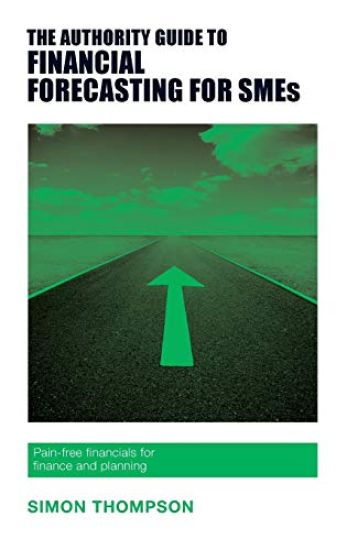
The Authority Guide to Financial Forecasting for SMEs
Build a better, faster forecast. In this Authority Guide, forecasting guru Simon Thompson shows you how to build financial forecasts quickly, effectively and cheaply through his unique, proven and easy-to-follow 10-step process. By learning how to create effective forecasts you will master the ability to understand the potential financial outcomes for your business and be able to communicate financial information in order to successfully raise investment or loans.