Kirjojen hintavertailu. Mukana 11 342 296 kirjaa ja 12 kauppaa.

Kirjahaku

Etsi kirjoja tekijän nimen, kirjan nimen tai ISBN:n perusteella.

3 kirjaa tekijältä Simon Trew

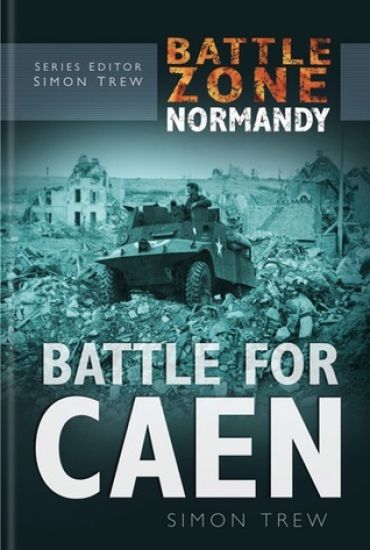
Battle Zone Normandy: Battle for Caen

Battle Zone Normandy: Battle for Caen

Simon Trew

The History Press Ltd
2004
sidottu
The city of Caen was perhaps the greatest major obstacle in the path of the Allied advance inland after their landings in Normandy, 6 June 1944. Consequently it was a key objective for 3rd British Division, landing on Sword Beach. The Allies were unable to capture the strategically important city on D-Day, however, in the teeth of armoured counter-attacks from 21st Panzer Division. Renewed attempts by 3rd Canadian Division on 7-8 June were foiled by 12th SS Panzer Division 'Hitlerjugend', as were 7th British Armoured Division's thrusts towards the city on 11-14 June. On 25 June Operation 'Epsom' was launched to take Caen.Preceded by RAF Bomber Command attacks, further British and Canadian assaults on 4 July stalled before the whole of the city could be taken. On 7 July Operation 'Charnwood' forced the Germans to withdraw from northern Caen. A much heavier bombardment opened Operation 'Goodwood' on 18 July, in the course of which the Canadians finally managed to liberate the rest of Caen, by now largely demolished after five weeks of intensive fighting.
Gold Beach

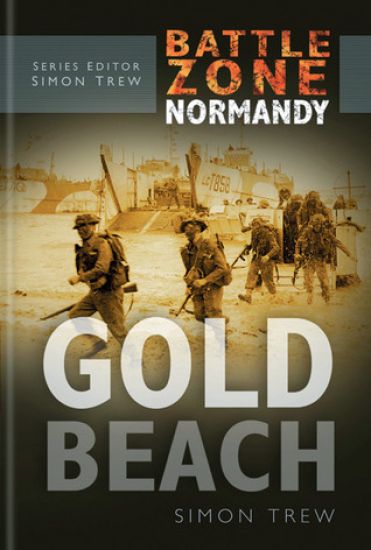
Gold Beach

Simon Trew

Sutton Publishing Ltd
2004
sidottu
On D-Day, British XXX Corps was ordered to break open the German defences on Gold Beach and advance to capture Bayeux. Its commander, Lieutenant-General G.C. Bucknall, chose the 50th (Northumbrian) Division, a veteran formation blooded in North Africa, to spearhead the landing, supported by 47 Royal Marine Commando. Despite poor weather conditions hampering the planned armoured support, the assaulting infantry overcame stiff resistance and heavy casualties to storm the beach. By noon Gold Beach was in full use as a reception and dispersal site, with all four brigades of 50th Division ashore and pressing inland. Although Bayeux was not taken, the defences towards Arromanches were quickly cleared, securing the site of the first artificial harbours so vital to the Normandy campaign. The arrival of 7th Armoured Division (the Desert Rats), also North Africa veterans, in the days following D-Day consolidated the beachhead in the face of mounting German resistance, setting the scene for further penetration inland.
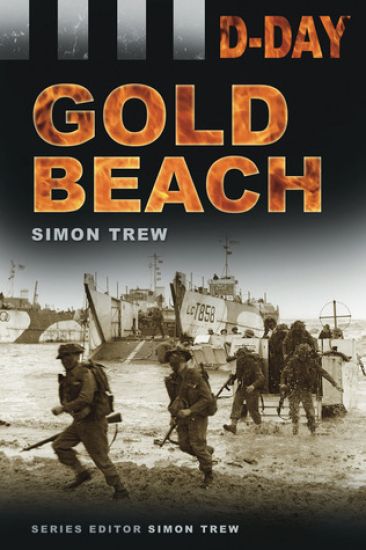
D-Day: Gold Beach

D-Day: Gold Beach

Simon Trew

The History Press Ltd
2011
nidottu
On 6 June 1944, 50th (Northumbrian) Infantry Division spearheaded the British landing at Gold Beach, near the coastal resort of Arromanches. Despite poor weather conditions, the assault troops overcame determined opposition to establish a beachhead and win the only Victoria Cross awarded on D-Day. By the next day Gold Beach was in full use as a reception and dispersal site, with all four brigades of 50th Division and numerous supporting units ashore and driving inland. Starting with an analysis of the two sides and their plans, Simon Trew describes the battle for Gold Beach and how British attempts to exploit their initial success were frustrated by bitter German resistance. Four detailed battlefield tours follow, covering some of the most dramatic actions fought by the 50th Division and its attached units during the opening stages of one of the most important battles in history.