Kirjojen hintavertailu. Mukana 11 342 402 kirjaa ja 12 kauppaa.

Kirjahaku

Etsi kirjoja tekijän nimen, kirjan nimen tai ISBN:n perusteella.

4 kirjaa tekijältä Simon Varey

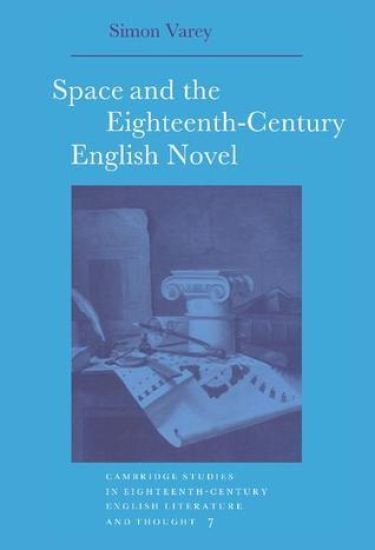
Space and the Eighteenth-Century English Novel

Space and the Eighteenth-Century English Novel

Simon Varey

Cambridge University Press
2006
pokkari
In this challenging and illustrated study, first published in 1990, Simon Varey relates the idea of space in the major novels of Defoe, Fielding and Richardson to its use in the theory and practice of eighteenth-century architecture. Concepts of divine design, expressed in the work of philosophers and theologians, introduced an ideological element to the notion of space which gave it a heightened significance in contemporary thought. Professor Varey's central argument is that space becomes a political instrument used to establish conformity, assert power and give form to the aspirations of social classes. He draws on a wide range of architectural books, both English and European, and on the example of Bath (focusing in particular on its chief architect in the eighteenth century, John Wood). The discussion of novels such as Robinson Crusoe, Tom Jones and Clarissa examines narrative as a form of spatial design, the use of architectural imagery to describe people, and the political control of social space.
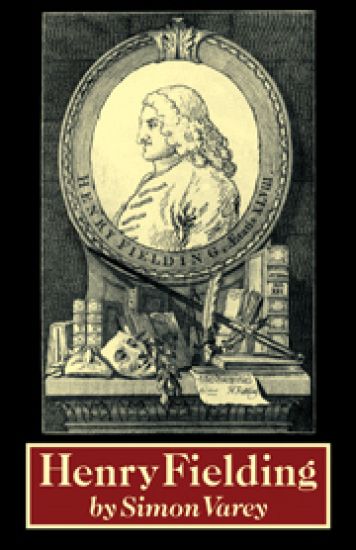
Henry Fielding

Henry Fielding

Simon Varey

Cambridge University Press
1986
sidottu
This concise and lucid study provides an ideal introduction to the major work of Henry Fielding for all students. Fielding's stature as a great comic novelist is assured, but as Professor Varey illustrates, he was a remarkably versatile writer. In his day Fielding was one of England's leading dramatists and also pursued a career in law. He founded, edited, and contributed essays for four different periodicals, and wrote a political-satirical novel Jonathan Wild, in addition to a work of powerful social protest Amelia and his two outstanding contributions to the development of English prose fiction: Tom Jones and Joseph Andrews. Professor Varey clarifies and explains this varied body of writing, concentrating on Fielding's technique of combining opposites or apparently ill-matched elements - of language, character, narrative made, and even philosophical thought.
Henry Fielding

Henry Fielding

Simon Varey

Cambridge University Press
1986
pokkari
This concise and lucid study provides an ideal introduction to the major work of Henry Fielding for all students. Fielding's stature as a great comic novelist is assured, but as Professor Varey illustrates, he was a remarkably versatile writer. In his day Fielding was one of England's leading dramatists and also pursued a career in law. He founded, edited, and contributed essays for four different periodicals, and wrote a political-satirical novel Jonathan Wild, in addition to a work of powerful social protest Amelia and his two outstanding contributions to the development of English prose fiction: Tom Jones and Joseph Andrews. Professor Varey clarifies and explains this varied body of writing, concentrating on Fielding's technique of combining opposites or apparently ill-matched elements - of language, character, narrative made, and even philosophical thought.
Space and the Eighteenth-Century English Novel

Space and the Eighteenth-Century English Novel

Simon Varey

Cambridge University Press
1990
sidottu
In this challenging and illustrated study, first published in 1990, Simon Varey relates the idea of space in the major novels of Defoe, Fielding and Richardson to its use in the theory and practice of eighteenth-century architecture. Concepts of divine design, expressed in the work of philosophers and theologians, introduced an ideological element to the notion of space which gave it a heightened significance in contemporary thought. Professor Varey's central argument is that space becomes a political instrument used to establish conformity, assert power and give form to the aspirations of social classes. He draws on a wide range of architectural books, both English and European, and on the example of Bath (focusing in particular on its chief architect in the eighteenth century, John Wood). The discussion of novels such as Robinson Crusoe, Tom Jones and Clarissa examines narrative as a form of spatial design, the use of architectural imagery to describe people, and the political control of social space.