
Kirjahaku
Etsi kirjoja tekijän nimen, kirjan nimen tai ISBN:n perusteella.
13 kirjaa tekijältä Simon Wortham

Rethinking the university explores and develops key critical debates in the humanities (concerning, for example, postmodernism, New Historicism, political criticism, cultural studies, interdisciplinarity and deconstruction) in the context of the various crises widely felt to be facing academic institutions. The analysis of the characteristic features of today's university is guided by a close reading of Derrida's work on the question of the academic institution, particularly with regard to the motifs of leverage and disorientation.This important topic has been the subject of heated debate in recent years and Rethinking the university offers clear and concise summaries of current work in the field as well as exploring original and challenging lines of enquiry on a number of issues of contemporary concern. In particular, Wortham argues that while Derrida's image of a university 'walking on two feet' presents us with a potentially paralysing problem, nevertheless it also enables a strong affirmation of the possibilities of academic life, work and effort.
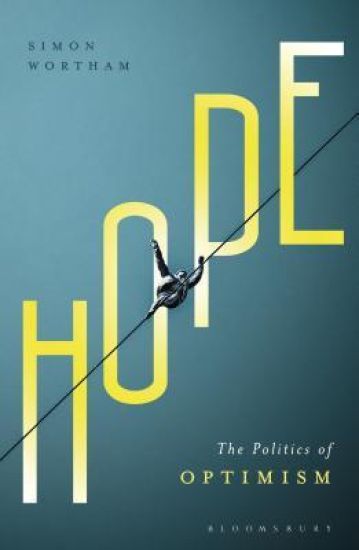
A colourful map of the current conflict between pessimism and optimism in Western politics and theory, Hope attempts to reveal both the deep history and contemporary necessity of political hopefulness. Starting in the 17th century with Spinoza, Wortham tells the story of the various fallacies and insights of pessimism and optimism through the 18th century with the help of Kant and Voltaire through to the famously nihilistic writings of Nietzsche and the 20th century works of thinkers such as Benjamin, Arendt, Kristeva and Fanon (to name but a few). He explores the contemporary significance of ideas such as affirmation, sovereignty, violence, therapy, existentialism and, of course, the oft maligned notion of 'hopefulness' to create a politics of optimism which avoids the pitfalls of uncritical acceptance of the status quo or the newest political idea. Short chapters written in an engaging narrative manner enable the reader to follow the story of political optimism over the last 4 centuries inspiring a new way of thinking about the transformative uses of hopefulness.

A colourful map of the current conflict between pessimism and optimism in Western politics and theory, Hope attempts to reveal both the deep history and contemporary necessity of political hopefulness. Starting in the 17th century with Spinoza, Wortham tells the story of the various fallacies and insights of pessimism and optimism through the 18th century with the help of Kant and Voltaire through to the famously nihilistic writings of Nietzsche and the 20th century works of thinkers such as Benjamin, Arendt, Kristeva and Fanon (to name but a few). He explores the contemporary significance of ideas such as affirmation, sovereignty, violence, therapy, existentialism and, of course, the oft maligned notion of 'hopefulness' to create a politics of optimism which avoids the pitfalls of uncritical acceptance of the status quo or the newest political idea. Short chapters written in an engaging narrative manner enable the reader to follow the story of political optimism over the last 4 centuries inspiring a new way of thinking about the transformative uses of hopefulness.
Derrida wrote a vast number of texts for particular events across the world, as well as a series of works that portray him as a voyager. As an Algerian emigre, a postcolonial outsider, and an idiomatic writer who felt tied to a language that was not his own, and as a figure obsessed by the singularity of the literary or philosophical event, Derrida emerges as one whose thought always arrives on occasion. But how are we to understand the event in Derrida? Is there a risk that such stories of Derrida's work tend to misunderstand the essential unpredictability at work in the conditions of his thought? And how are we to reconcile the importance in Derrida of the unknowable event, the pull of the singular, with deconstruction's critical and philosophical rigour and its claims to rethink more systematically the ethico-political field. This book argues that this negotiation in fact allows deconstruction to reformulate the very questions that we associate with ethical and political responsibility and shows this to be the central interest in Derrida's work.

To what extent does sleep constitute a limit for the philosophical imagination? Why does it recur throughout philosophy? What is at issue in the repeated relegation of sleep to the realm of physiological study (as in Kant, Freud and Bergson), in favour of promoting the critical investigation of dreams and dreaming as a key indicator of modernity? Does philosophy entail a certain repression of the poetics of sleep in all its conceptual impossibility? Through a series of engagements with key thinkers in modern European philosophy, this book rearticulates a poetics of sleep at the heart of some of its seminal texts. From the problematic yet instructive status of a Kantian discourse on sleep to the conceptual contradictions inherent in psychoanalytic thought and the rich possibilities of thinking 'sleep' in the writings of Bergson, Blanchot and Nancy, the book's aim is to dredge the remains of sleep - not to bring its secrets to the surface of waking life, but instead to draw closer to what falls under or away in thinking and writing 'sleep'.

To what extent does sleep constitute a limit for the philosophical imagination? Why does it recur throughout philosophy? What is at issue in the repeated relegation of sleep to the realm of physiological study (as in Kant, Freud and Bergson), in favour of promoting the critical investigation of dreams and dreaming as a key indicator of modernity? Does philosophy entail a certain repression of the poetics of sleep in all its conceptual impossibility? Through a series of engagements with key thinkers in modern European philosophy, this book rearticulates a poetics of sleep at the heart of some of its seminal texts. From the problematic yet instructive status of a Kantian discourse on sleep to the conceptual contradictions inherent in psychoanalytic thought and the rich possibilities of thinking 'sleep' in the writings of Bergson, Blanchot and Nancy, the book's aim is to dredge the remains of sleep - not to bring its secrets to the surface of waking life, but instead to draw closer to what falls under or away in thinking and writing 'sleep'.

Derrida wrote a vast number of texts for particular events across the world, as well as a series of works that portray him as a voyager. As an Algerian migr , a postcolonial outsider, and an idiomatic writer who felt tied to a language that was not his own, and as a figure obsessed by the singularity of the literary or philosophical event, Derrida emerges as one whose thought always arrives on occasion. But how are we to understand the event in Derrida? Is there a risk that such stories of Derridas work tend to misunderstand the essential unpredictability at work in the conditions of his thought? And how are we to reconcile the importance in Derrida of the unknowable event, the pull of the singular, with deconstructions critical and philosophical rigour and its claims to rethink more systematically the ethico-political field. This book argues that this negotiation in fact allows deconstruction to reformulate the very questions that we associate with ethical and political responsibility and shows this to be the central interest in Derridas work.
The Derrida Dictionary is a comprehensive and accessible guide to the world of Jacques Derrida, the founder of deconstruction and one of the most important and influential European thinkers of the twentieth century. Meticulously researched and extensively cross-referenced, this unique book covers all his major works, ideas and influences and provides a firm grounding in the central themes of Derrida's thought. Students will discover a wealth of useful information, analysis and criticism. A-Z entries include clear definitions of all the key terms used in Derrida's writings and detailed synopses of his key works. The Dictionary also includes entries on Derrida's major philosophical influences and those he engaged with, such as Kant, Hegel, Husserl, Freud, Heidegger, Foucault, Lacan and Levinas. It covers everything that is essential to a sound understanding of Derrida's philosophy, offering clear and accessible explanations of often complex terminology. The Derrida Dictionary is the ideal resource for anyone reading or studying Derrida, deconstruction or modern European philosophy more generally.

The Derrida Dictionary is a comprehensive and accessible guide to the world of Jacques Derrida, the founder of deconstruction and one of the most important and influential European thinkers of the twentieth century. Meticulously researched and extensively cross-referenced, this unique book covers all his major works, ideas and influences and provides a firm grounding in the central themes of Derrida's thought. Students will discover a wealth of useful information, analysis and criticism. A-Z entries include clear definitions of all the key terms used in Derrida's writings and detailed synopses of his key works. The Dictionary also includes entries on Derrida's major philosophical influences and those he engaged with, such as Kant, Hegel, Husserl, Freud, Heidegger, Foucault, Lacan and Levinas. It covers everything that is essential to a sound understanding of Derrida's philosophy, offering clear and accessible explanations of often complex terminology. The Derrida Dictionary is the ideal resource for anyone reading or studying Derrida, deconstruction or modern European philosophy more generally.
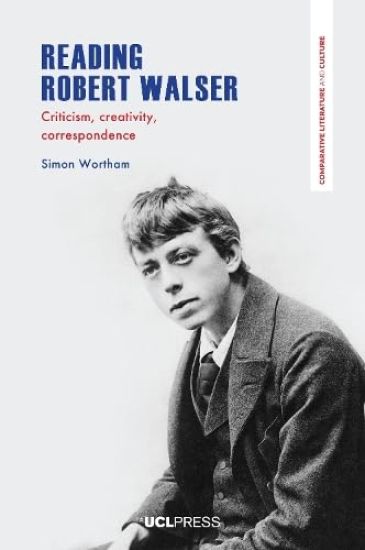
This book's argument is that Walser "toys" with style in ways that are not purely literary, but which carry the ambivalent resonance of politics in all its forms--cultural politics, sexual politics, class politics--both in his own time and, still, today. Once almost forgotten, the Swiss modernist author Robert Walser is now widely read and celebrated both in Europe and in the Anglo-American world. Such was his early promise that Franz Kafka was heralded by Robert Musil as "a peculiar case of the Walser type." The growing "Walser Myth," as Reto Sorg has called it, has been fueled through reference to canonical readings by writers and critics such as Walter Benjamin, Susan Sontag, Elias Canetti, W.G. Sebald and J.M. Coetzee. Meanwhile, others have suggested that the legacy of important figures in German writing such as Musil, Karl Kraus, Frank Wedekind and Walser himself suffered in the past from the early canonization of a quartet of authors taken to represent the high water mark of modern German literature: Thomas Mann, Rainer Maria Rilke, Franz Kafka and Bertolt Brecht (serving as a byword for literary achievement in the novel, lyric poetry, short prose and drama respectively). Perhaps like Kafka, Walser today feels uncannily modern. He is therefore attracting a great deal of critical interest for the key themes of his work: the enigmatic and fleeting experience of modern life, the intricacies of sexuality and sex identity, the modern experience of work, money and consumerism, the intersecting politics of capitalism and populism, and so on--contemporary themes that connect powerfully with his own life and writing. This study brings all of these issues into focus, reassessing them through the lens of Walter Benjamin's claim that Walser's writing is to be thought of in terms of a certain neglect of style.